In the late summer of 1958, the United States Navy quietly dispatched a ghost fleet into the remote South Atlantic. Task Force 88, a cluster of nine ships carrying 4,500 men, vanished into the ocean expanse to execute a maneuver that remains one of the most audacious experiments in military history. Over eleven days, the Americans detonated three nuclear warheads hundreds of kilometers above the Earth. This was Operation Argus, a secret mission designed to turn the heavens into a battlefield by creating artificial radiation belts capable of frying enemy electronics and blinding Soviet detection systems.
The strategic ambition behind these blasts was rooted in the work of Nicholas Christofilos, a self-taught physicist at Lawrence Livermore National Laboratory. Christofilos posited that a high-altitude nuclear detonation would inject a massive cloud of high-energy electrons into the Earth's magnetic field. These particles, trapped by the geomagnetic force, would form a shell around the planet. The goal was to render space a hazardous environment for incoming intercontinental ballistic missiles, essentially creating a radioactive minefield in the upper atmosphere.
Military planners saw a dual-use weapon. If the theory held, the resulting radiation shell could interfere with radio communication and radar transmissions. An opponent attempting a massive missile strike would find their guidance systems degraded, their sensors jammed, and their technological advantage neutralized. The South Atlantic location was not an arbitrary choice. The region features the South Atlantic Anomaly, a geographic weak point in the Earth’s magnetic field. This allowed for easier trapping of charged particles at lower altitudes, ensuring the experiment could be observed and measured with precision.
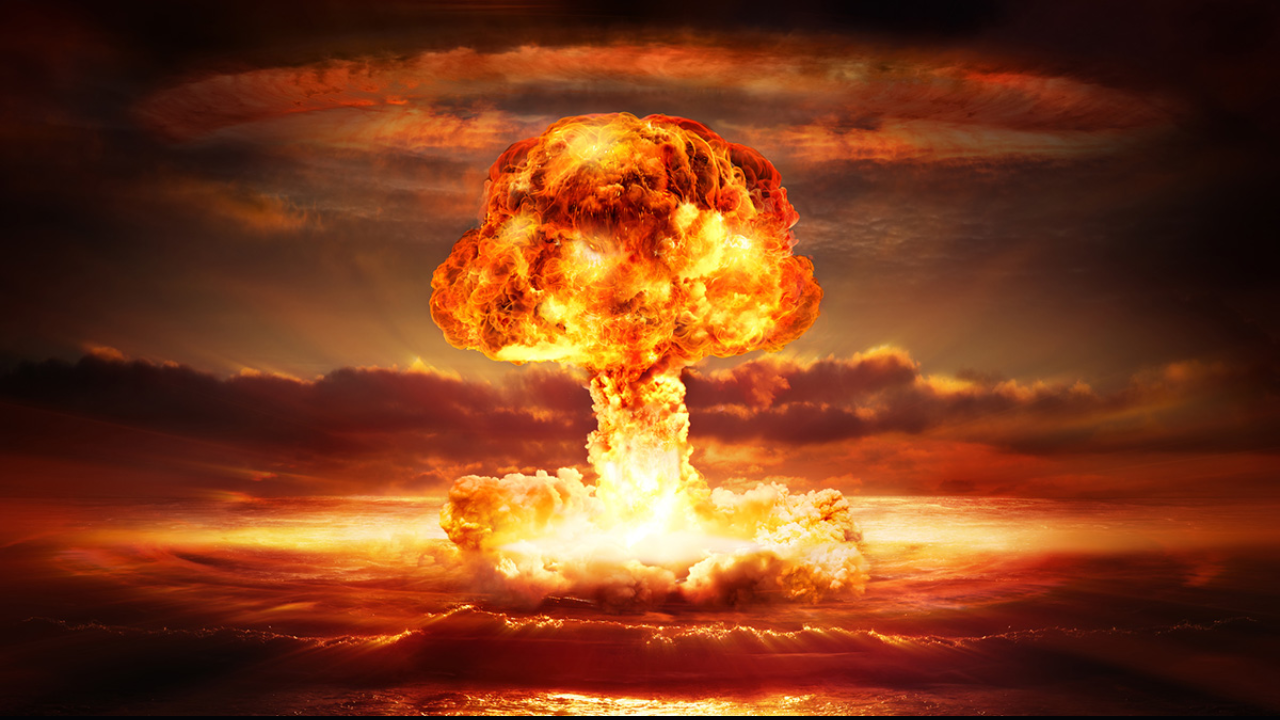
The execution was remarkably rapid. In just five months, the Department of Defense moved from the initial proposal to the launch of the first warhead. On August 27, August 30, and September 6, the USS Norton Sound launched three modified X-17A rockets, each carrying a 1.7-kiloton W-25 nuclear warhead into the vacuum of space. The explosions were invisible to the naked eye at the surface, yet they sparked artificial auroras that glowed across the night sky, reaching as far as the Azores in the North Atlantic.
Tracking the fallout required an equally sophisticated effort. Months before the detonations, the United States launched the Explorer 4 satellite to establish a baseline of natural background radiation. When the warheads finally detonated, the satellite, alongside an array of sounding rockets and ground-based sensors, captured the formation of the artificial radiation belts. The data confirmed the Christofilos effect in grim detail. The atmosphere had been successfully weaponized.
However, the findings also exposed the limitations of such tactics. While the radiation belts were undeniably effective, they were fleeting. The injected electrons dissipated into the upper atmosphere much faster than researchers initially projected. To maintain a functional defensive shield against a sustained attack, the military would have needed to conduct a continuous, near-constant series of space-based nuclear explosions. The logistical and radiological reality of such a plan rendered it impractical for long-term defense.
The fallout of these tests extended beyond the military sphere. The radio blackouts and radar interference triggered by the explosions served as a precursor to the unintended consequences of space warfare. By attempting to disrupt Soviet systems, the United States discovered that its own satellite infrastructure and communication networks were equally vulnerable. A weaponized space environment offered no sanctuary for either side, proving that the vacuum above us is as fragile as it is expansive.
The existence of Operation Argus remained a closely guarded secret for months. It was not until the spring of 1959 that the Eisenhower administration disclosed the mission, framing it as a monumental scientific endeavor rather than a tactical military exercise. The narrative focus on scientific advancement successfully masked the underlying search for a decisive edge in the Cold War. It was the "greatest scientific experiment ever conducted," according to the official public relations script, a label that ignored the potential for global destabilization.
Historical accounts of this era often focus on the spectacle of the explosions, but the true significance lies in the underlying technological scramble. The haste of the operation was driven by the knowledge that international pressure would soon limit atmospheric and space-based testing. Washington understood that the window to map the vulnerabilities of the ionosphere was closing. By the time the world moved toward the bans that would eventually restrict these activities, the data from Argus had already provided a grim roadmap of what happens when nuclear fire meets the planet's magnetic field.
The legacy of these tests is found in the modern understanding of the Van Allen belts and the physics of electron trapping. Every satellite launched today operates in an environment that was once subjected to this intense, controlled bombardment. The fear that once drove the development of orbital radiation traps has shifted toward different threats, such as solar storms and sophisticated electronic warfare, yet the core challenge remains unchanged. We continue to operate within a delicate magnetic balance, one that the 1958 mission proved could be easily and violently disrupted.
Looking back, the operation serves as a stark reminder of the risks inherent in treating the near-Earth environment as a tactical territory. The decision-makers in 1958 were operating on the frontier of new physics, pushed by the existential pressure of a global standoff. They succeeded in proving their hypothesis, yet they inadvertently highlighted the instability of the very shield they sought to exploit. The silent auroras over the South Atlantic were not merely a triumph of scientific inquiry; they were a warning.
True control of the high ground is an illusion when the weapon itself reshapes the medium in which it is used. The scientists of the 1950s looked into the abyss of space and saw a canvas for defense. The reality, as measured by the telemetry of the Explorer satellites, was far more complex. It was a chaotic, short-lived display of power that left the planet's magnetic shield battered, momentarily revealing the fragility of the technological systems upon which the modern era would soon come to rely.