The current military engagement in Iran, designated Operation Epic Fury, operates not on the logic of conventional containment but on a doctrine of total strategic submission. The objective is the systematic dismantling of the Islamic Republic’s three critical operational pillars: nuclear breakout capacity, regional kinetic reach through ballistic systems, and internal regime security. By analyzing the specific target sets engaged since February 28, 2026, it is possible to map a deliberate escalation ladder designed to force either a structural collapse of the clerical leadership or a supervised capitulation that removes Iran as a sovereign military actor in the Middle East.
The Triad of Kinetic Objectives
The Trump administration has shifted from the "maximum pressure" economic sanctions of 2018–2024 to a "maximum degradation" kinetic model. This strategy is defined by three distinct functional blocks of targeting: Discover more on a connected topic: this related article.
1. Nuclear Neutralization and Centrifuge Degradation
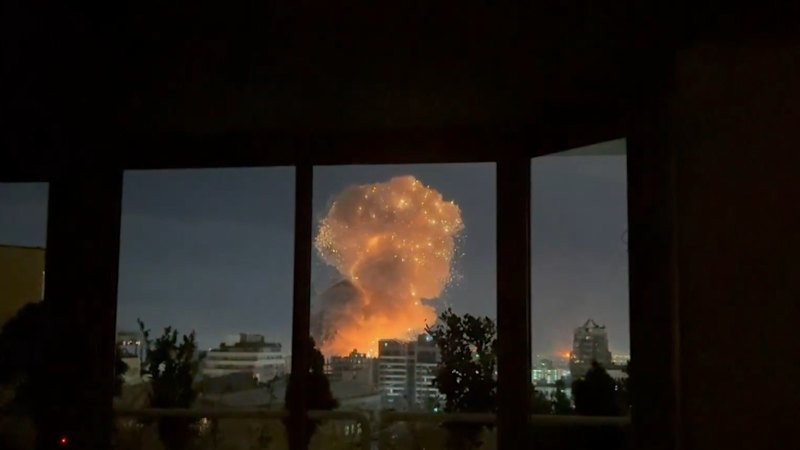
Initial strikes on February 28 targeted the hardened facilities at Natanz, Fordow, and Isfahan. While the 12-Day War in June 2025 caused surface-level damage, Epic Fury utilized advanced earth-penetrating munitions to reach lower-tier centrifuge halls. The tactical goal is to reduce Iran’s "breakout time"—the duration required to produce enough weapons-grade uranium for a single device—from a matter of days to several years.
By targeting the Shokouhiyeh and Esteghlal industrial zones, the campaign has simultaneously severed the supply chain for specialized components and vacuum pumps, ensuring that even if the facilities remain, the means to repair them are eradicated. Further journalism by Al Jazeera delves into similar views on this issue.
2. Ballistic Industrial Base Erasure
Unlike previous skirmishes that targeted launch sites, current operations prioritize the "industrial base." This involves striking:
- Solid-fuel mixing facilities: Hard-to-replace infrastructure required for modern medium-range missiles.
- Transporter Erector Launcher (TEL) depots: Cutting the mobility of the remaining arsenal.
- Guidance system laboratories: Reducing the accuracy of retaliatory strikes.
US Central Command reports a 90% reduction in ballistic missile launches since the start of March 2026. This indicates the "Cost Function" for Iran has shifted; they are no longer firing to deter, but firing their remaining "silver bullets" in a desperate attempt to maintain relevance.
3. Decapitation and Internal Command Fracture
The assassination of Supreme Leader Ali Khamenei and senior IRGC leadership via bunker-busting strikes in Tehran represents a departure from traditional US policy. The intent is to trigger a "command-and-control vacuum." By hitting Law Enforcement Command (LEC) headquarters and Basij mobilization centers, the coalition is stripping the regime of its domestic "enforcement arm."
This creates a structural opening for internal dissent. The tactical logic assumes that a regime unable to communicate with its provincial governors or pay its security forces will face an insurmountable internal legitimacy crisis.
The Economics of Maritime Interdiction
The naval theater in the Strait of Hormuz serves as Iran's primary leverage point against global markets. The destruction of nine major Iranian naval vessels and the targeting of the IRGC-Navy headquarters in Bandar Abbas are designed to pre-empt a "closure" of the Strait.
The economic bottleneck is quantified by the following variables:
- Seaborne Flow: 34% of global seaborne oil and 30% of LNG exports pass through this 21-mile-wide gateway.
- Insurance Premiums: Even without a physical blockade, the "war risk" surcharges on tankers have effectively created a shadow tax on global energy.
- Interdiction Capability: By sinking the IRGC’s "fast boat" swarms and midget submarines, the US is moving to ensure that any Iranian attempt to mine the Strait results in immediate, localized destruction of the remaining fleet.
Strategic Constraints and Operational Risks
Despite the high density of successful strikes, several structural limitations define the boundaries of this campaign.
- The "Basement Bomb" Contingency: Iran still possesses approximately 440kg of highly enriched uranium (HEU). If the regime perceives its end is certain, the incentive to prioritize the final enrichment of this material into a "dirty bomb" or a crude warhead increases.
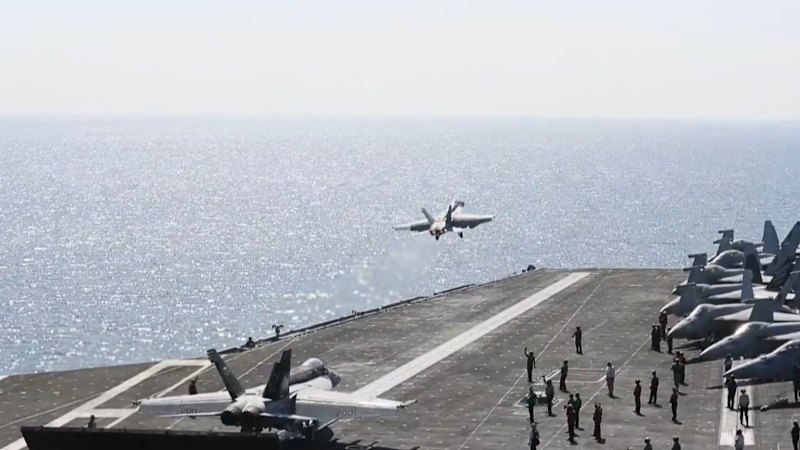
- The Logistics of Rotation: The US carrier force is currently overstretched. Maintaining a two-carrier presence in the region indefinitely creates a readiness deficit in the Indo-Pacific.
- Proxy Asymmetry: While the "head of the snake" is being targeted in Tehran, the "limbs"—Hezbollah in Lebanon and the Houthis in Yemen—retain the capability for autonomous, low-cost harassment of global shipping and Israeli population centers.
The Regional Realignment
The second-order effect of these strikes is the forced integration of a regional air defense architecture. Saudi Arabia, the UAE, and Qatar have participated in the interception of Iranian retaliatory drones. This creates a de facto security bloc that renders the 47-year Iranian strategy of "exporting the revolution" obsolete.
The shift of offensive operations toward the Iranian security and intelligence apparatus (MoIS) signals that the coalition is no longer seeking a return to the JCPOA or any variant of a nuclear deal. The endgame is the reduction of Iran to a "contained state"—one that lacks the industrial capacity for regional power projection or nuclear breakout.
Strategic action now dictates a transition from high-intensity bombing to "persistent ISR" (Intelligence, Surveillance, and Reconnaissance). The deployment of MQ-9 Reapers over Tehran serves as a permanent overhead presence, ensuring that any attempt to reconstitute nuclear or missile infrastructure is met with immediate kinetic negation. The goal is not to occupy, but to permanently degrade the regime's "Theory of Victory" until the internal cost of survival exceeds the benefits of defiance.