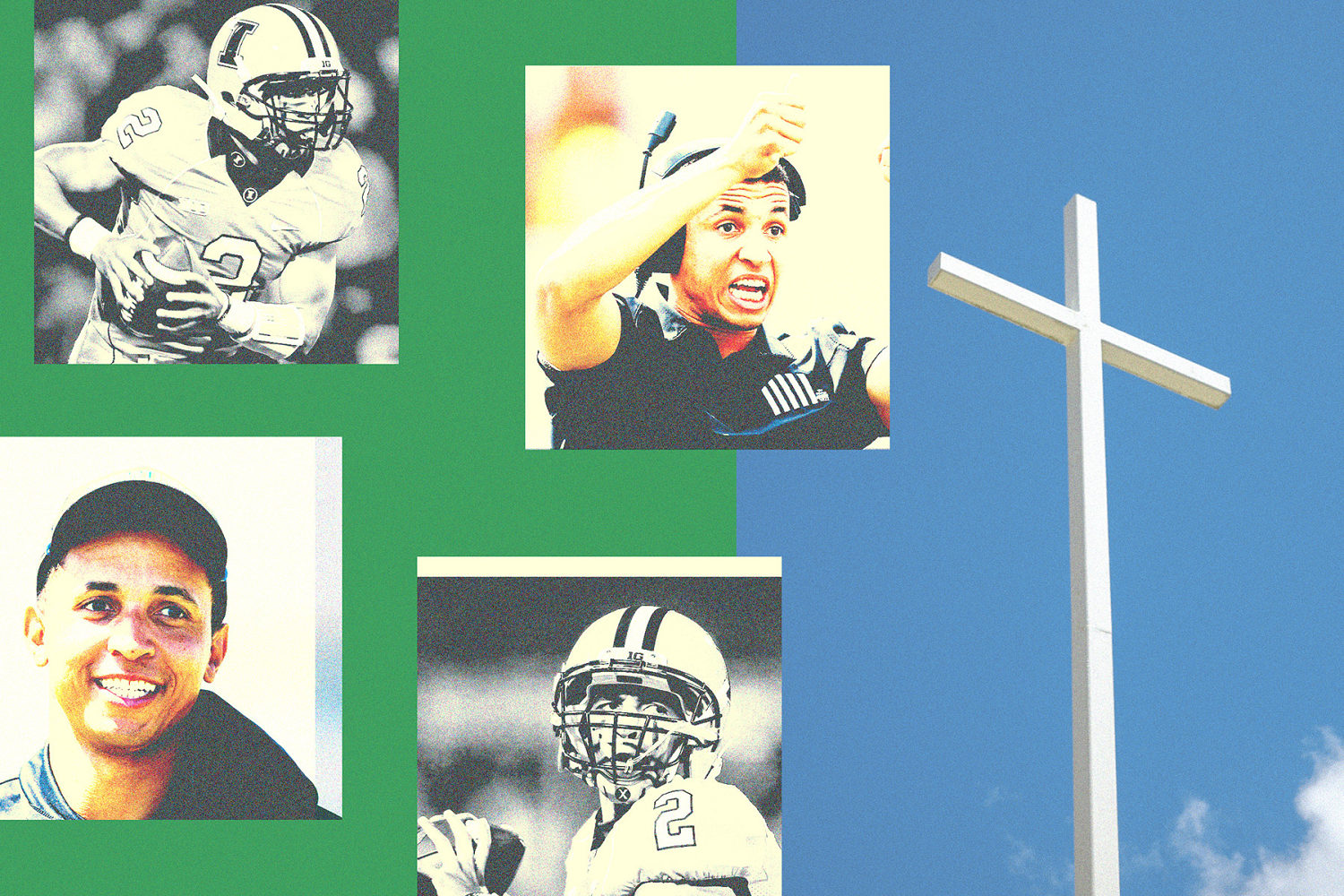
Modern National Football League offenses are typically led by career football lifers who ascended through an insular, hyper-specialized coaching pipeline. Frank Reich, the former NFL backup quarterback turned seminary-trained youth pastor and Reformed Theological Seminary president who later engineered elite offenses for the Philadelphia Eagles and Indianapolis Colts, represents a radical departure from that hiring orthodoxy. The standard sports media narrative treats Reich’s background in ministry as a quaint biographical quirk—a human-interest angle appended to box scores. That framing misses the operational reality. Reich’s offensive success is not an anomaly that occurred despite his time away from football; it is a direct structural output of the organizational, communicative, and cognitive frameworks developed in pastoral leadership and applied to high-variance gridiron environments.
To understand how an outsider blueprint produces top-decile offensive efficiency, one must strip away sentimentalism and examine the mechanics of play-calling, personnel management, and organizational design. An NFL offense is a complex adaptive system operating under extreme time constraints, asymmetric information, and violent physical execution. Traditional coaching models often fail because they optimize for tactical complexity at the expense of cognitive clarity. Reich’s background forced an inversion of that priority: he built systems optimized for human comprehension, role alignment, and emotional regulation under acute stress. Recently making waves in this space: Acoustic Signaling in Mass-Participation Endurance Events Why Cowbells Dominate Urban Soundscapes.
The Structural Economics of the NFL Coaching Pipeline
The NFL coaching market suffers from severe path dependence. General managers and team owners routinely hire from the same closed network of former players and graduate assistants who have spent every autumn since adolescence inside film rooms. This creates two distinct operational bottlenecks:
- Tactical Homogeneity: When coaches learn from the same tree, defensive coordinators can predict offensive tendencies with high statistical confidence. The margin between an average offense and an elite one shrinks to pure talent differential, which is artificially flattened by the NFL salary cap and draft structure.
- Authoritarian Communication Models: Traditional football coaching relies heavily on command-and-control hierarchy. Information flows downward through rigid terminology and punitive feedback loops. While effective for compliance in basic drills, command-and-control models degrade rapidly during live-game adjustments when players must process post-snap defensive rotations in under 2.5 seconds.
Reich exited this pipeline after a 14-year playing career defined by extreme cognitive preparation—serving as Jim Kelly’s backup in Buffalo and orchestrating the largest comebacks in NFL and NCAA history. Rather than immediately entering the quality-control coaching grind, he spent years in seminary, youth ministry, and academic administration. When he returned to the NFL in 2006 as an intern with the Indianapolis Colts under Tony Dungy, he brought an external operating system that solved the exact communication and alignment failures plaguing traditional staffs. More details regarding the matter are covered by Sky Sports.
The Three Pillars of Pastoral Offensive Engineering
Translating pastoral leadership into professional football strategy is not about delivering inspirational locker-room speeches. In an organizational context, ministry and executive seminary leadership require mobilizing diverse, non-coerced groups toward unified behavioral execution without relying solely on financial leverage or fear. Applied to an NFL offense, this produces three distinct structural advantages.
1. Cognitive Compression and Semantic Clarity
A standard West Coast or Erhardt-Perkins offensive playbook contains hundreds of concepts, each tagged with multi-word verbiage that dictates formation, motion, protection, and route distribution. Under fatigue and crowd noise, verbiage bloat increases pre-snap penalties and mental errors.
Pastoral communication relies on cognitive compression—distilling dense, abstract theological principles into concrete, actionable frameworks that a general audience can retain and execute immediately. Reich applied this exact mechanism to offensive installation. Instead of drowning quarterbacks and skill players in exhaustive theoretical variations, his systems group plays into tight conceptual families.
- Shared Mental Models: Every player on the field understands the intent of the play rather than merely memorizing an isolated assignment. When a defensive front shifts unexpectedly, a receiver and quarterback operating from a shared conceptual intent will adjust a route stem identically without needing an explicit audible.
- Reduction of Decision Latency: By stripping away redundant terminology, Reich lowers the cognitive load at the line of scrimmage. During the 2017 Philadelphia Eagles season, when Carson Wentz suffered a season-ending injury and backup Nick Foles stepped in, this architectural clarity became the decisive variable. Foles did not need to master an encyclopedia of bespoke plays; he operated within a compressed, high-clarity menu of Run-Pass Options (RPOs) and play-action concepts tailored to his processing speed, culminating in a 41-point output against a Bill Belichick defense in Super Bowl LII.
2. Asymmetric Ego Management and Collaborative Play Design
In most NFL buildings, the offensive coordinator is the sole intellectual bottleneck. Position coaches draw up plays in silos, and the coordinator selects them based on personal preference or rigid adherence to a historical system. Ego protection prevents junior staffers from challenging flawed designs.
Leading a congregation or a seminary faculty requires high-level servant leadership—a documented organizational behavior model where the leader’s primary function is to remove obstacles for subordinates and elevate their domain expertise. In Indianapolis and Philadelphia, Reich structured weekly game-planning as a decentralized marketplace of ideas:
- Bottom-Up Synthesis: Tight ends coaches, offensive line coaches, and quarterbacks coaches were given genuine ownership over specific situational packages (e.g., red zone, third-and-medium, two-minute drill).
- Psychological Safety in Film Review: Borrowing from pastoral counseling dynamics, Reich separated tactical failure from personal worth during Monday film sessions. When a quarterback throws an interception, traditional coaching often triggers defensive posturing. By framing errors purely as mechanical or processing variables, Reich accelerated the feedback loop, allowing quarterbacks like Andrew Luck, Philip Rivers, and Wentz to self-correct without losing aggression.
3. Stoic Variance Management
Football is governed by extreme stochastic variance. A tipped pass, a bad bounce on a fumble, or a questionable officiating call can invert win probability in seconds. Coaches conditioned exclusively inside hyper-reactive football environments frequently abandon their statistical game plans when early variance breaks against them—abandoning the run prematurely or forcing low-percentage vertical shots out of panic.
Years of counseling individuals through personal crises and managing institutional transitions instill a baseline emotional homeostasis. Reich’s sideline demeanor is a tactical asset because it prevents emotional contagion. When an offense stalls for three consecutive drives, the coordinator’s physiological and vocal stability signals to the play-caller and the quarterback that the underlying math of the game plan remains sound. In 2018, when the Indianapolis Colts started 1-5, a traditional regime would have fractured internally or overhauled its scheme midstream. Reich maintained strict adherence to his foundational passing and protection principles, resulting in a 9-1 finish and a playoff berth.
The Cost Function of Empathy-Driven Systems
No organizational model operates without structural trade-offs. The exact traits that allow a pastoral, collaborative leader to elevate an offense create specific vulnerabilities when applied across an entire football operation, particularly when transitioning from offensive coordinator to head coach.
The Accountability Deficit
High-empathy, high-trust systems depend entirely on the intrinsic motivation and professional maturity of the personnel. When a roster is populated by self-starting veterans (such as Philip Rivers or Jason Kelce), autonomy produces peak efficiency. However, when a roster contains younger, less disciplined players or underperforming assistants, a reluctance to deploy punitive, hard-edged accountability can allow cultural drift to set in. The grace required in pastoral counseling can inadvertently delay necessary personnel cuts or staff demotions in a zero-sum professional league.
The Quarterback Dependency Trap
Reich’s offensive architecture is heavily predicated on a quarterback capable of executing complex pre-snap declarations—identifying the Mike linebacker, sliding protection, and selecting between run and pass tags at the line of scrimmage. This grants the quarterback immense autonomy, which maximizes output for high-IQ processors. Conversely, when paired with quarterbacks who struggle with processing speed or chronic mechanical regression, the system lacks the rigid guardrails found in heavy play-action, under-center schemes (such as the Shanahan/McVay tree) that dictate reads artificially through motion and bootlegs. When Indianapolis cycled through aging or erratic passers between 2019 and 2022, the absence of structural crutches exposed the offense to high turnover variance.
Tactical Integration: How the System Operates on the Field
To observe Reich’s framework in action, analyze his deployment of the Run-Pass Option (RPO) and Mesh/Levels concepts in critical down-and-distance scenarios:
- Pre-Snap Stress: The offense aligns in 11 personnel (one running back, one tight end, three receivers) with tight splits. This forces the defense to declare whether it is playing single-high safety (loading the box against the run) or two-high safety (ceding light boxes to protect against vertical passes).
- Post-Snap Conflict: Rather than forcing an offensive lineman to win a physically disadvantaged block against an unblocked edge defender or overhang linebacker, the play design puts that specific defender in conflict. The quarterback reads that single defender’s hip turn at the mesh point.
- Binary Resolution: If the defender steps forward to fill the run gap, the ball is pulled and thrown into the vacated space behind him. If the defender widens to cover the slant or flat route, the running back takes the handoff into a numerically advantaged box.
This is the mechanical manifestation of cognitive compression: turning an 11-on-11 chaotic collision into a simple, binary read for the quarterback while protecting the offensive line from structural losses.
Strategic Execution for NFL Front Offices
General managers evaluating coaching candidates must stop filtering resumes through superficial career-path heuristics. The lesson of Frank Reich’s offensive success is not that teams should hire former pastors; it is that cross-domain cognitive diversity is an underpriced market inefficiency in professional sports.
Front offices seeking sustainable offensive advantages should implement three concrete shifts in their hiring and operational architecture:
- Audit for Communication Architecture, Not Playbook Volume: During coordinator interviews, bypass questions about scheme philosophy and require candidates to teach a complex, non-football concept to a layperson in ten minutes. Evaluate their ability to compress information, establish shared mental models, and eliminate semantic friction.
- Decouple Play Design from Play Calling: Structure offensive staffs as collaborative R&D labs during the week, flattening the hierarchy so junior analysts and position coaches own situational packages, while reserving game-day execution for a single, emotionally regulated voice capable of managing variance without panic.
- Match System Autonomy to Quarterback Processing Profiles: Deploy high-autonomy, line-of-scrimmage check systems exclusively when the starting quarterback possesses elite pre-snap recognition. When developing young or erratic passers, artificially constrain the offensive menu with motion-driven, half-field reads until the player’s processing floor rises to meet the system’s ceiling.