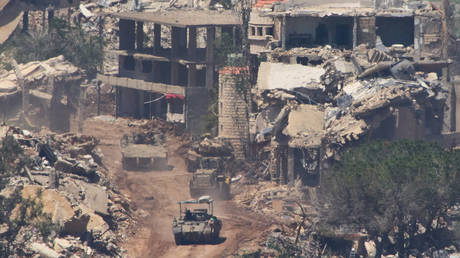
The proliferation of digital artifacts depicting irregular conduct by frontline military personnel represents more than a public relations deficit; it serves as a leading indicator of a breakdown in unit-level command and control (C2). When visual evidence suggests soldiers are engaging in the unauthorized removal of property—specifically in the context of the Israel-Lebanon conflict—the analytical focus must shift from moral condemnation to the structural degradation of combat effectiveness. Unauthorized appropriation of civilian assets creates a feedback loop of indiscipline that erodes the operational legitimacy of a kinetic campaign, complicates the transition to post-conflict stabilization, and provides the adversary with a potent psychological operations (PSYOP) advantage.
The Triad of Tactical Indiscipline
The occurrence of looting within a professional military force is rarely an isolated incident of individual greed. It is usually the result of three converging structural failures:
- C2 Vacuum at the Tactical Edge: In high-intensity urban environments, the "fog of war" often leads to decentralized operations where small units act with significant autonomy. Without rigorous oversight from non-commissioned officers (NCOs) and junior officers, the psychological barrier against opportunism thins.
- Dehumanization as a Combat Mechanism: Prolonged exposure to high-stress environments and the psychological necessity of distancing oneself from the enemy population can lead to a "spoils of war" mentality. This cognitive shift reclassifies civilian property as abandoned resources rather than protected assets.
- The Digital Proliferation Trap: The ubiquity of smartphone cameras creates a permanent record of actions that were previously transient. The act of filming the conduct itself signals a fundamental misunderstanding of operational security (OPSEC) and the strategic implications of the imagery.
Quantifying Strategic Friction
Every instance of documented looting imposes a measurable cost on the occupying or invading force. This is not a "soft" cost; it is a hard tax on the mission's probability of success.
The Legitimacy Tax
Military operations in the 21st century rely on "competitive control." To succeed, a force must prove to the local population that it is a more reliable and predictable arbiter of order than the insurgent or opposing force. When troops engage in looting, they destroy the predictability of the rule of law. This shifts the local population from a neutral or compliant stance to an actively hostile one, increasing the likelihood of IED placements, intelligence leaks to the adversary, and civil unrest.
The Intelligence Deficit
Human Intelligence (HUMINT) is the lifeblood of urban operations. A population that perceives a military force as a predatory actor will withhold critical information regarding enemy movements, tunnel locations, and weapon caches. The delta between a cooperative population and a hostile one can be measured in the increased casualty rates of the operating force.
The Diplomatic Opportunity Cost
On the international stage, documented misconduct narrows the "permissive environment" provided by allies. It forces political leadership to spend political capital defending the conduct of the military rather than advancing the strategic goals of the war. In the context of the Middle East, such imagery reinforces existing adversary narratives, making it exponentially harder for neutral regional powers to maintain a collaborative or even passive stance.
The Mechanism of Professional Atrophy
Indiscipline is a contagion. If a soldier observes a peer or superior removing assets without consequence, the internal logic of the unit shifts. This begins the process of professional atrophy, where the focus moves from the primary mission—neutralizing the adversary—to secondary, self-serving activities.
- Degradation of Situational Awareness: A soldier focused on identifying and securing valuables is a soldier not scanning for threats.
- Logistical Strain: Transporting and storing looted goods creates "clutter" within the tactical logistics chain. It utilizes space and mental energy that should be dedicated to ammunition, medical supplies, and communications gear.
- Command Erosion: Once a commander permits or ignores minor infractions, their authority to enforce life-and-death discipline in high-stakes combat scenarios is compromised. Consistency is the bedrock of military authority; selective enforcement leads to the collapse of the chain of command.
Information Warfare and the Asymmetric Advantage
In the modern conflict landscape, the "theater of war" is literal. The Lebanese border is a high-transparency environment. Every video uploaded to social media is immediately integrated into the adversary's strategic communications framework.
Adversaries like Hezbollah utilize these snippets to construct a narrative of moral equivalence. They use the imagery to mobilize their base, recruit new fighters, and solicit international funding. From a data-driven perspective, one video of a soldier looting can negate the strategic gains of a month of precision strikes. The "kinetic win" of destroying a missile launcher is offset by the "narrative loss" of the looting video, which fuels the very ideology that generates more missile launchers.
Redefining Operational Success
To mitigate these risks, military leadership must treat discipline as a core combat metric, equal in importance to target acquisition or casualty evacuation. This requires a shift in the operational framework:
- Pre-Deployment Cognitive Hardening: Training must move beyond tactical proficiency to include the strategic consequences of individual conduct. Soldiers need to understand that their phone is a weapon that can be fired at their own side.
- Aggressive NCO Intervention: The sergeant is the primary barrier against looting. Units with strong, present NCO leadership show near-zero rates of unauthorized property removal.
- Visible Accountability: For the military to maintain its professional standing, the response to misconduct must be rapid and public. This signals to both the internal force and the external world that the behavior is a deviation from the norm, not a sanctioned policy.
The failure to contain looting is a failure to understand the nature of contemporary conflict. In an era where every soldier is a potential broadcaster, there is no such thing as a private act in a public war. The tactical gains made in southern Lebanon are currently being undercut by the failure to enforce the most basic tenets of military discipline.
Strategic success depends on the ability to translate kinetic force into a stable, favorable political reality. Predatory behavior on the ground makes that translation impossible. Military planners must immediately implement a zero-tolerance policy on property interference, enforced through immediate field-grade investigations and public court-martials, to prevent the total erosion of the campaign's strategic objectives.