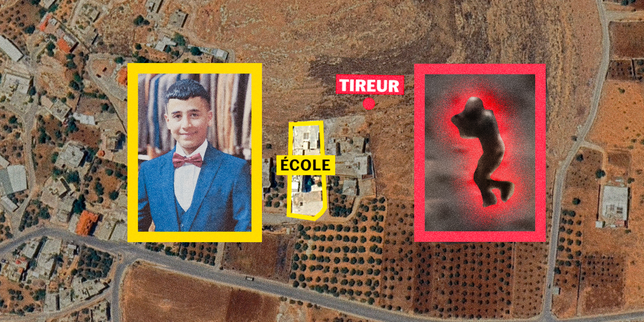
The death of a student at the gates of an educational institution in the West Bank is not an isolated tactical failure but the predictable output of a specific security architecture. While standard reporting focuses on the emotional resonance of the event, a structural analysis reveals a breakdown in the rules of engagement (ROE) and the spatial dynamics of military-civilian friction. This event serves as a case study in how the intersection of permanent military presence and civilian infrastructure creates high-probability zones for lethal outcomes. To understand the death of a minor in this context, one must analyze the geographic bottleneck of the school zone, the escalation ladder of kinetic force, and the erosion of standard operating procedures in non-permissive environments.
The Geography of Friction
The school environment in the West Bank acts as a recurring flashpoint because it represents the highest density of vulnerable civilian populations directly adjacent to active military transit routes. In the specific instance of the school in question, the spatial arrangement dictates the risk profile. When an educational facility sits within 100 meters of a military checkpoint or a frequent patrol route, a "friction zone" is established.
Three factors define these zones:
- The Bottleneck Effect: Arrival and dismissal times create predictable, high-density crowds. In any security theater, predictability combined with high density increases the risk of a misinterpreted threat.
- Visual Obscuration: Urban environments around schools often contain high levels of architectural noise—fences, parked vehicles, and street furniture. This reduces the "decision window" for security forces to differentiate between a student reaching for a backpack and a hostile actor.
- Psychological Symmetry: The presence of military hardware in a space designated for childhood development triggers a reciprocal escalation in stress levels for both the resident population and the patrolling units.
The Kinetic Escalation Ladder
The lethal engagement of a minor suggests a failure in the graduated application of force. In high-tension environments, the transition from presence to lethal force often bypasses critical intermediary steps. A rigorous examination of the incident requires mapping the decision tree used by the personnel on the ground.
The standard hierarchy of control typically involves:
- Presence and Verbal Commands: Establishing authority through visibility and vocal instructions.
- Non-Lethal Deterrence: Use of tear gas, stun grenades, or rubber-coated steel bullets (RCSB).
- Lethal Force: Reserved for "immediate and life-threatening" danger.
In the analyzed event, the collapse of this ladder occurs when the perceived threat is prioritized over the actual threat. The "immediate danger" clause is often interpreted through the lens of individual soldier discretion. When a soldier is placed in a high-friction zone (like a school gate) where the population is inherently non-compliant or hostile to their presence, the threshold for "perceived threat" lowers. This creates a systemic bias toward kinetic solutions. The death of an adolescent occurs when the technical capability of the weapon system—in this case, high-velocity rounds—is applied to a situation where the threat level was likely manageable through non-lethal or tactical withdrawal methods.
The Mechanism of Discretionary Failure
The core of the issue lies in the lack of accountability within the discretionary window. Rules of engagement are theoretically rigid, but in practice, they are filtered through the "combat mindset." This mindset operates on a cost-benefit analysis where the survival of the unit is weighted more heavily than the preservation of civilian life.
The failure points in this specific engagement can be categorized into three operational errors:
Target Identification Latency
Modern optics and training emphasize rapid target acquisition. However, in a school setting, the "target" is often indistinguishable from the surrounding civilian population. If a soldier fires into a crowd at a school gate, they are accepting a 100% probability of collateral risk. The decision to fire indicates that the internal logic of the unit viewed the risk of not firing as greater than the risk of killing a non-combatant.
Proportionality vs. Neutralization
Military training focuses on neutralizing threats. In a civilian policing context, proportionality is the governing metric. The West Bank exists in a legal and operational gray zone where military forces perform policing duties using combat-oriented training. This creates a fundamental mismatch. A soldier trained to neutralize a target will use a center-of-mass shot, which is almost always fatal, whereas a police officer in a stable jurisdiction is trained to de-escalate or use less-than-lethal options.
Post-Incident Validation
The secondary failure occurs during the internal review process. When the institutional response defaults to a "security necessity" narrative without a granular breakdown of the ballistics and timing, it validates the previous discretionary failure. This creates a feedback loop that lowers the threshold for the next engagement.
The Cost Function of Persistent Military Presence
Every lethal encounter involving a minor incurs a significant strategic cost that outweighs the tactical gain of "neutralizing" a localized threat. These costs are not merely reputational; they are operational.
- Radicalization Velocity: A death at a school gate acts as a force multiplier for local resistance. The "martyrdom" narrative provides a concrete rallying point that increases the recruitment pool for militant groups.
- Intelligence Blackouts: Lethal incidents sever the local cooperation necessary for high-level intelligence gathering. Communities that feel targeted by security forces cease to provide the granular data points required for effective counter-terrorism.
- Legal and Diplomatic Erosion: Constant violations of international standards regarding the protection of minors in conflict zones create a cumulative record that complicates state-level defense cooperation and international legal standing.
Structural Recommendations for Risk Mitigation
To prevent the recurrence of lethal friction at educational sites, the current security model requires a shift from aggressive presence to passive surveillance and tactical separation.
The first priority is the establishment of Buffer Zones. Schools must be designated as non-patrol zones during peak hours. If a security threat exists, it must be managed via remote surveillance (drones or fixed sensors) rather than physical proximity. Physical presence at the gates of a middle or high school is an invitation to escalation.
The second priority is the Mandatory Use of Non-Lethal Equipment. Units assigned to civilian-dense areas must be stripped of lethal primary weapons for routine patrol, replaced with advanced non-lethal systems that have a high stop-rate without permanent lethality. The reliance on live ammunition for crowd control is an admission of tactical incompetence.
Finally, there must be an Independent Ballistic Audit. Every discharge of a weapon in a civilian zone must be treated as a criminal investigation by default, rather than an internal military review. Only by raising the personal and professional cost of firing a weapon can the discretionary threshold be restored to a level that protects non-combatants.
The death of an adolescent in the West Bank is the logical conclusion of a system that prioritizes unit safety over civilian preservation in high-density friction zones. Without a fundamental restructuring of the spatial and legal frameworks governing these interactions, the school gate will remain a site of predictable, preventable lethality. Focus must shift from investigating individual soldiers to dismantling the operational logic that places them in high-risk civilian corridors with lethal mandates. Strategies must focus on de-linking military transit from civilian life cycles, specifically regarding educational and medical infrastructure. This is the only path to reducing the kinetic output of the current occupation model.