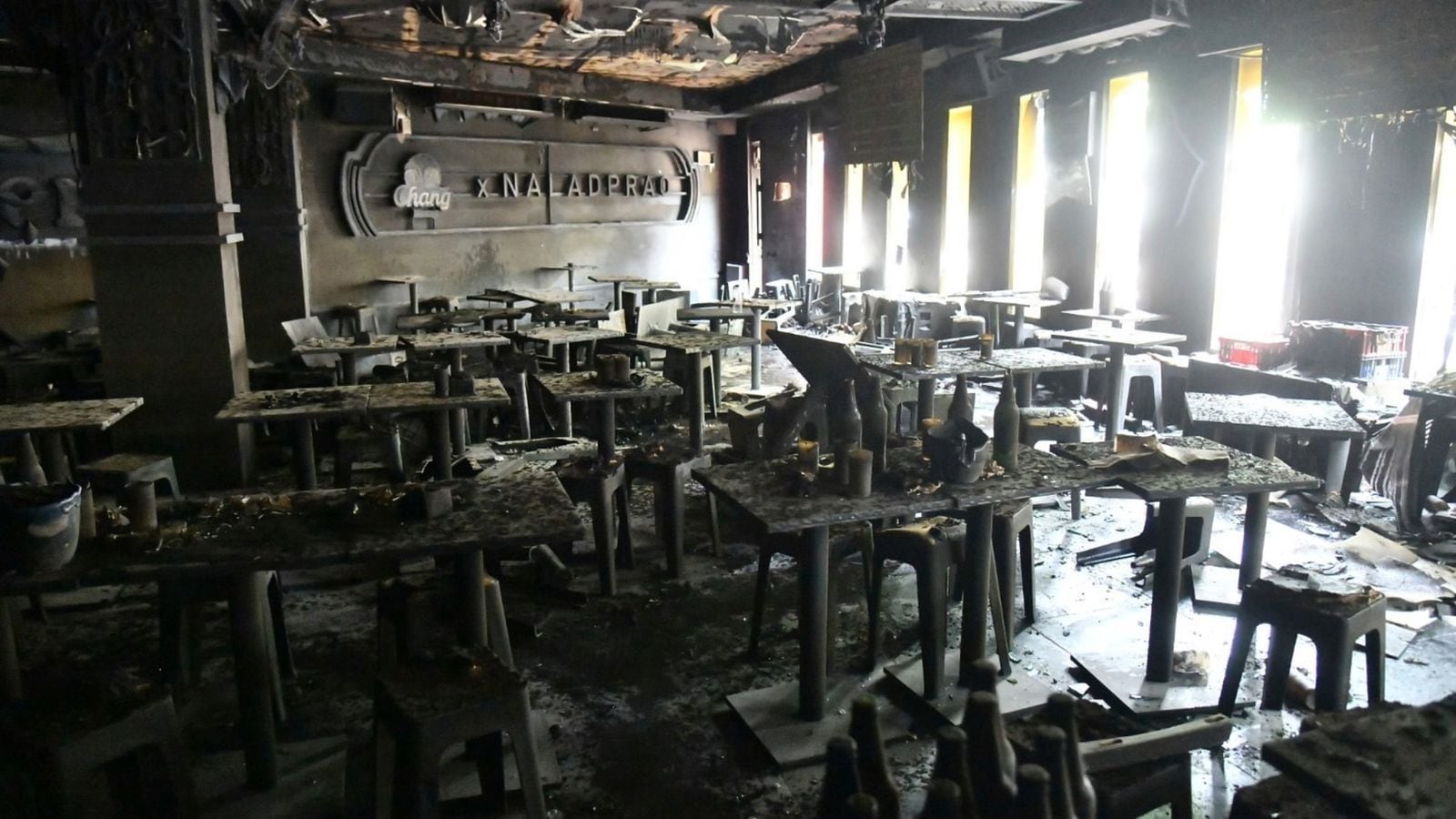
The aftermath of a mass-casualty nightclub fire follows a script as predictable as it is useless.
First come the harrowing photos of charred corrugated iron and twisted steel. Then, the inevitable media feeding frenzy demanding to know why a venue was operating on a lapsed license, why the soundproofing foam was highly flammable, and why the emergency exits were locked from the outside. We saw this hollow ritual play out after the Mountain B music club fire in Sattahip, Chonburi—which claimed over thirty lives—just as we saw it decades ago with the Santika Club disaster in Bangkok, the Station nightclub fire in Rhode Island, and the Kiss nightclub tragedy in Brazil.
The public cries for a "crackdown." Politicians parade in front of the cameras, promising sweeping inspections and zero-tolerance policies.
It is a comforting lie.
The belief that we can eliminate venue tragedies through aggressive policing of paper permits and heavier fines is a dangerous fantasy. It ignores the brutal economic realities of the nightlife industry and the fundamental limits of regulatory enforcement. If we want to actually save lives instead of just feeling righteous on social media, we have to stop treating fire safety as a legal compliance checklist and start treating it as an engineering and economic reality.
The Illusion of the "Illegal Venue"
Every time a tragedy like the Mountain B fire occurs, investigative reports zero in on a single, scandalous fact: The venue was operating illegally.
Commentators speak of these establishments as if they are rogue underground bunkers operating completely outside the fabric of society. This narrative is incredibly naive.
In the real world, the line between a "fully compliant" nightlife venue and an "illegal" one is razor-thin and constantly shifting.
I have spent years analyzing municipal regulatory structures and consulting on commercial real estate risk. Here is the open secret nobody wants to admit: Almost every independent music venue, dive bar, and DIY club operates in a state of perpetual non-compliance.
┌──────────────────────────────────────────────────────────┐
│             The Regulatory Compliance Gap                │
├──────────────────────────────┬───────────────────────────┤
│    Theoretical Standard     │     Practical Reality     │
├──────────────────────────────┼───────────────────────────┤
│ Multi-million dollar fire    │ Bootstrapped local venues │
│ suppression systems, rigid   │ scrape by on thin margins │
│ zoning, and years of bureaucratic │ using cheap, accessible  │
│ approvals.                   │ materials to survive.     │
└──────────────────────────────┴───────────────────────────┘
When local governments draft building codes, they design them for sparkling, multi-billion-dollar entertainment complexes owned by massive conglomerates. They mandate complex, active fire protection systems—like integrated deluge sprinklers, voice-evacuation alarms, and dedicated pressurization stairwells—that cost more than the entire annual revenue of a local neighborhood music bar.
Faced with a choice between shutting down entirely or operating in the gray market, venue owners choose the gray market. They pay off local inspectors, run on temporary permits, or register as "restaurants" while operating as high-energy concert halls.
When you demand "stricter enforcement" without addressing the financial impossibility of compliance, you do not make venues safer. You simply drive them deeper into the shadows, making them even harder to inspect and monitor.
Cheap Soundproofing is a Death Sentence (And Codes Do Not Stop It)
Let us talk about the actual killer in almost every single nightclub fire: polyurethane acoustic foam.
In the Mountain B fire, eyewitnesses described a fire that raced across the ceiling in seconds, dripping burning plastic onto the crowd below. This is the exact same mechanism that killed 100 people at the Station nightclub in 2003.
The common consensus is that we need stricter laws banning these materials. This is a fundamental misunderstanding of the problem. The laws already ban these materials in assembly spaces. The issue is not a lack of rules; it is the physical properties of sound and the economics of running a music venue.
- The Physics of Sound: Low-frequency bass waves require massive amounts of absorption to prevent them from vibrating through walls and disturbing neighbors.
- The Cost of Safety: True, fire-rated acoustic treatment (such as class-A fiberglass panels or specialized Rockwool) is incredibly expensive and difficult to install.
- The Deadly Alternative: A package of cheap, highly flammable polyurethane egg-crate foam can be bought online for pennies. It stops high-frequency echoes, making the room sound "better" to an amateur ear, but it is essentially solidified gasoline.
When a venue owner is forced to choose between a $15,000 professional acoustic installation that keeps them code-compliant, or a $300 DIY foam job that stops the neighbors from calling the police tonight, they choose the $300 option.
No amount of red tape will change this calculation. If a venue cannot afford to soundproof safely, they will soundproof unsafely in secret.
Why Locked Exits Keep Happening
The most infuriating detail of these tragedies is always the locked exit doors. "Why would anyone lock an emergency exit?" the public asks in disbelief.
The answer is simple, cynical, and entirely predictable: theft prevention and crowd control.
In the nightlife industry, inventory shrinkage (stolen alcohol) and "dine-and-dashes" (patrons slipping out without paying their tab) are constant threats to already razor-thin profit margins. Furthermore, venues must strictly control entry to prevent underage patrons from slipping in or to ensure everyone pays the cover charge.
To a venue manager worried about making payroll on Monday, a side exit door is a financial liability.
- They chain the door shut.
- They block it with empty beer crates.
- They lock it "just for the night" because they are short-staffed on security.
They convince themselves that in an emergency, someone will simply find the key. But panic destroys rational thought. When the power cuts out, the room fills with toxic black smoke within 90 seconds, and hundreds of people are screaming, finding a key is a mathematical impossibility.
Time to Unoccupiable Conditions (Toxic Smoke & Heat): ~90 Seconds
Time to Locate a Key in Pitch Black/Panic: >180 Seconds
Result: Catastrophic failure of the evacuation path.
If your safety strategy relies on human beings remembering to unlock doors, your safety strategy is already dead.
Stop Inspecting Paper. Start Engineering Fail-Safes.
If passing more laws and conducting more aggressive raids does not work, what does? We must shift our focus from legal compliance to hard physical fail-safes.
Instead of demanding that cash-strapped venues install million-dollar sprinkler systems, we should mandate simple, foolproof design constraints that cannot be bypassed by human error or financial greed.
1. The Magnetic Lock Rule (Passive Fail-Safe)
If a door must be secured for security or ticketing purposes, it must be held shut only by electromagnetic locks connected directly to the venue's main power grid and fire alarm system. If the power cuts out—which happens almost immediately in a electrical fire—the magnets lose power, and the doors swing open freely. If a venue is caught using a physical padlock or chain on a perimeter door, the penalty should not be a fine; it should be the immediate, permanent revocation of their business license on the spot.
2. Radical Simplification of Exit Paths
We need to stop allowing venues to construct maze-like entrances designed to build "hype" or force patrons through long paths to get to the bar. If a room holds more than 50 people, the exit path must be a straight, unobstructed line of sight to the outdoors. If you cannot see the exit door from the center of the dance floor, the layout is fundamentally broken.
3. Subsidized Safety Materials
If governments actually cared about saving lives rather than collecting permit fees, they would subsidize fire-retardant building materials for small businesses. Instead of spending millions of dollars on bureaucratic enforcement task forces, create a program that allows small music venues to purchase certified, non-flammable acoustic insulation at cost. Lower the financial barrier to safety, and compliance will follow.
The charred ruins of the Mountain B club are not a failure of policing. They are a failure of design and a failure of imagination.
We can continue to participate in the useless cycle of public outrage, symbolic crackdowns, and eventual forgetting. Or we can accept that nightlife is an chaotic, low-margin, naturally rebellious industry that will always route around bureaucracy—and start building safety measures that actually account for human nature.

