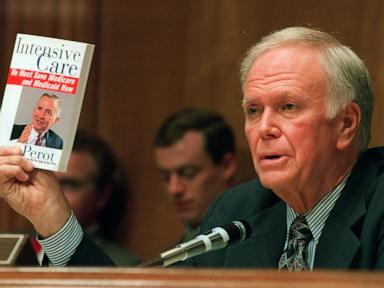
The death of former Oregon Senator Bob Packwood at age 93 structuralizes a critical case study in the calculus of legislative power and the institutional mechanics of political self-preservation. Packwood’s 27-year tenure in the United States Senate presents a distinct operational paradox: he was simultaneously a critical legislative architect of modern American fiscal policy and the catalyst for one of the most comprehensive institutional ethics investigations in congressional history.
Analyzing Packwood requires bypassing standard partisan narratives to examine the structural friction between individual legislative utility and institutional risk management. His career demonstrates how concentrated committee leverage can insulate a political actor from systemic vulnerabilities, and conversely, how the mechanics of institutional self-policing execute a forced expulsion when that actor becomes a liability to the chamber’s collective legitimacy. Meanwhile, you can find similar developments here: The Night the Sky Turned Red.
The Architecture of Legislative Leverage: The Finance Committee Function
Packwood’s baseline political longevity was built on structural utility, specifically his ascension to the chairmanship of the Senate Finance Committee. Within the legislative ecosystem, the Finance Committee controls the state's revenue-generating mechanisms, giving its leadership direct influence over macroeconomic policy and targeted tax structures.
Packwood’s operational peak occurred during the drafting and execution of the Tax Reform Act of 1986. This legislation required a fundamental restructuring of the internal revenue code, balancing individual rate reductions against the elimination of corporate tax shelters. Packwood utilized a specific transactional methodology to achieve consensus: To explore the complete picture, we recommend the detailed report by BBC News.
- The Isolation of Key Variables: Rather than negotiating comprehensive packages on the Senate floor, Packwood isolated specific industrial and regional tax provisions to trade with individual committee members.
- Asymmetric Incentive Alignment: By adjusting capital gains treatments or corporate depreciation schedules for specific senators' constituencies, Packwood converted ideological opponents into transactional allies.
- The Mitigation of Structural Deficits: He maintained revenue neutrality by systematically broadening the tax base while lowering marginal rates, creating a bipartisan legislative product that altered the trajectory of domestic fiscal policy.
This legislative capability created an insulation mechanism. For decades, the institutional leadership tolerated individual deviations from party orthodoxy—such as Packwood’s aggressive advocacy for reproductive rights and social moderation—because his structural competence on fiscal matters delivered predictable legislative outcomes.
The Mechanics of Structural Contradiction
Packwood’s political brand was built on a deliberate alignment with emerging socio-political demographics, specifically the expanding political mobilization of women in the 1970s and 1980s. He secured endorsements from organizations like Planned Parenthood and pioneered the integration of female staff into high-ranking policy and campaign roles.
The operational contradiction lay in the systemic divergence between this public policy posture and his internal administrative behavior. The eventual downfall was not triggered by a sudden policy failure, but by the accumulation of internal organizational externalities.
+--------------------------------------------------------+
|               Public Policy Posture                    |
|  - Champion of reproductive rights                     |
|  - High-ranking female staff integration               |
|  - Alliance with progressive advocacy groups           |
+-------------------------------------------+------------+
                                            |
                         STRUCTURAL FRICTION|
                                            |
+-------------------------------------------v------------+
|             Internal Administrative Reality            |
|  - Systematic abuse of institutional authority         |
|  - Compulsive documentation of misconduct (Diaries)    |
|  - Escalating exposure to institutional risk           |
+--------------------------------------------------------+
When The Washington Post published detailed accounts of sexual harassment and assault from ten women in late 1992, it exposed a pattern of behavior that weaponized the traditional hierarchical power dynamics of Capitol Hill. The Senate, operating as a closed ecosystem, relied on an implicit contract: staff deference in exchange for professional advancement. Packwood disrupted this equilibrium by converting professional subordination into a venue for predatory behavior.
The Ethics Committee Blueprint: The Mechanics of Forced Resignation
The three-year investigation by the Senate Select Committee on Ethics (1992–1995) provides a precise operational model of how a legislative body handles internal reputational contagion. The process altered standard political defense strategies due to a significant procedural error by Packwood himself: the reliance on written diaries.
Packwood kept thousands of pages of detailed daily audio recordings and transcriptions. When the Ethics Committee subpoenaed these documents to investigate the initial harassment claims, Packwood attempted to invoke executive privilege and privacy protections. The legal battle reached the Supreme Court, which refused to stay a lower court order requiring the surrender of the diaries.
The entry of the diaries into evidence transformed the investigation from a baseline credibility contest into an unassailable data set of official misconduct. The documents revealed two distinct categories of institutional liability:
- The Behavioral Pattern: Direct, contemporary documentation of unwanted physical advances toward staff members, campaign workers, and acquaintances, confirming a systemic abuse of power.
- The Financial Conflict: Evidence suggesting Packwood had solicited financial favors and job offers from lobbyists for his ex-wife to reduce his alimony obligations, directly compromising his legislative neutrality as Finance Committee Chairman.
The structural prose of the Ethics Committee’s final report left no room for political compromise. On September 6, 1995, the committee voted unanimously (6–0) to recommend Packwood’s expulsion from the Senate.
The mechanics of expulsion require a two-thirds majority of the full Senate. Packwood’s internal support evaporated because his continued presence threatened the institutional credibility of the entire chamber. The cost-benefit analysis for his colleagues shifted rapidly: the legislative utility of his tax expertise was completely neutralized by the electoral and reputational liabilities of defending him. Recognizing that the expulsion vote was mathematically guaranteed to succeed, Packwood delivered his resignation speech on September 7, 1995.
Post-Senate Transition and the K-Street Monetization Model
The final phase of Packwood’s career illustrates a broader systemic reality of the Washington political economy: the monetization of legislative expertise via the lobbying sector.
Following his resignation, Packwood did not retreat from the political ecosystem; instead, he founded Sunrise Research Corporation, a boutique government relations and lobbying firm. This transition demonstrates that while the Senate can strip an individual of official membership, it cannot erase their internal institutional knowledge or their networks of influence.
Packwood’s post-Senate revenue model relied on three core assets:
- Granular Tax Code Expertise: His deep understanding of the language and historical intent of the Internal Revenue Code made him an invaluable asset to corporate entities seeking targeted legislative interventions.
- Procedural Mastery: Knowledge of Senate committee mechanics, amendment strategies, and reconciliation processes allowed him to guide corporate clients through complex legislative terrains.
- Residual Network Access: While he was a pariah in public floor debates, his private access to former colleagues and staff directors remained intact, allowing him to shape policy from outside the chamber.
This career trajectory underscores the limits of congressional self-policing. The institutional sanction of forced resignation successfully insulated the Senate from immediate public blowback, but it did not prevent the censured actor from extracting significant commercial value from the exact legislative machinery he had compromised.
The legacy of Bob Packwood cannot be understood through single-dimensional historical assessments. He was neither exclusively a brilliant reformer nor solely a disgraced official; he was an operative who mastered the structural levers of American governance while remaining entirely blind to the institutional boundaries that governed his own survival. His career stands as a definitive blueprint of how political capital is accumulated through legislative specialization, and how swiftly it is liquidated when an individual's internal liabilities threaten the stability of the institution itself.