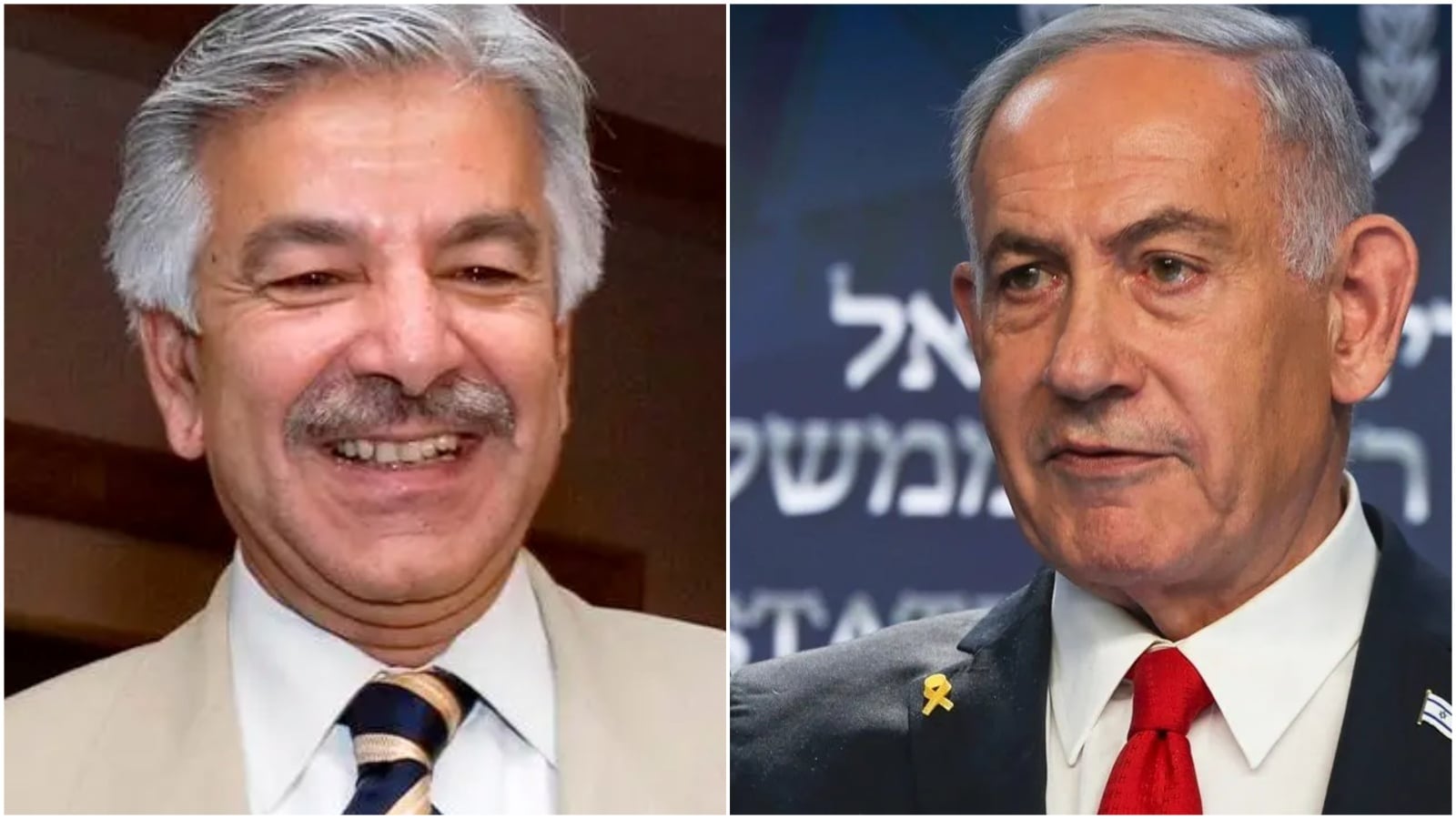
Diplomacy is usually a game of whispered threats and polite handshakes, but Pakistan's Defence Minister Khawaja Asif just threw the script into the fire. While Islamabad tries to position itself as the critical bridge between the U.S. and Iran, its top defense official decided to use his megaphone to call for Israel's annihilation. It's a move that hasn't just angered Jerusalem—it’s threatened to blow up the very peace talks Pakistan is supposed to be hosting.
The timing couldn't be worse. Pakistan has spent weeks trying to look like a neutral arbiter, even earning rare nods from Washington for brokering a fragile two-week ceasefire. But on Thursday, Asif took to X (formerly Twitter) to vent. He didn't just criticize Israeli policy; he went for the jugular, calling the country "evil" and a "curse for humanity." Most explosive of all was his claim that the state was a "cancerous" creation designed to "get rid of European Jews." Also making waves recently: The Gilded Cage and the Broken Bridge.
Benjamin Netanyahu didn't wait long to hit back. His office slammed the remarks as "outrageous," pointing out the obvious hypocrisy of a country claiming to be a peace mediator while its ministers pray for the destruction of one of the regional players. Honestly, it’s hard to argue with that logic. You can't be the referee if you're wearing the jersey of one of the teams and screaming at the other from the sidelines.
The Islamabad Peace Talks are Shaking
Right now, Islamabad is supposed to be a fortress of diplomacy. High-level delegates, including U.S. Vice President JD Vance and envoys like Jared Kushner, are heading there to turn a shaky truce into something permanent. But the atmosphere has turned toxic. Additional information regarding the matter are detailed by BBC News.
Israel isn't at the table in Islamabad, but its shadow is everywhere. The recent strikes in Lebanon—which killed over 300 people in a single day—have pushed Pakistani officials to the edge. Asif’s outburst was triggered by these attacks, which he labeled a "genocide." He’s not alone in that sentiment in Pakistan, but saying it out loud while you're trying to play the role of the world's most important middleman is a massive strategic blunder.
Why the European Jews Comment Matters
When Asif mentioned "getting rid of European Jews," he touched a nerve that goes back decades. He was essentially echoing a revisionist historical narrative that suggests Israel was only created so Europe could export its "Jewish problem" after World War II. It’s a line of thinking that many in the West and Israel view as a blatant "antisemitic blood libel," as Israeli Foreign Minister Gideon Sa’ar put it.
By framing Israel as a colonial project meant to purge Europe, Asif did two things:
- He stripped away any pretense of neutrality.
- He aligned himself with the most radical rhetoric coming out of Tehran.
If you’re the United States, how do you trust a mediator who uses the same vocabulary as the "Axis of Resistance"? You don't. You start looking for a new venue or a new host.
A Mediator in Name Only
Pakistan's role in the U.S.-Iran ceasefire was a rare moment of international relevance for a country usually bogged down by economic crises and internal politics. For a few days, it looked like Prime Minister Shehbaz Sharif and Field Marshal Asim Munir had pulled off a miracle.
Then came the Lebanon strikes. Israel claims it's defending itself against Hezbollah; Pakistan sees it as a deliberate attempt to sabotage the peace talks. Asif's deleted post—yes, he took it down after the firestorm—suggests that the Pakistani government is deeply divided. One side wants the prestige of being a global peacemaker. The other side can't stomach the optics of being "neutral" while Lebanon and Gaza are under fire.
What Happens to the Ceasefire Now
Despite the war of words, the delegates are still arriving. The U.S. wants this deal because it needs to de-escalate with Iran. Iran wants it because its economy is screaming for air. But the "neutral" ground of Islamabad now feels a lot like an enemy camp for anyone allied with the West.
Here is what you should watch for in the next 48 hours:
- Official Retractions: Look for the Pakistani Foreign Office to issue a "clarification" that distances the government from Asif's personal views.
- Israeli Pressure on Washington: Expect Netanyahu to push the U.S. to move future talks to a truly neutral location like Qatar or Oman.
- The Lebanon Factor: If Israel continues its offensive in Lebanon, Pakistan might be forced to officially abandon its mediator role to appease its own angry public.
The bottom line is simple. You can't scream for a country's destruction on Thursday and expect to be taken seriously as their peace broker on Saturday. Pakistan tried to have it both ways, and in the process, they might have just handed the spoilers exactly what they wanted.
If you're following the Islamabad talks, don't just look at the official communiqués. Watch the social media feeds of the ministers. That's where the real policy—and the real anger—is hiding.