Every time a public official vanishes on the brutal stretch of asphalt between Quetta and Panjgur, the media machine grinds into a predictable, lazy gear. Headlines scream about human rights violations, press releases from organizations like the Human Rights Commission of Pakistan flood the wires, and armchair pundits weep over the erosion of the judicial apparatus. It is the same script, recycled ad nauseam whenever an individual of modest prominence goes off the radar in Pakistan’s most misunderstood province.
Stop reacting to the noise. The disappearance of Judge Asadullah Raisani is a tragedy for his family, but treating it as an isolated anomaly of law enforcement failure is a profound intellectual error. The conventional narrative wants you to believe this is merely about a missing man in a lawless border territory. That framing is comfortable because it keeps the blame neatly pinned to rogue actors and institutional decay. It lets everyone pretend that the system is broken when, in reality, the system is operating exactly as its underlying power dynamics dictate. For an alternative look, see: this related article.
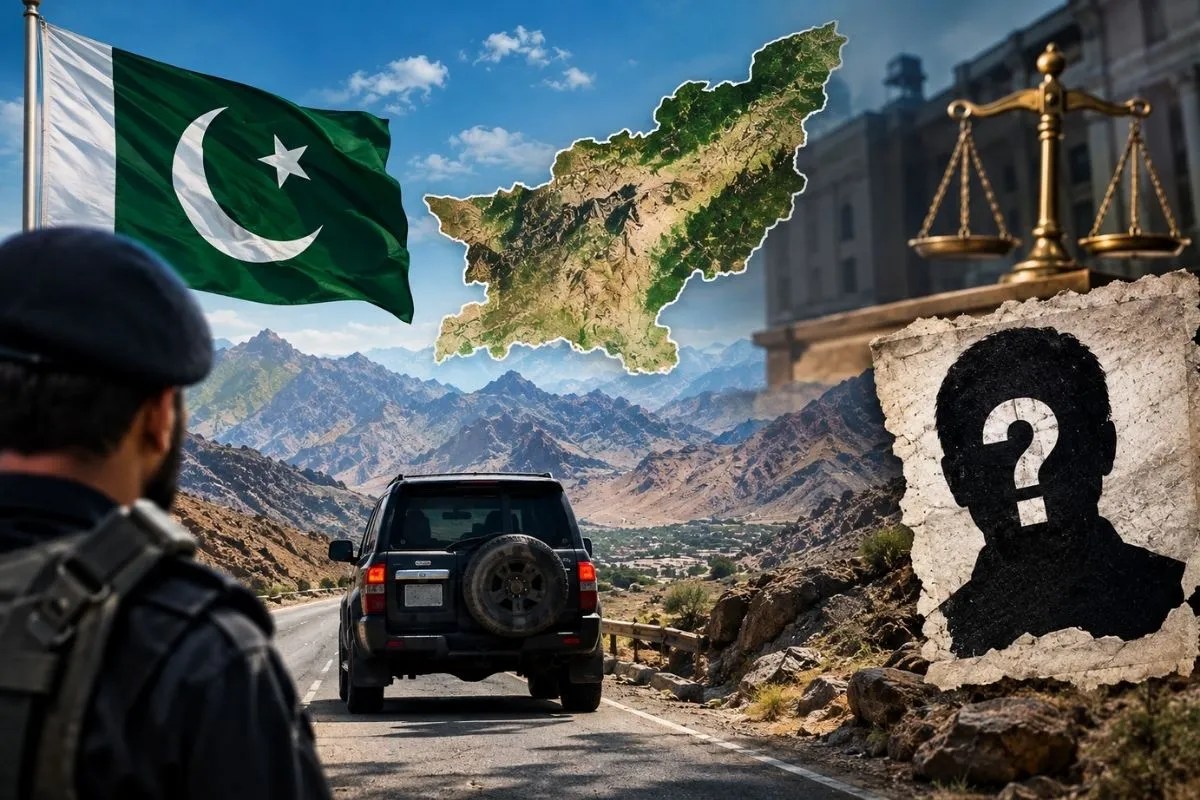
Look at the geography. The transit corridor connecting Quetta to Panjgur cuts through terrain where traditional authority structures, state writ, and insurgent networks collide in a permanent war of attrition. To view this abduction through the lens of standard civil jurisprudence is like trying to use a pocket calculator to fix a jet engine. You are applying the rules of a constitutional democracy to a theater of structural friction.
The Illusion Of State Control In The Periphery
For decades, the central discourse surrounding Balochistan has been paralyzed by a false binary. On one side, you have the security establishment insisting that everything is under control and that unrest is purely externally funded turbulence. On the other side, human rights advocates point to every enforced disappearance as proof of a fascist dystopia devouring its own citizens. Both sides are peddling comforting fictions. Further analysis on this trend has been published by Associated Press.
The unvarnished truth is that the state does not possess a monopoly on violence or justice in these remote corridors, and pretending otherwise is dangerous. When a sitting judge goes missing on a highway notorious for ambushes and checkpoints, it exposes the hollow core of administrative governance.
Imagine a scenario where every single administrative district functioned with absolute transparency and rule of law. Panjgur would not be a black box where state functionaries vanish into thin air without a trace. Yet, we act surprised every time the machinery of justice gets swallowed by the very vacuum it was designed to regulate. The crisis is not that a judge was taken. The crisis is that the state built an administrative facade over a vacuum and expected everyone to pretend it was a concrete foundation.
Why The Human Rights Outrage Machine Fails
Organizations churn out urgent appeals, express grave concern, and demand immediate judicial inquiries. Then what? The cycle repeats next month with an activist, a journalist, or a mid-level bureaucrat.
This routine outrage is a substitute for hard analysis. It treats symptoms while ignoring the structural architecture of the conflict. The Balochistan insurgency and the counter-insurgency apparatus that counters it are locked in an ugly symbiosis. Every time a high-profile figure goes missing, the narrative hardens on both sides. Insurgents chalk it up to another casualty of state overreach, while security apologists hint at complex internal rivalries or militant infiltration.
Meanwhile, the actual mechanics of governance grind to a halt. Judges stop making bold rulings. Prosecutors look the other way. Local administration becomes an exercise in self-preservation rather than public service. When the arbiters of the law become the targets, the message to the populace is unambiguous: the writ of the constitution stops wherever the paved road ends.
Redefining The Question
People ask: How can we secure the judges and officials traveling through volatile transit routes?
That is the wrong question entirely. It assumes that the primary problem is a logistical deficit—that if we just add more police escorts, install more roadblocks, or issue satellite phones, the problem will vanish.
The question we should be asking is: Why do we maintain the fiction of normal judicial administration in regions where the social contract has been completely shredded?
If the state cannot guarantee the basic safety of a judicial officer on a primary provincial route, continuing to dispatch civil servants into that meat grinder without a radical restructuring of security policy is institutional negligence. You cannot run a nineteenth-century administrative model in a twenty-first-century asymmetric war zone and expect different outcomes.
The Uncomfortable Road Ahead
Fixing this requires abandoning the theater of condemnation. Condemnations do not deter armed groups, and they do not reform corrupted administrative pipelines.
First, we must acknowledge that legal institutions in high-conflict zones cannot operate independently of a comprehensive political settlement. Treating judicial security as a standalone policing issue is like trying to put out a forest fire with a garden hose while ignoring the wind.
Second, the central government must stop treating Balochistan as an extraction colony and a security problem to be managed through rotational postings of terrified bureaucrats and judges. Until the structural grievances—ranging from resource distribution to the opaque handling of missing persons across the board—are addressed with brutal, unvarnished honesty, every high-profile abduction will merely be another predictable chapter in a tragedy of our own making.
The next time a headline breaks about a missing official in the deep south of the province, do not look for comfort in the ritualistic expressions of concern. Look at the map, look at the incentives driving the actors on the ground, and recognize that until the foundational fractures of the region are repaired, nobody on that road is safe.