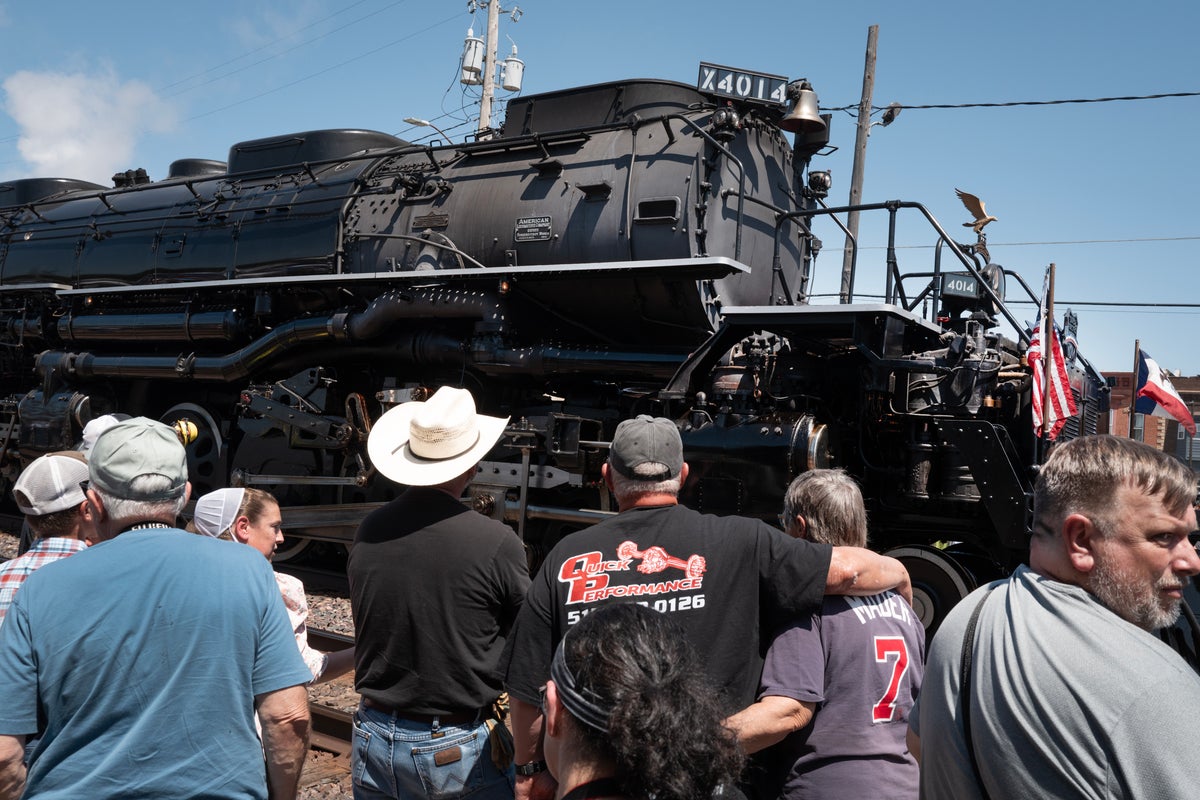
The media loves a good historical freak-out. When a vintage steam locomotive rolls through a Pennsylvania town and a hundred spectators complain of feeling unwell, the headlines write themselves. It is the classic narrative: old, dirty, industrial-era technology poisoning unsuspecting modern citizens.
But the immediate rush to condemn historical rail operations misses the entire point of how localized emissions, crowd dynamics, and atmospheric conditions actually interact. Meanwhile, you can read other stories here: The Dangerous Illusion of Justice in Transnational Press Attacks.
We are looking at the wrong culprit. The lazy consensus blames the vintage machine for a sudden public health crisis. The reality is far more nuanced, rooted in a perfect storm of stagnant air physics, modern hypersensitivity, and the compounding emissions of the thousands of idling cars brought in by the spectators themselves.
The Physics of the Plume
Let us look at how coal combustion actually works in a moving locomotive compared to stationary sources. A steam engine under load produces particulate matter and sulfur dioxide ($SO_2$). There is no debating that. However, the dispersion mechanics of a moving train are drastically different from a factory smokestack. To explore the complete picture, check out the recent article by Associated Press.
Under normal atmospheric conditions, the thermal buoyancy of hot exhaust forces the plume upward, rapidly diluting it in the upper air currents. For a crowd at ground level to experience acute symptoms, you need an atmospheric inversion—a layer of warm air trapping cooler air, and emissions, close to the ground.
When a hundred people cough at a train siding, they are not just inhaling historical coal smoke. They are sitting in a microclimate choked by the hundreds of modern diesel trucks and gasoline SUVs idling in nearby gridlocked parking lots, waiting to catch a glimpse of the passing engine. The locomotive is the visible target. The modern internal combustion engines surrounding it are the actual, invisible source of the concentrated ground-level ozone and fine particulates.
The Sensation of Nostalgia vs. Reality
I have spent two decades managing historical industrial sites and analyzing environmental compliance. I have seen organizations spend millions trying to mitigate risks that are purely perceptual, while ignoring systemic infrastructure flaws right under their noses.
People flock to these events expecting a sanitized, Disney-ified version of history. They want the aesthetic of the 19th century with the air quality of a modern surgical suite. When real history hits them—complete with unburned carbon and sulfurous compounds—the shock is immediate.
This is not a public health crisis caused by a single train ride; it is a mass exposure event driven by poor crowd management and a complete lack of regional transit planning for spectators.
- The Exposure Myth: A single exposure to passing coal smoke does not cause chronic illness. It causes temporary mucosal irritation.
- The Real Danger: The real hazard is the thousands of spectators idling their vehicles for hours in a concentrated zone, creating a localized pocket of high-density pollution that lingers long after the steam train has gone.
Dismantling the Standard Questions
Whenever these incidents happen, the public asks the same flawed questions. Let us dismantle them one by one.
Should we ban vintage steam excursions from populated areas?
Absolutely not. Banning historical rail excursions to "protect" air quality is like banning backyard barbecues to fight global warming. It is a drop in the bucket. A vintage locomotive runs a few times a year. The daily commuter traffic through that same Pennsylvania town introduces more heavy metals and carcinogens into the local ecosystem over a single week than a steam engine does in an entire season.
Why did so many people get sick at once if the train isn't solely to blame?
Look at the density. When you pack thousands of people into a tight geographical bottleneck—often a valley or a low-lying trackside area—with zero wind, any emission source will concentrate. Combine the train's brief, high-volume plume with the sustained, low-volume emissions of spectator vehicles, and you create an accidental chemical soup. The train acted as the catalyst, but the crowd's own transport infrastructure provided the baseline toxicity.
The Actionable Fix Nobody Wants to Hear
If municipal leaders actually want to prevent these incidents, they need to stop looking at the tracks and start looking at the parking lots.
First, enforce strict no-idling zones for all spectator vehicles within a two-mile radius of the tracks. If people want to watch the train, they park far away and walk, or take a shuttle bus. This eliminates the baseline pollution layer that traps the train's exhaust.
Second, historical societies must utilize meteorology, not just mechanics. If an atmospheric inversion is forecasted, the excursion must be delayed. Running a high-emission vehicle when the air cannot disperse it is operational negligence, regardless of how historical the equipment is.
We must tolerate the downsides of our heritage if we want to preserve it. Industrial history is loud, dirty, and visceral. If you want pristine air, do not stand downwind of a living piece of 19th-century engineering in a crowded valley. Stay home.