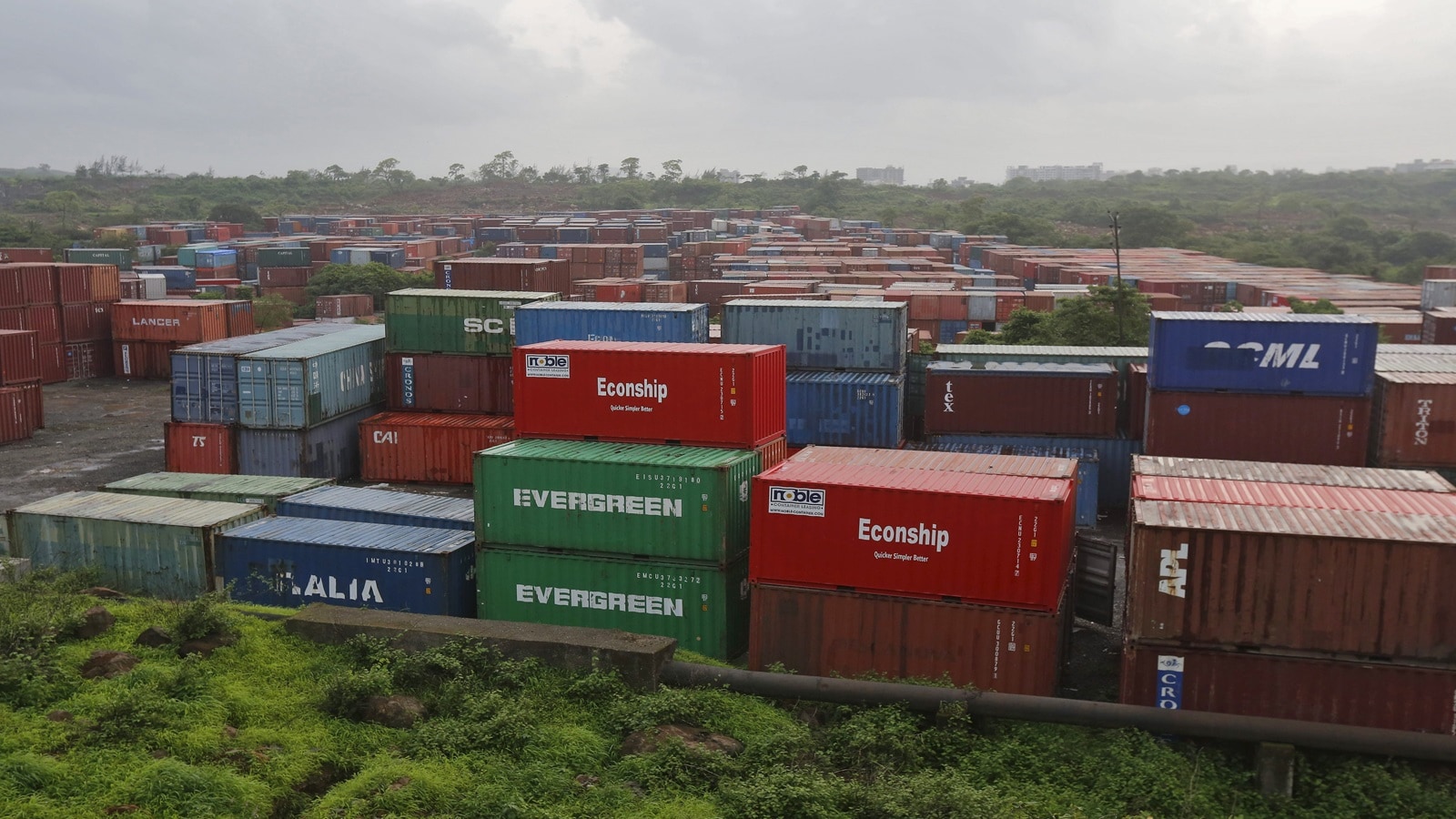
Smells like burning cardboard and damp warehouse floors. That is the scent of a global supply chain sweating under fluorescent lights.
Listen closely. The rhythmic clack of a sorting machine. The urgent shout of a fork-lift driver cutting too sharp around a corner. Somewhere inside a sprawling port facility on the edge of a bustling industrial corridor, a small brown box sits waiting. Stamped neatly across its side are three sharp words. Made in India.
Except the box didn't start its life anywhere near the subcontinent.
Weeks ago, thousands of miles away across choppy grey waters, the individual components of that box were cast in heavy industrial molds inside a sprawling manufacturing plant in Guangdong. They were wired by technicians working under the hum of high-ceiling fans, boxed in generic containers, and loaded onto a massive container ship. But trade rules are shifting. Walls are rising. Tariffs are sharpening like kitchen knives. When political winds blow cold from Washington, carrying sweeping mandates designed to choke off direct imports from specific superpowers, clever logistics managers find open windows where doors used to be.
Consider what happens next: the ship takes a slight detour.
The cargo does not clear customs at its final destination immediately. Instead, it drifts into a neutral port zone. Workers unload the container. They unpeel the original shipping labels. They swap out instruction manuals printed in Mandarin for ones written in English. They slide the components into slightly different outer casings—assemblies put together quickly by a local workforce earning local wages. A new certificate of origin is drafted, stamped, and signed.
The paperwork says India. The origin says transformation. The truth says something entirely different.
This is the chaotic, high-stakes art of transshipment. It is a puzzle of geography and legal loopholes that keeps trade lawyers awake at night and gives global economists permanent headaches. When an administration like Donald Trump's cracks down on direct trade corridors, it treats borders like rigid, unyielding walls. But commerce acts like water. It finds the cracks. It pours through the smallest gaps, seeping around embargoes and pooling in countries that serve as convenient waypoints.
Let us meet Aarav.
Aarav is a hypothetical logistics coordinator sitting in a cramped, windowless office filled with endless spreadsheets and ringing phones. He is not a villain plotting economic subversion. He is a guy trying to keep his company solvent while navigating a maze of shifting protectionist policies. When a client calls demanding to know why their profit margins are evaporating under heavy tariffs, Aarav does not talk about geopolitics. He talks about route optimization. He talks about assembly thresholds.
"If we route the components through a facility in Chennai," Aarav explains to a junior analyst, pointing a highlighter at a large wall map, "we cross the minimum local value-addition threshold. Legally, the product transforms. Economically, we survive."
That word value-addition is where the entire modern global economy pivots on a razor blade.
International trade law is built on a set of polite fictions. It assumes a product has a single home. It assumes you can point to a widget and definitively state where its soul was forged. But reality is messy. A smartphone screen might be manufactured in South Korea, its microchips designed in Silicon Valley, its rare earth metals mined in Africa, its casing molded in China, and its final screws tightened in India.
When a government slaps a steep penalty tax on anything originating from China, it triggers a scramble to alter the genealogy of goods. Companies look for nations with preferential trade agreements or looser tariff structures. They ask a simple question: How much processing needs to happen in Country B before customs officials stop seeing Country A?
Sometimes the answer is a rigorous transformation. Factories expand. Local workers get jobs assembling parts, testing circuits, and packaging goods. In these moments, the paper passport matches reality. Real infrastructure grows. Real skills transfer to a new workforce.
Other times, the transformation is a bureaucratic magic trick. A box sits in a warehouse for forty-eight hours, gets a new sticker slapped on its lid, and moves on. No new skills learned. No lasting infrastructure built. Just an expensive shell game played across international waters to dodge the tax man.
This is where the transshipment crackdown bites hardest.
Regulators are not stupid. Customs and Border Protection agencies have grown increasingly sophisticated, using data analytics, shipping telemetry, and mandatory component tracking to sniff out fraudulent routing. When authorities suspect a product is merely wearing a disguise, they halt entire shipments at the dock. Warehouses back up. Supply chains stutter. Small businesses face sudden, crippling cash flow crises because a container holding half their seasonal inventory is sitting in a customs holding pen while inspectors debate whether a screw counts as substantial transformation.
The tension between protectionist policy and commercial ingenuity creates a strange economic theater. On one side, policymakers stand at podiums proclaiming the defense of domestic industries against unfair competition. On the other side, executives and supply chain strategists plot clever detours across oceans, treating global trade routes like a complex video game where every new rule simply unlocks a new strategy for bypassing the barrier.
Think about the consumer standing at the end of this long, convoluted chain.
You walk into a brightly lit store or click purchase on a sleek website. You pull a sleek gadget out of its packaging. You see the country of origin printed in small font on the back. You feel a sense of clarity. You trust that the label tells a complete story.
It does not.
Behind that label lies a hidden history of political maneuvering, clever accounting, shifting shipping lanes, and workers in multiple hemispheres whose daily labor is caught in the crossfire of international trade wars. The label is a conclusion, but the reality is an ongoing negotiation between governments trying to draw lines on a map and markets determined to erase them.
The ship pulls away from the dock, churning dark water into white foam. Another container is secured in the hold, carrying parts that crossed borders before they ever crossed minds, waiting for their next stop on a planet too interconnected to ever truly be pulled apart.