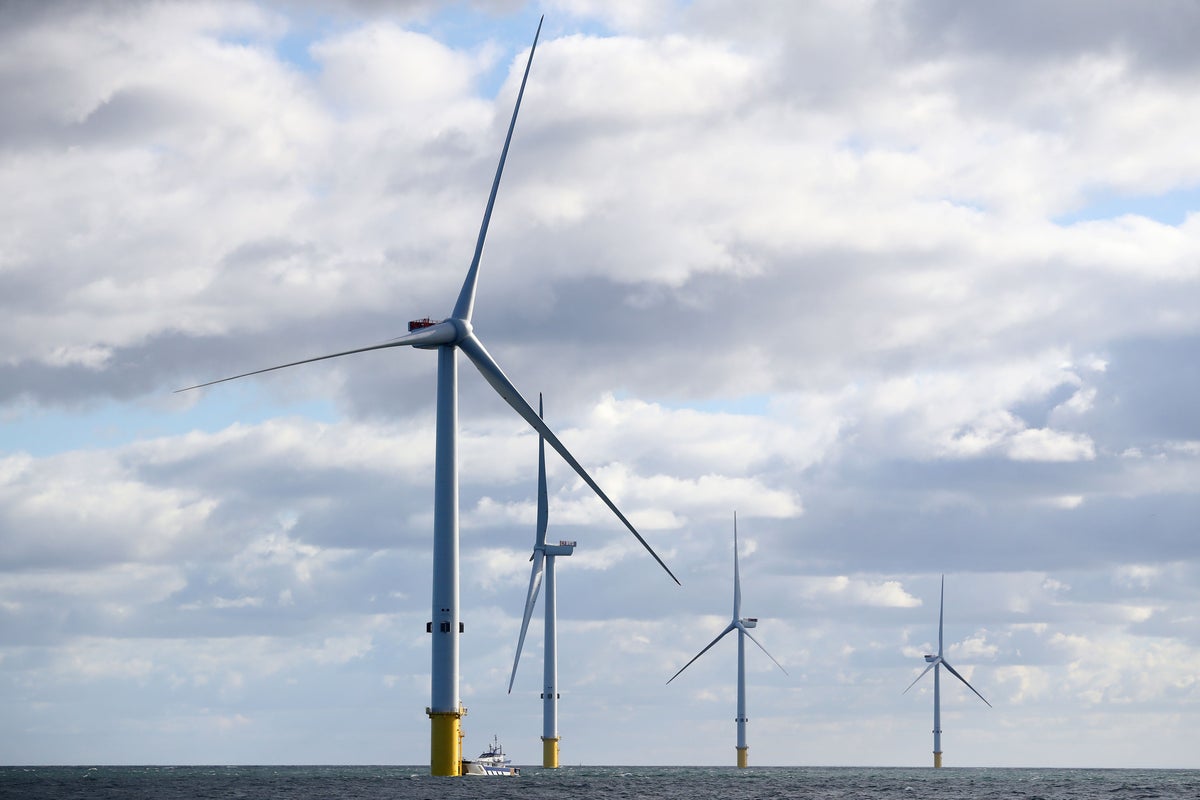
The headlines are bleeding outrage. Critics are screaming about wasted taxpayer capital, derailed climate goals, and a catastrophic setback for renewable infrastructure. The mainstream narrative surrounding the Trump administration's decision to shell out $765 million to cancel offshore wind leases is entirely predictable. It frames the buyout as political theater—a costly, ideological assault on green progress.
The mainstream narrative is completely wrong.
In reality, paying three-quarters of a billion dollars to kill these specific offshore wind projects isn't a failure. It is a masterclass in sunk-cost mitigation. It is an act of financial mercy for both the taxpayer and the utility ratepayer. The lazy consensus among environmental pundits and surface-level business analysts is that a signed lease equals a viable project. They view these cancellations as a step backward. They fail to look at the brutal, unyielding physics of energy economics.
I have spent years analyzing capital allocation in infrastructure markets. I have watched developers blow through hundreds of millions of dollars chasing projects that were fundamentally broken on the drawing board. The offshore wind sector, in its current state, is an economic zombie. Keeping it alive through endless federal life support is far more expensive than pulling the plug.
Paying a termination fee to escape a compounding financial disaster is standard corporate hygiene. When the math changes, you cut your losses. You do not keep digging just because you like the shape of the shovel.
The Myth of Cheap Offshore Energy
To understand why canceling these leases is a victory, you have to understand the massive gap between the projected cost of offshore wind and its actual operational reality.
Advocates love to point to the falling costs of onshore wind and solar photovoltaic systems. They then apply that exact same optimism to massive turbines anchored in moving saltwater miles away from the coastline. This is a severe intellectual error.
[Image of offshore wind turbine structural components]
Offshore wind is not just onshore wind with a view. It is one of the most complex, capital-intensive marine engineering feats on earth. The levelized cost of energy (LCOE) for offshore wind is heavily weighed down by factors that cannot be optimized away by software or mass production:
- Marine Logistics: You are not driving a flatbed truck to a field. You require highly specialized wind turbine installation vessels (WTIVs). Due to protectionist maritime laws like the Jones Act in the United States, the supply of these vessels is artificially restricted and astronomically expensive.
- Corrosive Degradation: Saltwater environments destroy mechanical equipment. The operations and maintenance (O&M) costs for offshore installations are exponentially higher than onshore counterparts, requiring continuous specialized marine deployment just to keep the blades turning.
- Transmission Grid Locking: Generating power thirty miles out at sea is useless unless you can bring it inland. The high-voltage direct current (HVDC) subsea cables and onshore substation upgrades required to integrate this intermittent power into the existing grid represent a massive, अक्सर hidden cost that developers routinely understate.
When these leases were initially auctioned, developers bid based on a macroeconomic fantasy: near-zero interest rates, stable global supply chains, and cheap steel.
None of those conditions exist today.
The Macroeconomic Squeeze
The global economy shifted violently under the feet of these projects. Inflation drove the cost of specialized labor and raw materials through the roof. Simultaneously, central banks raised interest rates to combat that inflation.
For a tech startup, higher interest rates are annoying. For a capital-intensive infrastructure project where 80% of the lifetime cost is front-loaded into initial construction, higher interest rates are fatal.
Imagine a scenario where a developer plans a $3 billion wind farm financed with 70% debt. When interest rates jump from 2% to 6%, the cost of servicing that debt balloons by tens of millions of dollars annually. That capital cost increase completely erases the project’s profit margins.
Before the administration stepped in with the cancellation payout, major developers like Orsted, Equinor, and BP were already taking massive write-downs on US offshore wind assets. They were actively trying to renegotiate power purchase agreements (PPAs) because the price of electricity they originally agreed to sell was no longer high enough to cover their soaring construction costs.
Had the federal government forced these projects forward, one of two things would have happened:
- The Ratepayer Bailout: Utilities would have been forced to buy hyper-expensive wind energy, passing a massive premium directly onto residential and commercial electricity bills.
- The Subsidy Pit: The federal government would have been trapped in a cycle of issuing endless emergency tax credits and direct subsidies to keep bankrupt developers afloat.
A $765 million exit fee is a bargain compared to a multi-billion-dollar, multi-decade subsidy trap.
Dismantling the Green Jobs Illusions
Every time a politician stands in front of a microphone to defend a compromised energy project, they play the job creation card. They promise thousands of high-paying, permanent union jobs in coastal communities.
Let us be brutally honest about where the money in offshore wind actually goes.
The manufacturing supply chain for large-scale offshore wind components—specifically the massive nacelles, specialized generators, and subsea cables—is heavily concentrated in Europe and Asia. The United States lacks the specialized domestic manufacturing capacity to build these specific components at scale.
Consequently, the vast majority of the capital deployed in these projects immediately flows out of the country to foreign manufacturers. The local "green jobs" created are largely temporary construction and maritime transport roles. Once the turbines are anchored and spinning, the permanent operational workforce required to maintain them is remarkably small.
If the goal is genuine domestic economic stimulus and energy security, sinking billions into an industry reliant on foreign supply chains and heavily restricted by domestic maritime law is an incredibly inefficient way to deploy capital.
The True Path to Decarbonization
Canceling these unviable offshore leases does not mean abandoning clean energy goals. It means allocating capital to technologies that actually offer a return on investment, both financially and environmentally.
If you have three-quarters of a billion dollars to spend on transforming the energy sector, offshore wind is a terrible place to put it. Consider the alternatives that offer far superior energy density, reliability, and cost-effectiveness:
Nuclear Energy Revitalization
Nuclear power plants provide baseline power. They operate 24 hours a day, 7 days a week, regardless of weather conditions. Advanced small modular reactors (SMRs) offer a scalable, predictable way to decarbonize the grid without requiring millions of acres of open ocean or massive new transmission corridors.
Onshore Wind and Solar Photovoltaic Optimization
The cost per megawatt-hour for onshore solar and wind is a fraction of the cost of offshore installations. The supply chains are mature, the logistics are simplified, and the regulatory hurdles are significantly lower.
Grid Modernization and Storage
The bottleneck for renewable energy is no longer generation; it is storage and distribution. Investing capital into utility-scale battery storage and high-efficiency transmission lines yields far greater grid stability than adding intermittent, unpredictable offshore generation sources to a fragile network.
The High Cost of Sentimentality
The fiercest opponents of this lease cancellation are not arguing from a position of economic spreadsheet reality. They are arguing from sentimentality. They have invested emotional capital into the visual iconography of the offshore wind turbine as a symbol of progress.
But symbols do not power factories. Symbols do not lower utility bills for working families.
Admitting that a project or an entire asset class is no longer viable takes courage. It requires looking past the political sunk cost and making a cold, calculated decision based on the numbers as they exist today, not as they existed in a 2019 investor deck.
The administration’s decision to cut ties with these stalled offshore wind leases is a recognition of reality. It prevents the creation of an energy infrastructure system that is structurally dependent on permanent government bailouts. It protects the consumer from skyrocketing energy costs. Most importantly, it frees up the economic landscape to focus on energy solutions that actually work.
Stop mourning the loss of inefficient, cost-prohibitive offshore wind farms. Start demanding energy infrastructure that can survive on its own merits.