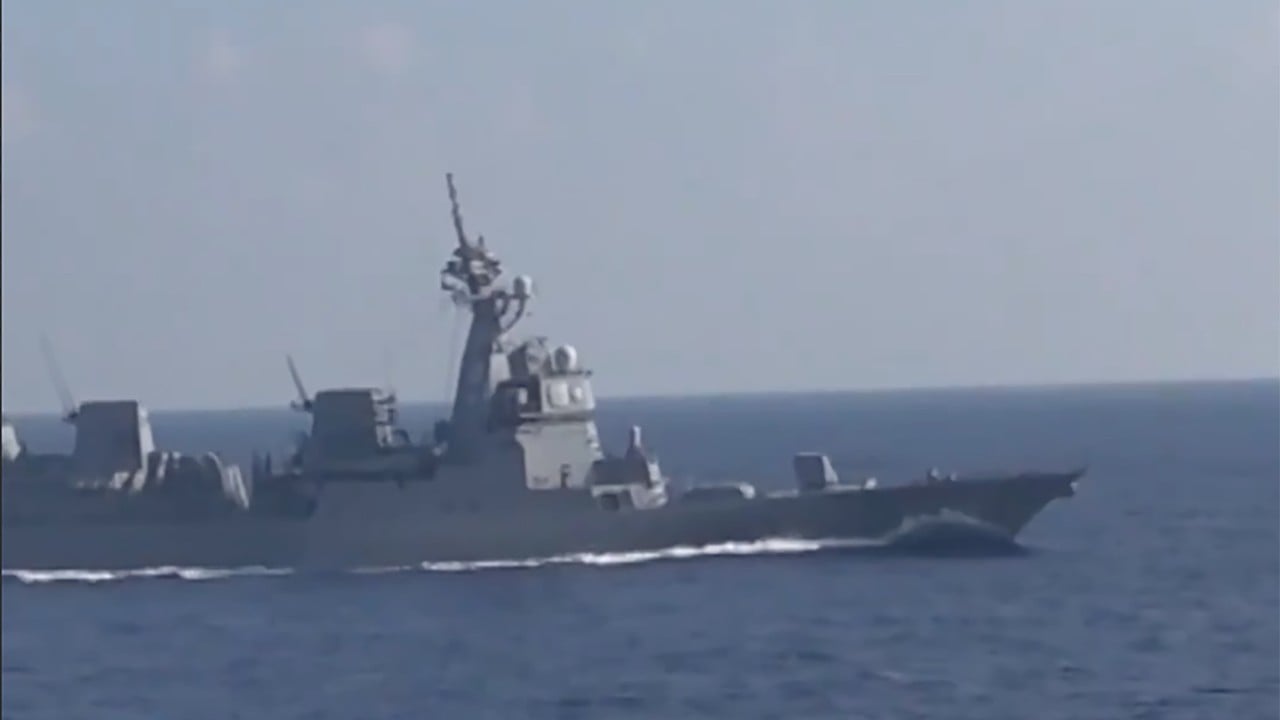
Sending a massive carrier strike group into the open ocean for 40 days is not a routine patrol, no matter what official press releases claim. When the Chinese aircraft carrier Liaoning slipped back into its home port on June 22, 2026, it wrapped up more than just a standard training cycle. It ended a high-stakes standoff with the Japanese military that played out across thousands of miles of open water.
State media wasted no time broadcasting dramatic footage of the deployment. The videos showed close-range encounters, warplanes buzzing through the clouds, and surface warships shadowing each other at dangerously close distances. Beijing claims it professionally warned off multiple Japanese provocations during the aircraft carrier drills. Tokyo tells a very different story, framing its actions as standard surveillance against an increasingly aggressive neighbor. If you enjoyed this post, you might want to read: this related article.
If you only read the surface headlines, you miss the actual tactical shift happening right now in the Western Pacific. This deployment was not just about showing off the Liaoning. It was a live-fire test of an entirely new naval ecosystem designed to push foreign militaries out of China's backyard.
The Reality of Close Range Encounters in the Western Pacific
The official reports from China's state broadcaster, CCTV, painted a tense picture. They described repeated close-range tracking, harassment, and provocation by Japanese ships and aircraft. According to the Chinese military, the Liaoning carrier group had to stay on high alert, scrambling fighter jets and shifting battle formations to handle these encounters. For another angle on this event, check out the latest update from NPR.
What does a warning off actually look like in the middle of the ocean? It is a dangerous game of chicken. It means a Chinese guided-missile destroyer deliberately cutting across the path of a Japanese surveillance vessel. It involves carrier-based J-15T fighters locking their radars onto Japanese spy planes. This is done to send a clear message: back off or risk an accident.
Japan views these encounters from an opposite perspective. The Japanese Ministry of Defense has been incredibly transparent about tracking the Liaoning. They regularly publish detailed maps showing the exact coordinates of the Chinese fleet, the names of the escort ships, and the number of flight operations launched from the carrier deck. For Japan, this is not provocation. It is essential self-defense monitoring. When an enemy carrier operates right outside your maritime borders, you watch every single move they make.
What Made the 2026 Liaoning Drills Different
Most Western analysts look at the Liaoning as a starter carrier. It is an old Soviet hull, modified and rebuilt, using a ski-jump ramp instead of modern steam or electromagnetic catapults. Because of this, people often dismiss its actual combat utility. That is a massive mistake.
During this 40-day run through the South China Sea and the Western Pacific, the Chinese navy proved it has grown past the learning phase. They did not just sail in a straight line. The carrier group executed complex integrated system training, simulated anti-ship strikes, and ran continuous air defense networks.
The real surprise of these exercises was the inclusion of an amphibious assault ship group. This was the first time the Chinese navy publicly ran a joint exercise combining a full aircraft carrier strike group with a Type 075 amphibious assault ship, specifically the Anhui.
Think about what that combination means. A carrier group alone provides massive air superiority and long-range strike power, but it cannot seize or hold territory. An amphibious assault ship carries hundreds of marines, helicopters, and landing craft, but it is incredibly vulnerable to air attacks. By marrying these two forces together in the far seas, China demonstrated a complete power projection package. They are actively practicing how to seize islands under the protection of a carrier air wing.
The Invisible Battle for the First Island Chain
To understand why Japan is so obsessed with tracking these drills, you have to look at a map. For decades, the Chinese navy was effectively bottled up behind the First Island Chain. This is a strategic line of islands stretching from the Japanese mainland down through Okinawa, Taiwan, and the Philippines.
[Image map of the First Island Chain in the Western Pacific]
If China cannot move past this chain safely during a conflict, its navy is effectively useless for global power projection. The waters east of the island chain, extending into the Philippine Sea, are where any future conflict would be won or lost.
Japan knows this. Every time the Liaoning or its sister ship, the Shandong, transits through the Miyako Strait or the Bashi Channel to enter the Western Pacific, Tokyo treats it as an existential threat. The Japanese military deploys its own destroyers and scrambles fighter jets from bases in Okinawa to keep eyes on the fleet.
During these recent drills, the Liaoning group operated extensively east of the Philippines' Luzon island. This places the Chinese fleet directly in the waters where US and allied forces would try to reinforce Taiwan during a crisis. By conducting live-fire weapons tests and air supremacy drills in this specific pocket of the ocean, China is sending a direct message to both Tokyo and Washington. They are showing that they can operate in the very waters the allies plan to use as a staging ground.
How the Tactical Matchup Has Shifted
The hardware involved in these encounters shows just how fast the military balance is changing. During the early days of Chinese carrier operations, the fleet relied heavily on basic destroyers and older support ships. This time, the escort fleet included advanced Type 055 cruisers and even the newer Type 054B guided-missile frigates.
On the aviation side, the training featured round-the-clock operations of the J-15T fighter jet. These planes were seen conducting night takeoffs, complex aerial refueling maneuvers with YY-20 tankers, and simulated combat air patrols. This level of operational tempo strains crews and equipment to their absolute limits. The fact that the Chinese navy sustained this for over 40 days proves their logistical and maintenance pipelines are maturing.
Japan is fighting back with its own naval upgrades. Tokyo is currently converting its Izumo-class helicopter destroyers into light aircraft carriers capable of operating American-made F-35B stealth fighters. When Japanese ships shadow the Liaoning, they are not just taking photos for press releases. They are collecting electronic intelligence, recording the radar signatures of China's newest warships, and analyzing the flight patterns of the J-15T fighters.
The Dangerous Myth of Routine Military Operations
Both sides use carefully chosen language to manage public perception. The Chinese Ministry of National Defense insists that its far-seas training is completely routine, strictly adheres to international law, and does not target any specific nation. Japan claims its close-range surveillance is standard maritime awareness.
Do not buy into the corporate military speak from either side. These operations are inherently provocative, and they are meant to be. China uses these massive deployments to normalize its presence in international waters that the US and Japan have dominated for three-quarters of a century. They want the world to get used to seeing Chinese carriers in the Western Pacific.
The danger here is not a planned outbreak of war. The real risk is a tactical miscalculation on the high seas. When you have heavily armed fighter jets flying within visual range of each other, or warships maneuvering just hundreds of yards apart, the margin for error is tiny. A single pilot pulling the wrong trigger or a helmsman misinterpreting a command could spark a major international crisis in minutes.
If you want to track where this tension goes next, look away from the official statements and watch the deployment schedules. The Chinese navy is building more carriers, with the advanced electromagnetic-catapult-equipped Fujian deep into its sea trials. As more carriers enter service, these 40-day far-seas deployments will become more frequent. Japan will keep sending its own assets to shadow them, and the encounters will only get tighter, louder, and more dangerous. Keep an eye on the transit routes through the Miyako Strait, because that is where the real friction will show up next.