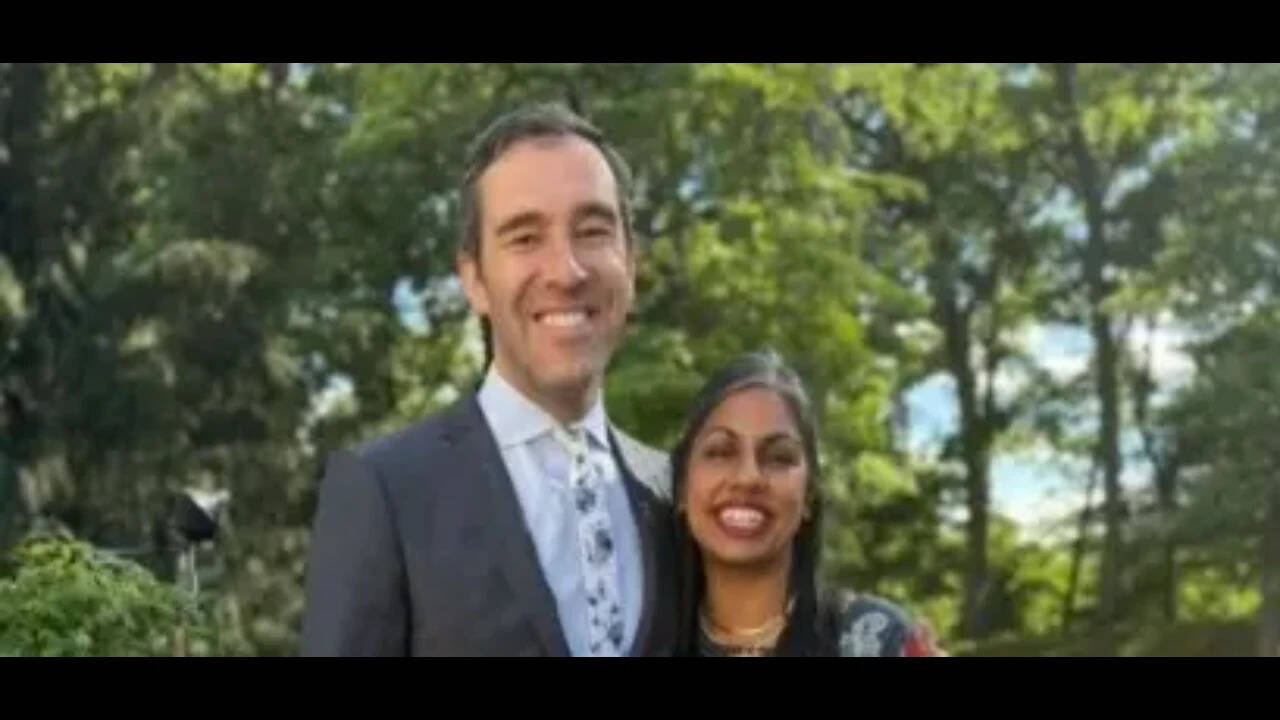
You post a sunny family photo on social media. You share a quick note celebrating your life, your partner, and your kids. Then the internet comes for your children.
That's exactly what happened to Baltimore City Council President Zeke Cohen. He shared a picture with his wife, Dr. Reena Ardeshna, and their kids. In the caption, he wrote a brief line about his "HinJew" blended family. For a different view, consider: this related article.
The backlash was instant, ugly, and incredibly revealing.
Commenters swarmed the post to tell Cohen that his kids are "0% Jewish." Others claimed it was just a regular Indian-American family and that the Jewish identity had been completely erased. The internet gatekeepers of purity showed up in full force. Related analysis regarding this has been provided by Reuters.
This isn't just an isolated incident of social media nastiness. It highlights a massive, ongoing anxiety about identity, multiculturalism, and who gets to decide who belongs to a community.
The Anatomy of an Internet Attack
When Zeke Cohen used the term "HinJew," he was using a common, affectionate shorthand for families that blend Hindu and Jewish traditions. It's a term used by hundreds of couples across the United States who navigate two ancient, rich cultures.
The comments on X quickly turned toxic. Troll accounts targeted the kids directly.
"You're Jewish, they're Hindu. Important to keep that organized," one person commented.
Another added, "You mean Indian Hindu family. Those aren't Jews. You know that."
The anger from the trolls stems from a rigid view of lineage. In traditional Jewish law, Jewish identity is passed down through the mother. Because Dr. Ardeshna is of Indian Hindu heritage, traditionalists argue the children aren't halachically Jewish.
But hiding behind theological arguments to bully a family online is weak. The reality of modern American life looks completely different from the rigid boxes these commenters want to enforce.
Modern Identity Doesn't Fit in a Spreadsheet
People love to audit other people's families. They want clear lines, neat percentages, and strict categories. But real life is messy.
Zeke Cohen is a prominent public servant in Baltimore. His wife is a psychiatrist at MedStar Harbor Hospital who trained at Johns Hopkins. They're highly educated professionals raising a family in a pluralistic society. Expecting their household to mimic a century-old village structure is absurd.
The "0% Jewish" comment isn't just factually silly—genetics and culture don't work in flat zeros and hundreds—it ignores how identity is actually formed. Children in interfaith households don't live as math equations. They experience the holidays, the values, the food, and the histories of both parents.
American Judaism has been adapting to this reality for decades. The Reform movement, which is the largest Jewish denomination in the US, recognized patrilineal descent back in 1983. If a child has one Jewish parent—mother or father—and is raised with a Jewish identity and education, they are recognized as Jewish.
The internet trolls act like they are defending a faith, but they're usually just exposing their own discomfort with changing demographics.
The Hypocrisy of Cultural Gatekeeping
Gatekeepers always claim they want to protect a culture from fading away. But their methods do the exact opposite.
When you attack an interfaith couple for celebrating their blended identity, you don't push them to choose your side. You alienate them. You ensure they want nothing to do with a community that treats their children as outsiders or fractions.
I've seen this play out constantly in cultural discussions. The loudest voices demanding purity usually contribute the least to actual community building. They sit behind anonymous profiles, typing out vitriol, while families like the Cohens are out in the real world trying to build bridges between distinct traditions.
Hinduism and Judaism actually share deep cultural commonalities. Both emphasize family, education, historical memory, and a strong sense of community. Blended "HinJew" weddings often feature a beautiful mashup of a chuppah and a mandap. Families celebrate both Diwali and Hanukkah. It's an expansion of a child's worldview, not a reduction.
How Families Can Navigate Online Hostility
If you're raising a multicultural family, the public square can sometimes feel like a minefield. You don't owe the internet an explanation of your private life, but you do need strategies to protect your peace.
First, stop engaging with the purists. You will never convince an anonymous commenter that your family's lived experience is valid. They aren't looking for a nuanced discussion on patrilineal descent or cultural synthesis. They want a reaction.
Second, double down on your internal family narrative. Talk to your kids explicitly about their heritage. Let them know that their identity is defined by the love, traditions, and values practiced inside your home, not by the metrics of strangers on a screen.
The world is moving toward more blending, not less. The angry comments on a politician's family photo are the desperate gasps of a rigid mindset that's losing its grip on the culture.
Block the trolls. Celebrate the blend. Keep moving forward.