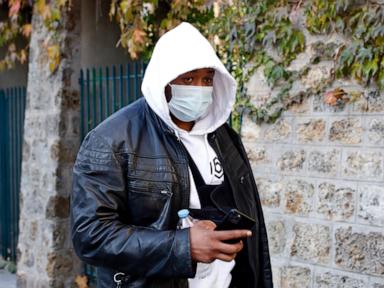
Most coverage of the November 20, 2026 Paris criminal court verdict treats it like another standard police brutality conviction. It isn't. When three Paris police officers were sentenced to five years in prison—with varying portions suspended—for beating Black music producer Michel Zecler, the court did something French judges almost never do. It officially recognized racism as an aggravating factor.
"What is very important is that the racist nature of the violence he suffered has been recognized," Zecler's attorney, Serge Money, told reporters outside the Palais de Justice after the ruling. "This is a first."
If you've followed French policing over the last decade, you know why Money used those exact words. French courts routinely treat police misconduct as isolated lapses in judgment, stripping away any racial context even when victims and witnesses report slurs. In fact, investigating judges had initially dismissed the racist dimension of Zecler's case altogether due to a supposed lack of evidence. Convincing a criminal court to reverse course six years later—almost to the exact day of the November 21, 2020 attack—changes the legal math for future victims across France.
How a Missing Face Mask Turned Into a Five-Minute Beating
The facts of the case are brutal, yet they started with something completely mundane. On November 21, 2020, during France's second COVID-19 lockdown, 41-year-old Michel Zecler walked into the entrance of his music studio in Paris's 17th arrondissement. Officers stopped him over an alleged failure to wear a mandatory face mask and claimed they smelled cannabis.
Within seconds, the encounter escalated inside the building's hallway.
Over roughly five minutes, three officers—Aurélien Lapersonne, Philippe Tondeux, and Pierre Plantier—punched Zecler and struck him with a truncheon approximately 30 times. The beating only stopped when nine young artists rehearsing in the basement heard the commotion and came upstairs to intervene. Even then, backup arrived, and a fourth officer threw a tear gas canister directly into the studio where Zecler and the musicians had retreated.
The physical toll was severe. Medical reports documented craniofacial trauma, deep cuts to his lip and scalp, and a completely ruptured biceps tendon that required surgery and a titanium anchor in his left arm. Doctors ruled Zecler unfit to work for 45 days.
Yet the physical violence was only half the scandal.
The Lie That Nearly Put an Innocent Man in Prison
Here's the part that genuinely chills legal observers. After beating Zecler bloody, the officers arrested him and accused him of assaulting police and trying to grab one of their weapons. Zecler spent two days in police custody facing serious criminal charges.
Had there been no cameras inside that studio entrance, Michel Zecler almost certainly would have gone to prison.
"If there hadn't been cameras, their reports would have been enough to send me to prison," Zecler said ahead of the trial. His lawyer put it even more bluntly after the verdict, noting that without the CCTV footage released by the French media outlet Loopsider, his client's life would have been ruined by fabricated charges.
During the two-week trial that opened on November 9, 2026, the cover-up unraveled in open court. When the presiding judge pressed Aurélien Lapersonne on whether he had invented the claim that Zecler struck officers, Lapersonne admitted it outright. "Absolutely," he told the court, adding that he deliberately omitted the officers' blows from the official report out of fear.
That admission sealed their fate on a second major charge: forgery of a public document by persons holding public authority. Under French law, falsifying an official police report isn't a minor administrative slap on the wrist—it carries a maximum penalty of 15 years in prison.
Breaking Down the Sentences and Why Some Critics Aren't Satisfied
While headlines focus on the five-year prison terms, the actual time each former officer will serve behind bars is much shorter. Prosecutors had requested sentences of six, five, and four years respectively, warning the court that there was "no room for a symbolic sentence" given the total loss of control and calculated cover-up.
The Paris criminal court landed slightly below those requests, handing down split sentences:
- Aurélien Lapersonne (29): Sentenced to five years in prison, with three years suspended, leaving two years of active prison time.
- Philippe Tondeux (50): Sentenced to five years in prison, with three and a half years suspended, leaving 18 months to serve.
- Pierre Plantier (37): Sentenced to five years in prison, with four years suspended. His remaining one-year term can be served at home under electronic monitoring rather than inside a cell.
All three men were permanently barred from ever working in law enforcement again. (The fourth officer, accused of throwing the tear gas grenade into the studio, is being prosecuted separately in a lower correctional court.)
Reactions outside the courtroom split sharply. French rapper Stomy Bugsy called the outcome "a victory for all victims" that could finally help curb police abuse. Others argued that suspending three to four years of each sentence still felt lenient compared to the severity of a five-minute beating and an intentional frame-up.
Honestly, both reactions make sense. Seeing police officers serve any real prison time in France is rare enough to feel historic, yet watching someone walk away with an electronic ankle bracelet after falsifying a felony report leaves a bitter aftertaste.
Why Proving Racism in a French Court Is Usually Impossible
To grasp why Serge Money called this ruling a starting point, you have to understand how French institutions handle race. France operates under a strict universalist model that officially avoids racial classifications. While designed in theory to treat every citizen identically, in practice it often makes institutional racism legally invisible.
Throughout the trial, all three officers apologized to Zecler—Plantier even wept in court—while flatly denying they acted out of racism. Tondeux told judges he regretted "for the image of the police" he had portrayed. Defense lawyers argued the incident was a chaotic arrest gone wrong, not a hate crime.
Yet Zecler maintained from day one that the officers repeatedly used a specific anti-Black racial slur while beating him. Four witnesses corroborated the use of racist insults, a detail previously flagged by France's national rights ombudswoman. By weighing Zecler's consistent testimony alongside witness accounts and the sheer gratuitousness of the violence, the judges rejected the officers' denials and validated the racist motive.
That matters because of the broader reality on French streets. According to a 2025 report by France's Defender of Rights (the country's independent rights chief), young men perceived as Black, Arab, or North African are four times more likely to be stopped by police than the rest of the population. Despite those numbers, convictions for police violence remain scarce. In 2024, for instance, a court handed down purely suspended sentences to three officers who inflicted permanent injuries on Theo Luhaka during a 2017 stop-and-search.
What This Precedent Actually Changes Going Forward
A single verdict doesn't overhaul a national police force overnight, especially when French lawmakers have simultaneously debated controversial legislation expanding police self-defense protections that critics warn could shield future misconduct. Even Zecler's lawyer noted that while individual officers were convicted of racism, the court wasn't ruling on systemic bias across the entire institution.
Still, legal precedents work by removing excuses. Before November 2026, French prosecutors and investigating judges routinely dropped racist aggravating circumstances before trials even started, claiming intent was too hard to prove without an explicit confession. Now, defense attorneys and civil rights lawyers have a concrete Paris criminal court ruling showing that consistent victim testimony, witness corroboration, and disproportionate violence can establish racist intent even when officers deny it.
If you're following civil rights and police accountability in Europe, watch three specific developments over the coming months:
- The separate tear-gas trial: Monitor how the correctional court handles the fourth officer charged over the grenade thrown into Zecler's studio, which will test whether lower courts apply the same strict scrutiny to secondary officers at the scene.
- Appeals on the suspended sentences: Keep an eye on whether the convicted officers challenge the racism aggravator on appeal, a move that would push this legal standard up to a higher French appellate court.
- Upcoming high-profile trials: Compare this outcome against the upcoming trial of the officer charged in the fatal June 2023 police shooting of 17-year-old Nahel Merzouk outside Paris, which will serve as the next major stress test for France's justice system.
Serge Money put the challenge directly to France's judiciary outside the courthouse: "There has to be a first, a starting point. It is now up to the justice system to make use of this ruling." Whether this remains an isolated exception or becomes an actual standard depends entirely on whether future judges have the nerve to follow it.



