Most royal watchers tuned into Heal, the 30-minute BBC documentary featuring the Princess of Wales, expecting a medical tell-all. They wanted to know the exact type of cancer Catherine fought, the specific chemotherapy drugs she took, and the surgical details Kensington Palace kept locked down since early 2024.
They didn't get any of that. In other developments, take a look at: The Quiet Friction of Prison Rules and a Public Marriage.
Instead, the 44-year-old royal delivered something far more interesting—and honestly, much harder to pull off. Rather than feeding the internet's hunger for clinical gossip, Heal uses her June 2026 Three Peaks Challenge across England, Scotland, and Wales to dismantle a toxic myth about illness. Most people treat remission like a finish line where you magically bounce back to your old self. Catherine flatly rejects that idea.
Why the Princess of Wales Documentary Skips the Medical Chart
If you watched the broadcast on BBC One on November 29, 2026—or caught the international rollout on NBCUniversal, Channel 9, or CTV—you noticed immediately what wasn't on screen. There are no hospital bed photos. No clinical charts. No naming of the specific cancer. Bloomberg has also covered this fascinating subject in great detail.
Critics quickly jumped on this omission, arguing that naming the disease could have driven massive spikes in early screening and symptom awareness. That's a fair point from a public health standpoint. When celebrities disclose exact diagnoses, clinic bookings surge.
Yet looking closely at how the royal family operates, keeping the clinical specifics private makes total sense. Once a senior royal attaches their name to a specific cancer, every public appearance for the next thirty years gets filtered through that single medical label. By keeping the diagnosis broad, Catherine avoids becoming the permanent poster child for one pathology while still raising funds for The Royal Marsden Cancer Charity, the London specialist hospital where she received treatment.
More importantly, she shifts the conversation from what attacked her body to how recovery actually feels once the doctors send you home.
The Truth About Ringing the Hospital Bell
One of the sharpest moments in the film happens during a quiet exchange with her brother, James Middleton. At The Royal Marsden, patients traditionally ring a brass bell on the ward to mark the end of chemotherapy.
Catherine admits to James that she never rang it.
James looks at her and suggests that scaling the highest peaks in three nations within 24 hours—and sharing the film—might be her version of ringing that bell. That brief conversation captures a reality every oncology nurse knows firsthand. Finishing your last chemo infusion doesn't mean the ordeal is over. For many patients, the day treatment stops is actually when the psychological crash begins. You lose the safety net of weekly appointments, your body still feels foreign, and everyone around you expects you to throw a party.
Climbing Three Mountains to Test a Post-Chemo Body
The physical backbone of Heal is Catherine's decision in June 2026 to tackle the Three Peaks Challenge. That means climbing Ben Nevis in Scotland, Scafell Pike in England, and Yr Wyddfa (Snowdon) in Wales—all within a single 24-hour window.
It's a brutal test even for seasoned hikers with untouched immune systems.
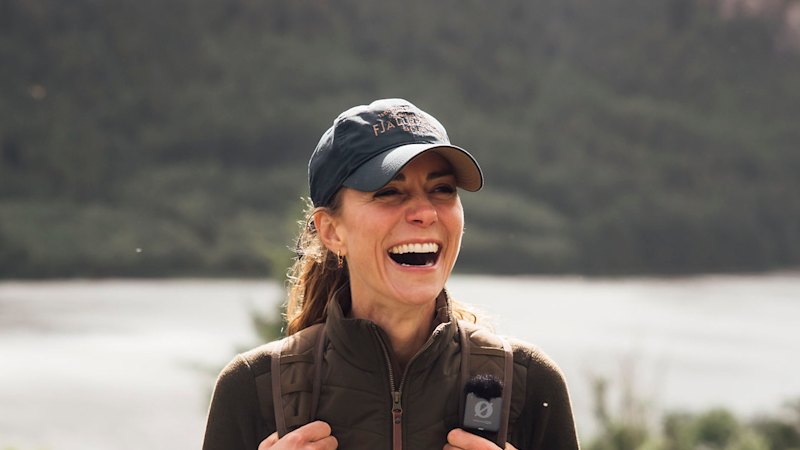
Filmmaker Will Warr, who previously shot the Princess's September 2024 chemotherapy completion video, captures her in a T-shirt and baseball cap under clear skies, then huddled in a hooded parka against freezing mountain mist. She isn't posing for a palace portrait. She's testing whether a body rebuilt after major abdominal surgery and months of preventive chemotherapy can still absorb severe physical stress.
"I think when you've had to confront your own vulnerabilities, you know, when faced with your own mortality, you have to accept that life is not infinite," Catherine says during the trek. "And in those moments, yes, a shift does happen."
That line hits hard because it strips away royal polish. You can have access to the finest physicians in London and a team of royal protection officers, and cancer still forces you to stare at the exact same ceiling at three in the morning. Health really is the great leveler.
How Royal Storytelling Changed Between 2024 and 2026
You can't separate Heal from the communication disaster Kensington Palace walked into back in early 2024. Remember the Mother's Day photo controversy and the weeks of wild internet conspiracy theories before Catherine sat on that wooden bench in March 2024 to announce her diagnosis?
The palace learned a brutal lesson from that mess. Traditional royal silence—the old "never complain, never explain" rule—doesn't survive modern social media. If you leave a vacuum, TikTok and X will fill it with nonsense within twelve hours.
At the same time, William and Catherine clearly refused to hand their narrative over to traditional royal correspondents. Instead, they built an in-house visual playbook:
- March 2024: A direct-to-camera bench video cutting out press intermediaries entirely.
- September 2024: A cinematic woodland family film directed by Will Warr announcing the end of chemotherapy.
- January 2025: A measured written update confirming she was officially in remission.
- May 2025: The Mother Nature short film series tying mental recovery to outdoor spaces.
- November 2026: Heal, introduced by broadcaster Kirsty Young, blending personal reflection with charity fundraising.
Some media critics argue this approach gives the royals too much editorial control, turning journalism into curated public relations. They aren't wrong about the control. Will Warr served as producer, cinematographer, and editor alongside director Benji Jackson. Every frame passed through palace approval.
Still, there's a big difference between spinning a scandal and owning your medical story. Nobody owes the press their pathology report. By setting firm boundaries around clinical details while opening up about emotional grief, Catherine found a middle ground that previous generations of royals never managed to navigate.
What Cancer Survivors Actually Take Away From the Film
Strip away the crown, the BBC broadcast slot, and the royal commentary. If you've dealt with serious illness—or watched someone you love drag themselves through treatment—Heal validates three truths that polite society usually tries to sweep under the rug.
First, the old version of you isn't coming back. Friends mean well when they say, "I can't wait until things get back to normal." Catherine pushes directly against that pressure, pointing out that serious illness permanently alters how you view time, energy, and priorities. Fighting to resurrect your pre-diagnosis life only breeds exhaustion.
Second, physical clearance isn't emotional recovery. Scans can come back clear in January 2025, and you can still spend the next eighteen months rebuilding your nervous system. Stepping back into major overseas duties—like her recent trip to Mumbai, India with Prince William for the Earthshot Prize—takes staged pacing, not an overnight switch.
Third, isolation makes recovery twice as hard. Throughout the documentary, Catherine keeps circling back to the idea that humans aren't wired to carry heavy trauma solo. Leaning on family, fellow patients, and medical staff isn't weakness. It's basic survival.
Where to Watch Heal and How to Support Cancer Care
If you missed the initial BBC One broadcast on November 29, UK viewers can stream the full 30-minute film on BBC iPlayer. International broadcasts follow immediately across major networks:
- United States: Airs November 30 at 8 p.m. on NBC and Bravo, streaming the next day on Peacock.
- Australia: Broadcasts December 1 on Channel 9.
- Canada: Airs December 7 on CTV and Noovo.
All proceeds from the documentary's distribution go directly to The Royal Marsden Cancer Charity to fund patient care and research. If you want to turn the conversation into real-world impact, skip the online speculation about palace medical files, donate directly to a local oncology support center, and check in on a friend whose treatment ended six months ago—because that's usually when they need company the most.