Military aviation watchers spent months wondering how Ukraine would solve its deep-strike deficit. The answer just landed with an explosion inside a Russian semiconductor facility.
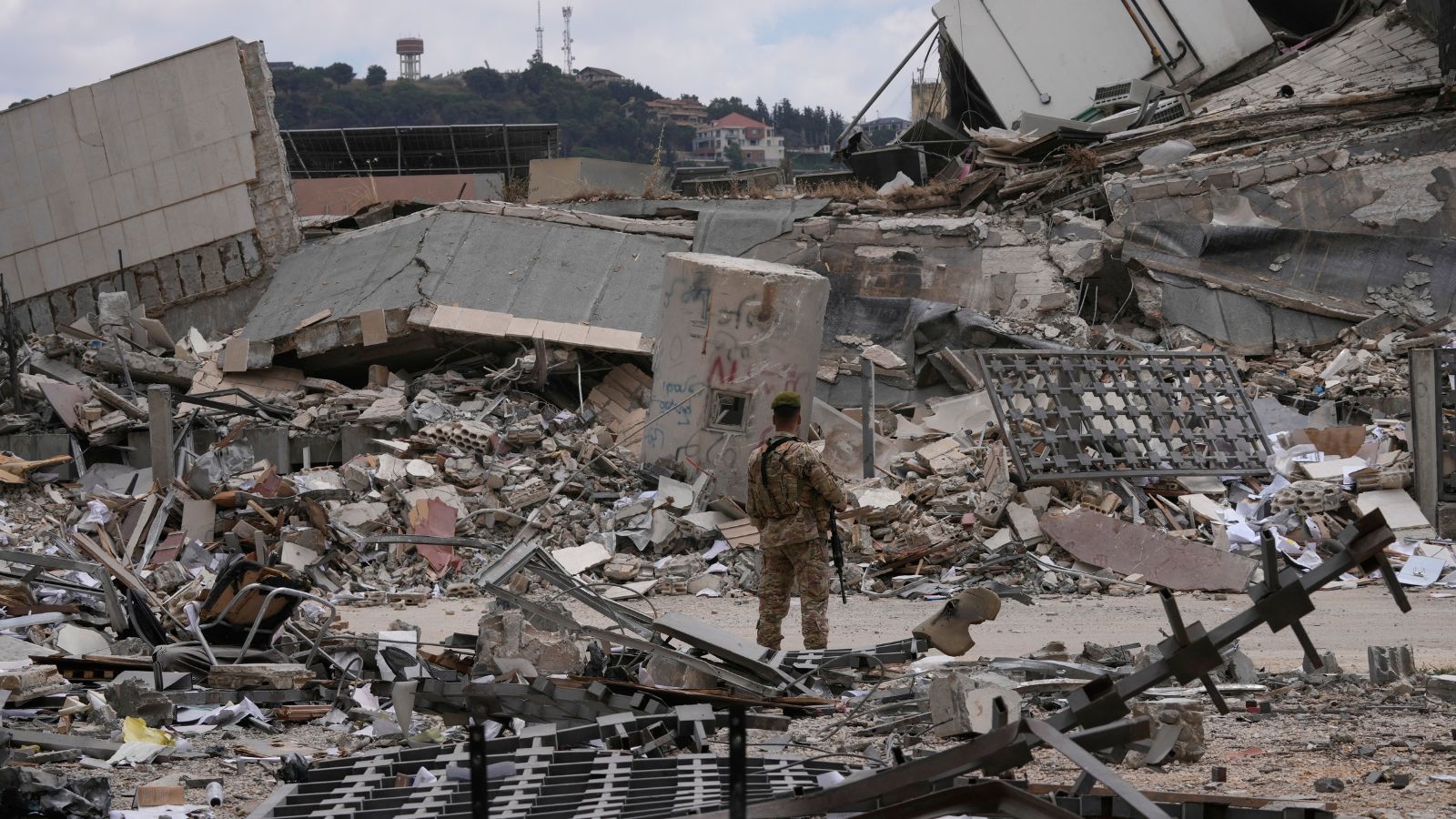
On June 22, explosions ripped through the Voronezh Semiconductor Plant, a critical factory located just 200 kilometers from the Ukrainian border. This isn't just any factory. It manufactures the high-spec electronic components that keep Russia’s Iskander ballistic missiles, Kh-101 cruise missiles, and Pantsir air defense systems functioning. Early internet chatter blamed British-supplied Storm Shadow missiles. Russian military Telegram channels quickly corrected the narrative. They pointed to wreckage featuring an eight-element anti-jamming antenna. Ukraine didn't use old European stockpiles. They just debuted the brand-new American AGM-188A Rusty Dagger. If you found value in this piece, you should check out: this related article.
The speed of this development caught Moscow completely off guard. The United States Air Force only initialized the Extended Range Attack Munition program in mid-2024. Prototypes were flying within months. Flight certification wrapped up at Eglin Air Force Base in early 2026. Now, the missile is already claiming combat kills.
Western observers are misreading what this deployment means. This isn't just another shiny weapon sent in tiny batches to satisfy a news cycle. It marks a fundamental shift in how modern industrial warfare will be fought moving forward. For another perspective on this development, refer to the latest coverage from Associated Press.
The Brutal Logic of Affordable Mass
Western defense procurement usually favors exquisite, wildly expensive systems. Think of a Tomahawk cruise missile costing up to two million dollars. Or a JASSM stealth missile pushing past one and a half million. These weapons are highly capable, but you can't build them quickly. In a high-intensity war of attrition, you run out of them. Ukraine did.
The AGM-188A turns that philosophy upside down. Developed by Zone 5 Technologies, the Rusty Dagger is built explicitly for rapid manufacturing at a fraction of the cost of standard cruise missiles. The Pentagon calls this concept affordable mass. The goal is simple. Build something cheap enough to manufacture by the thousands, yet precise enough to destroy a hardened industrial target deep inside hostile territory.
The math behind the weapon explains its true utility.
- Weight: 225 kilograms (500-pound class)
- Propulsion: PBS Aerospace TJ80 turbojet engine
- Range: Up to 930 kilometers when air-launched
- Warhead: 230 kilograms with flexible blast and penetration fuzing
- Production target: 1,000 units per year
Look closely at those numbers. A 500-pound missile carrying a warhead that matches its entire total weight profile sounds impossible. It works because the airframe uses ultra-light commercial manufacturing techniques instead of heavy, specialized military alloys. The PBS Aerospace TJ80 turbojet is a compact, highly reliable engine that gives the weapon high subsonic speeds over immense distances. It doesn't need to fly at supersonic speeds to survive. It survives through numbers and smart routing.
How Ukraine Smashed the Voronezh Air Defenses
Voronezh isn't an undefended city. It sits directly in the path of potential Ukrainian strike corridors and remains heavily protected by layered S-400 and Pantsir-S1 air defense systems. Hitting a semiconductor facility inside this protective bubble required a highly coordinated tactical plan.
Local reports indicate the Ukrainians used a mixed strike package. They launched a salvo of low-cost decoy drones alongside older cruise missiles to oversaturate Russian radar networks. While the Pantsir systems focused on tracking and intercepting the slow-moving drones, the Ukrainian F-16s fired the AGM-188A missiles from safe altitudes well behind the frontline.
The Rusty Dagger's guidance package did the rest. Russian electronic warfare units blanket the border region with intense GPS jamming. Standard satellite-guided bombs fail under these conditions. The AGM-188A overcomes this with a multi-layered guidance suite. It combines basic inertial navigation with a special Controlled Reception Pattern Antenna that filters out jamming signals. If the GPS signal dies completely, the missile switches to an autonomous visual navigation system. This system matches the terrain below against onboard digital maps.
The missile doesn't care if the sky is jammed. It finds the target anyway.
The strike on the Voronezh plant proved the concept works in the teeth of the most contested airspace on earth. By eliminating the electronics factory, Ukraine disrupted the supply chain for Russia's premier precision weapons. You can't build Iskander guidance computers without semiconductor chips.
The Tactical Upgrade for Ukraine’s F-16 Fleet
When Ukraine received its first batch of F-16 fighters from European allies, critics pointed out their vulnerability. Russian long-range surface-to-air missiles forced Ukrainian pilots to fly at low altitudes. This restricted them to using short-range weapons like JDAM glide bombs. To hit anything meaningful, pilots had to fly dangerous profiles close to the frontlines.
The Rusty Dagger changes everything for those pilots. With a range exceeding 900 kilometers, an F-16 operating near Lviv or Kyiv can strike targets inside Russia without ever getting close to the border. The jet simply becomes an airborne launch platform.
This creates a serious dilemma for Russian commanders. They can no longer assume their critical military infrastructure is safe just because it sits hundreds of kilometers behind the front. Every rail yard, ammunition depot, and drone assembly plant in western Russia is now a viable target.
The economic asymmetry favors Ukraine here. The State Department previously cleared a potential sale of up to 3,350 of these munitions to Ukraine. Funding streams from Denmark, the Netherlands, Norway, and U.S. financial aid mean these weapons will keep coming. Russia cannot afford to shoot down a cheap missile with a multi-million-dollar S-400 interceptor indefinitely. The interceptor stockpiles will dry up faster than the Rusty Dagger production lines.
Why the Pentagon is Watching This Closely
The deployment of the AGM-188A is a live combat laboratory for the United States Air Force. The Pentagon realized its own munitions stockpiles are dangerously low for a potential conflict in the Indo-Pacific. The defense industry takes too long to build legacy weapons.
The ERAM program proved that non-traditional defense firms can design, test, and field a cruise missile in under two years. Zone 5 Technologies and CoAspire both delivered working designs on shoestring budgets. By deploying these weapons directly to Ukraine, the U.S. military gets real-world telemetry on how their low-cost guidance systems handle advanced Russian electronic warfare.
The data gathered from the Voronezh strike will feed directly into the next production blocks. Engineers will adjust flight profiles, refine the visual navigation algorithms, and optimize the production methods. This rapid feedback loop is invaluable.
What Happens Next on the Ground
If you want to understand where this conflict goes next, watch the Russian supply hubs. The first strike targeted a high-value electronics plant, but the true threat of the AGM-188A lies in its volume. When hundreds of these missiles begin arriving monthly, Ukraine will likely shift from targeting singular high-profile factories to systematic interdiction.
Expect upcoming strikes to focus on regional electrical substations feeding military plants, fuel storage farms, and specific rail junctions. If Ukraine can sustain a high volume of long-range strikes, they can starve Russian frontline units of fuel and ammunition before the supplies ever reach the Donbas.
For defensive planners, the lesson is clear. You can't rely solely on a few expensive, highly capable weapons systems. You need a baseline of affordable, rapidly producible munitions to survive an industrial-scale conflict. The Rusty Dagger isn't just a new tool for Ukraine. It is a warning shot to military planners worldwide.
Organizations tracking global security should monitor satellite imagery around Russian manufacturing hubs over the coming weeks. The arrival of the AGM-188A means the deep rear areas of the Russian military just became the new frontline. Ensure your logistics maps are updated to reflect this expanded strike geometry, as traditional safe zones no longer exist.