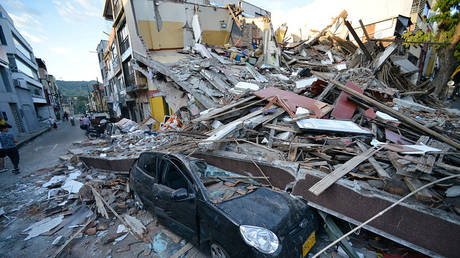
When a massive 7.4-magnitude earthquake strikes a country's western region, the clock starts ticking immediately. Every second counts. In the frantic hours following the disaster that shook Colombia, sending shockwaves through cities like Cali, Pereira, and the rugged Chocó province, rescue workers faced a brutal reality. Finding survivors trapped beneath concrete rubble isn't just about heavy machinery or international aid packages. It's an agonizing race against time, physics, and logistical nightmares that most headlines gloss over entirely.
Official reports note that the death toll has climbed past 200 people, with thousands more listed as missing or unreachable. But numbers on a screen fail to capture the raw desperation on the ground.
The Brutal Reality of Urban Rubble and Human Chains
In dense urban centers like Pereira and Cali, dozens of buildings pancaked into piles of jagged concrete and twisted steel. Heavy equipment can only do so much when engines risk shifting unstable slabs and crushing anyone still breathing underneath. That's why you see human chains forming in the dust. Neighbors, relatives, and volunteers pass heavy blocks of masonry hand-to-hand, stopping dead in their tracks every time someone shouts for absolute silence.
People listen for a faint tap, a groan, or the muffled sound of crying. This is the agonizing reality of the first 48 to 72 hours—the critical window when rescue teams have the highest probability of pulling people out alive. When you watch these scenes unfold, you realize that advanced technology like thermal-imaging drones and search dogs are vital, but ordinary people using their bare hands often make the initial difference.
Why Remote Regions Are Being Left Behind
While television cameras focus heavily on the dramatic apartment collapses in major cities, a quieter catastrophe is playing out in rural and jungle-heavy areas. The earthquake's epicenter near San José del Palmar in the Chocó region exposed a stark fracture line in emergency response infrastructure.
Chocó is one of the nation's poorest areas. Many rural communities along the Atrato River can only be reached by boat or small aircraft after hours of grueling travel. Local leaders have pointed out that government relief efforts concentrate heavily on capital cities, leaving isolated towns cut off by damaged roads, landslides, and a chronic lack of communication. Compounding this, the presence of armed groups in these neglected zones makes deployment risky and unpredictable. When an earthquake hits an already vulnerable territory, basic communication failures mean families wait days just to find out if entire villages survived.
How Citizen Databases Step In When Systems Fail
Official rescue tracking has limits. While the government works through organized channels, a massive gap exists between official missing person counts and the data compiled on citizen-run platforms. Families desperate for news have flooded online databases and social networks, posting photographs of elderly relatives, children, and neighbors last seen near the epicenter.
This crowdsourced approach highlights a crucial lesson in modern disaster response. Official channels are often too slow to process the massive influx of personal panic. Communities take matters into their own hands, creating digital networks to track who is safe and who remains unaccounted for. It's messy, emotional, and sometimes chaotic, but it fills a void that bureaucracy leaves wide open.
The Immediate Road Ahead for Recovery
President Abelardo de la Espriella stepped into office just days before the disaster, making this unprecedented crisis an immediate test of his administration's capability. Mobilizing the military, police apparatus, and engineering units is only step one. International support—including millions in emergency shelter and food assistance from the United States and satellite mapping tools from the European Union—provides a crucial lifeline.
However, long after international headlines fade, the true test remains. Rebuilding collapsed infrastructure, clearing blocked mountain roads, and restoring power to blackout-hit cities will take months, if not years. If you want to support recovery efforts directly, look toward established humanitarian organizations operating on the ground in western Colombia that focus on delivering clean water, temporary shelter, and medical supplies to the families who lost everything overnight.