Everyone wants to call it Yalta 2.0. That comparison misses the mark by a wide margin.
When Donald Trump, Xi Jinping, and Vladimir Putin sat down together at Kylin Villa in Shenzhen on November 19, 2026, pundits immediately dusted off their World War II history books. They predicted secret backroom deals carving up Europe and Asia into neat spheres of influence. They expected a grand bargain that would end the war in Ukraine overnight or redraw global trade routes before dessert arrived.
Nothing like that happened.
Instead, the first-ever trilateral summit between the leaders of the United States, China, and Russia lasted roughly 90 minutes and produced a remarkably thin, four-point communiqué. If you're looking for the real story behind the Trump Xi Putin trilateral summit, stop reading the breathless cable news chyrons about a new world order. Look at the actual text they signed, the glaring omissions they ignored, and the exact political leverage each man walked away with.
Why Shenzhen Happened Right Now
Diplomacy rarely happens by accident. Hosting this meeting on the sidelines of the 2026 APEC Economic Leaders' Meeting in Shenzhen required months of quiet calibration. Each leader walked into that room with a completely different scorecard, and understanding their individual motives explains why the summit looked so dramatic on television yet yielded so little on paper.
Xi Jinping Played the Ultimate Host
For Beijing, this wasn't about solving global crises. It was about optics and convening power.
China has spent years arguing that the international system shouldn't run through Washington alone. By bringing both the American and Russian presidents to southern China, Xi positioned himself as the indispensable center of gravity in global politics. Chinese state media and party journals like Qiushi wasted zero time framing the event as proof that Beijing stands on completely equal footing with the United States.
Look closely at the staging in Shenzhen, because Chinese protocol never leaves placement to chance. Xi personally greeted Trump at the airport. During the pre-gala dinner group photo, Trump stood to Xi's right—the traditional spot of highest honor. By the time the closing photo rolled around after the trilateral session, Putin occupied that exact spot. Beijing managed to flatter Washington and reassure Moscow within the span of 48 hours without giving up a single concession on tariffs, semiconductor export controls, or Taiwan.
Vladimir Putin Escaped Diplomatic Quarantine
Putin didn't need a sweeping treaty to declare victory. He just needed the photograph.
For years, Western capitals worked to isolate the Russian president over the war in Ukraine. Standing shoulder-to-shoulder with the U.S. president in a high-profile trilateral setting shattered whatever remained of that diplomatic quarantine. Even better for the Kremlin, the joint declaration included an explicit swipe at the International Criminal Court, condemning abuses of jurisdiction and defending the immunity of sitting heads of state. Getting Washington to sign off on language criticizing the very court that issued an arrest warrant for him was a massive public relations win for Moscow.
Donald Trump Chased the Deal Maker Image
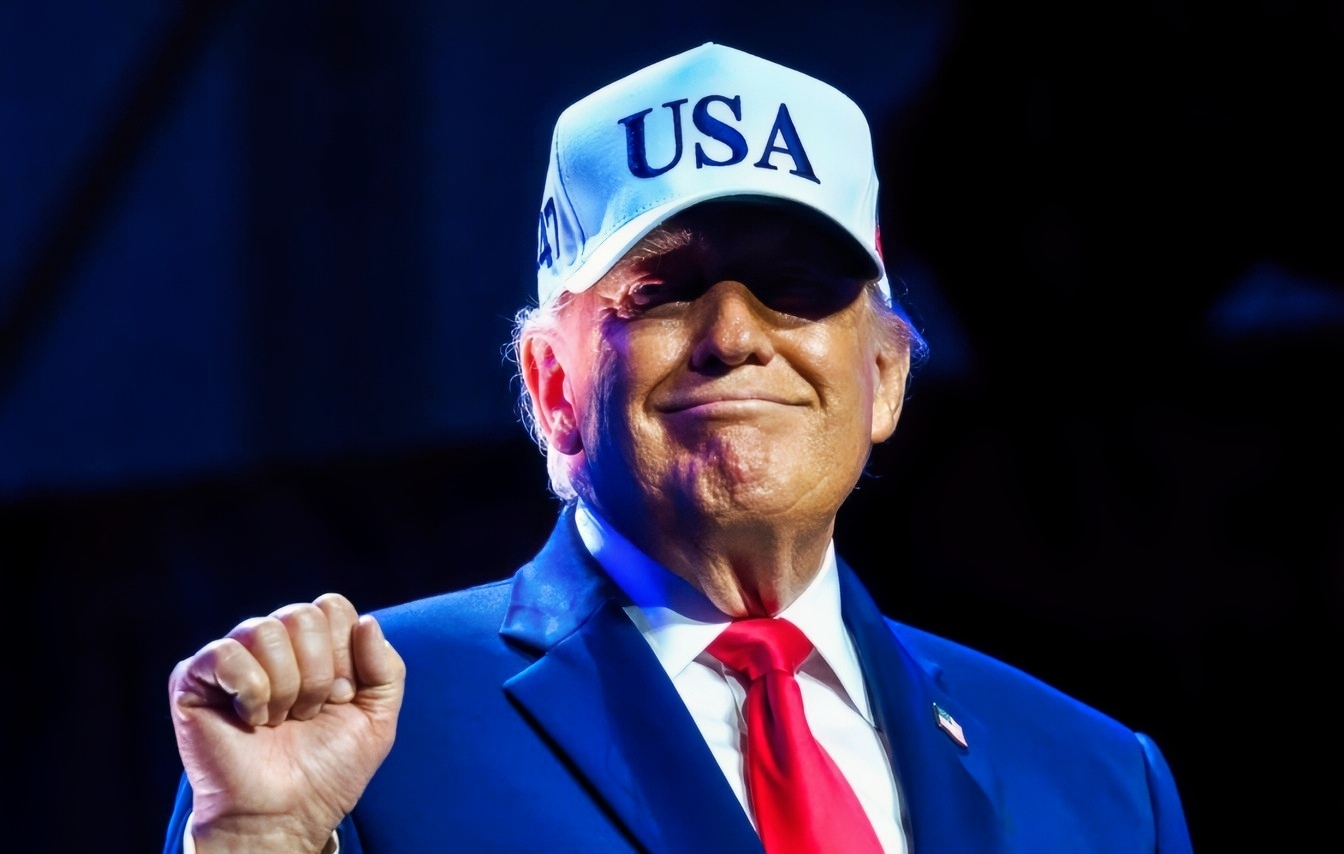
Trump has always preferred personal leader-to-leader engagement over traditional multilateral bureaucracy. At his White House press conference on November 20, he called the Shenzhen gathering one of the most momentous international summits in years.
His core argument is straightforward—you can't solve nuclear proliferation or regional wars if you refuse to sit in the same room with your rivals. Trump wanted a visible win showing he could bring America's two biggest strategic competitors to the table, get them to endorse energy production, and restart conversations around nuclear risk reduction. Whether that photo op translates into actual concessions on American priorities is another question entirely.
Decoding the Four Point Joint Declaration
Most commentary on the U.S.-Russia-China Heads of State Declaration toward Peace skims past what the document actually says. That's a mistake. When three nuclear superpowers agree on exact wording, every sentence reflects intense negotiation.
First, the three leaders pledged to reform the United Nations so it can better address global security challenges. That sounds noble until you realize they are three of the five permanent veto-wielding members of the UN Security Council. "UN reform" means completely different things in Washington, Beijing, and Moscow. Russia and China want to dilute Western influence inside international bodies, while the Trump administration has long pushed to cut funding and overhaul UN agencies it views as bloated or biased. Agreeing that the UN needs reform costs nobody anything.
Second, they promised to boost the production and supply of refined petroleum products. This line is pure Trump administration energy policy grafted onto a diplomatic communiqué. Keeping global fuel supplies flowing helps tame domestic inflation in the U.S., gives Russia an implicit nod to keep energy moving into global markets, and reassures China—the world's largest crude importer—that energy security remains a shared priority.
Third came the clause on state consent and official immunity targeting the International Criminal Court. None of the three nations are party to the Rome Statute that created the ICC, so attacking the court's reach is easy common ground. Still, putting it in a trilateral peace declaration sends a clear message to European allies who rely heavily on international legal institutions.
Fourth, and most critically, the trio reaffirmed that a nuclear war cannot be won and must never be fought, committing to a trilateral dialogue on reducing nuclear risks and preventing proliferation.
The Nuclear Arms Control Reality Check
If you want to know why nuclear weapons dominated the buildup to Shenzhen, look at the calendar.
The New START treaty—the last remaining bilateral pact limiting deployed strategic nuclear warheads between the United States and Russia—expired back in February 2026. Right now, for the first time since the early 1970s, there are zero legally binding caps restricting the world's two largest nuclear arsenals. At the same time, China has been rapidly expanding its own nuclear stockpile, refusing for years to join bilateral U.S.-Russia arms control talks on the grounds that its arsenal is still much smaller than theirs.
Getting Xi to agree to a trilateral dialogue on reducing nuclear risks is a genuine shift. Previously, Beijing treated three-way nuclear talks as a non-starter.
Don't pop the champagne yet, though. A "dialogue on reducing nuclear risks" is miles away from a verifiable arms control treaty. Risk reduction usually means setting up crisis hotlines, agreeing to advance notifications for ballistic missile launches, or talking about keeping artificial intelligence out of nuclear command-and-control systems. Those guardrails matter—they keep an accidental radar glitch from triggering World War III—but they don't stop China from building more silos, nor do they force Russia to dismantle a single warhead.
There's also a hidden motive driving Moscow and Beijing to humor Trump on non-proliferation. Neither Putin nor Xi wants American allies like South Korea, Japan, Poland, or Germany to panic over shifting U.S. security guarantees and build nuclear bombs of their own. Keeping the nuclear club locked tight serves Russian and Chinese interests just as much as American ones.
What Was Left Off the Table
You can judge a diplomatic summit just as easily by what isn't in the final statement as by what is. In Shenzhen, the omissions were massive.
Ukraine was completely absent from the joint communiqué. While Trump and Putin held a separate bilateral meeting in Shenzhen where Ukraine took center stage, neither side reported any breakthrough on territorial lines or long-term security guarantees. Four rounds of U.S.-brokered Russia-Ukraine talks in Abu Dhabi earlier in November ended without a deal, and Putin clearly had zero intention of letting Xi or Trump corner him into concessions during a 90-minute trilateral chat. European leaders, who were excluded from the room entirely, watched nervously from the sidelines, worried that decisions about European security were being discussed over their heads.
The conflict with Iran went unmentioned. Despite the ongoing U.S.-Israeli war with Iran that erupted in late February 2026—and the resulting shockwaves across Middle Eastern shipping lanes and oil markets—the declaration said nothing about Tehran. Washington wants Beijing to use its economic leverage over Iranian oil purchases to rein in Tehran, while China prefers to protect its discounted energy imports and avoid taking ownership of an American military entanglement.
Trade and tech wars stayed frozen in place. The U.S.-China trade truce is scheduled to expire on January 10, 2027. Beneath the polite smiles at Kylin Villa, Washington and Beijing are still locked in a bitter fight over advanced semiconductor export controls and Chinese restrictions on critical rare-earth minerals. None of those structural economic disputes were resolved in Shenzhen.
Why European and Asian Allies Are Uneasy
I've watched enough great-power diplomacy over the years to recognize a classic trap—when Washington sits down exclusively with Moscow and Beijing, traditional American allies start wondering if they're on the menu instead of at the table.
From Brussels to Tokyo, diplomats read the Shenzhen communiqué with quiet alarm. The language attacking international courts and emphasizing "state consent" echoes talking points Beijing and Moscow use to push back against criticism of human rights abuses or territorial aggression. Meanwhile, framing global stability as a three-way management project between Washington, Beijing, and Moscow feeds the exact multipolar narrative China has been selling to the Global South.
European foreign policy analysts, including experts at the European Union Institute for Security Studies, quickly warned that Beijing and Moscow share a 13-year track record of coordinating against Western alliances. Walking into a two-against-one room without European or Indo-Pacific allies present carries real strategic risk if Washington trades away alliance cohesion for vague promises of dialogue.
How to Track What Actually Matters Next
If you want to separate real geopolitical shifts from summit theater over the next few months, ignore the press releases and watch three concrete deadlines.
- Watch the G20 Summit in Miami on December 14–15, 2026. Trump is hosting world leaders at his Doral resort. Xi is expected to attend, and Putin has an invitation on the table. If the Shenzhen nuclear risk dialogue actually has legs, working-level diplomats will announce formal dates and envoy appointments around this meeting. If nothing is announced by mid-December, Shenzhen was pure pageantry.
- Track the January 10, 2027 U.S.-China trade truce deadline. That date is hard-wired into bilateral trade policy. Watch whether Beijing eases rare-earth export licensing or if Washington rolls out fresh semiconductor restrictions. Trade actions will tell you immediately whether the warm personal rapport between Trump and Xi survived the flight home from Shenzhen.
- Monitor missile launch notifications and strategic deployments. Since New START expired in February, defense analysts rely on voluntary transparency measures to track Russian and American nuclear forces. If Moscow and Washington resume data exchanges or pre-launch notifications as part of the new trilateral risk-reduction track, the Shenzhen declaration will have produced its first tangible security benefit.
Keep your eye on those three markers. Everything else from Kylin Villa was just expensive choreography.
To explore how expert analysts break down the strategic trade-offs of the Shenzhen meeting, watch The Significance of Trump, Xi, and Putin's First Trilateral Meeting for additional context on how this gathering affects global security equations.