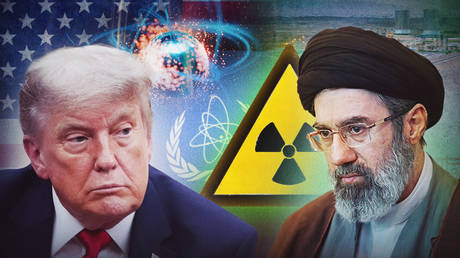
Donald Trump thought he could bomb his way to an easy victory in the Middle East. After launching military strikes earlier this year, leveling facilities at Natanz and Fordow, and watching the conflict trigger a massive global oil shock, the White House rushed to claim total victory. The administration proudly pointed to the Islamabad Memorandum signed on June 17 as proof that raw military power works. But the celebratory mood in Washington didn’t last long. The reality is that Trump’s Iran gamble has just entered its most volatile and dangerous phase. Winning a brief, destructive war is one thing. Hammering out a functional, lasting peace with a deeply embittered adversary is a completely different beast.
The current technical talks in Switzerland have already exposed how fragile this entire project is. Just days ago, Trump nearly blew up his own negotiations by firing off aggressive posts on Truth Social and threatening Iranian envoys during a Fox News interview. He warned that if Tehran closed the Strait of Hormuz again, their negotiators wouldn't even make it back to their own country. The Iranian delegation promptly walked out of the room. Vice President JD Vance has been left scrambling to clean up the mess, trying to assure everyone that the administration wants to turn over a new leaf. This chaotic back-and-forth shows why the hard part is only beginning.
Why the Islamabad Memorandum Looks Nothing Like Unconditional Surrender
During the height of the military campaign, Trump repeatedly asserted that he would accept nothing less than Iran’s unconditional surrender. If you look closely at the actual text of the provisional deal signed in France, the reality tells a completely different story.
Instead of a defeated nation bowing to American terms, the agreement looks a lot like a massive financial rescue package. The framework promises a staggering $300 billion for Iran’s economic development and reconstruction. It unfreezes $24 billion in restricted Iranian funds and begins easing heavy sanctions. Critics from both sides of the political aisle are already throwing fits. Outgoing Republican Senator John Cornyn has publicly questioned how rogue regimes manage to evade economic warfare, while Democrats like Susan Rice have labeled the arrangement an egregious surrender.
They have a point. When Trump abandoned Barack Obama's Joint Comprehensive Plan of Action back in 2018, he called it the worst deal in history. Yet Obama's pact only released about $50 billion in frozen assets and tied every dollar to strict, verifiable nuclear restrictions. Trump’s new framework hands over hundreds of billions of dollars up front without securing a finalized, ironclad contract on weapons development.
The Dangerous Logic of Escalation and Bluffing
The military strategy behind this conflict relied on a theory that Iran would crumble quickly under massive pressure. Proponents of the strikes argued that shattering Iran's conventional military capacity would prevent any serious retaliation. They were wrong.
The conflict managed to destabilize global energy markets, send gas prices swinging wildly, and force temporary closures of the Strait of Hormuz. While intelligence briefings warned about these exact economic and regional consequences, those warnings were brushed aside in favor of promises of a clean, decisive victory. Now, the administration faces a complex aftermath where Iran still holds significant leverage through its regional proxies and its geographical dominance over vital shipping lanes.
Trump’s recent public threats show the biggest flaw in his diplomatic approach. He tends to bluster and threaten total destruction up to the point where a conflict starts costing him serious political capital at home, and then he looks for an immediate exit. The Iranians have figured this out. They know he is desperate to project a historic foreign policy win before America's 250th anniversary celebrations. After their brief walkout in Switzerland, the Iranian envoys returned to the table because they realized Trump's lethal threats were mostly theatrical.
Moving From Bully Pulpit to Technical Verification
The true test of Trump's Iran gamble will happen in quiet rooms, not on social media. Writing checks and making vague promises about reconstruction won't stop a nuclear program. The International Atomic Energy Agency has reported that Iran previously held massive stockpiles of uranium enriched to 60 percent. Getting that material out of the country or down-blended requires meticulous, technical cooperation.
For this deal to actually protect American interests, the administration needs to shift its focus entirely. First, they must establish the specific verification measures demanded by international monitors. This means securing unrestricted access to Iranian military workshops, procurement documents, and key scientific personnel. Vague political statements won't suffice.
Second, the White House needs to coordinate a unified front with regional partners and European allies. Countries like Spain and Italy restricted their airspace during the bombing campaign, proving that international support for unilateral American military action is incredibly thin. Trump needs to stop treating foreign policy like a solo business transaction and let his diplomatic team do their jobs without constant interference from the executive mansion.
Finally, the administration must provide clear, binding guarantees that sanctions relief will remain stable as long as compliance is verified. If the U.S. reserves the right to tear up the agreement on a whim, Tehran will have zero incentive to dismantle its remaining infrastructure. The era of easy victories is over. If the White House cannot transition from loud threats to disciplined, boring diplomacy, this entire gamble will collapse into an even larger regional disaster.