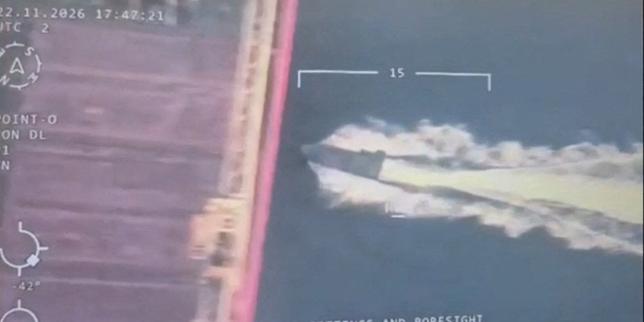
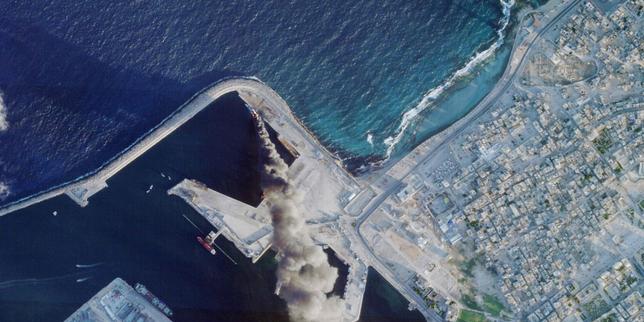
Everyone keeps calling Ukraine’s strike on the Russian corvette Merkury off Libya a shocking geographic escalation. They're missing the actual story. Yes, Benghazi sits roughly 1,700 kilometers away from Ukraine’s southern coastline. That distance grabs headlines fast. Yet the real shock isn't that Ukrainian sea drones reached the central Mediterranean—it's how easily Kyiv dismantled Moscow’s African supply bridge while triggering a diplomatic headache with its own European backers.
On November 22, 2026, Ukrainian forces and the Security Service of Ukraine (SBU) deployed seven domestically built unmanned surface vessels near Benghazi. Within hours, one of Russia’s newest Project 20380 warships lay capsized and semi-submerged in the harbor, a Ka-27 military helicopter was destroyed, and a sanctioned cargo vessel called the MV Angara took heavy damage nearby.
If you only read surface-level news reports, you’ll assume this was simply a flashy long-range stunt designed to embarrass the Kremlin. It wasn't. Kyiv targeted a vital logistical artery feeding Russia’s operations across Africa, and the fallout is already reshaping Mediterranean security.
How Ukrainian Sea Drones Reached Benghazi
Most military observers struggled to figure out the basic physics of the operation. Ukraine only has direct naval access to the Black Sea, and the Turkish Straits remain closed to belligerent warships under the Montreux Convention. Standard unmanned surface vessels don't just casually cruise thousands of miles through the Aegean and Ionian seas undetected.
Here's what actually happened according to the SBU. Ukrainian operatives transported the seven sea drones to a designated drop zone in the Mediterranean and launched them into the water from a so-called "mothership".
That single detail changes everything about modern naval warfare. You don't need a traditional blue-water navy to project maritime power anymore. You just need commercial cover, modular drones, and patient intelligence work.
Eastern Libyan officials initially claimed the drones were launched from a base run by Ukrainian forces inside western Libya, though Kyiv hasn't backed up that claim. Regardless of the exact launch coordinates, the tactical execution caught Russian defenses flat-footed. Commercial satellite imagery captured right after the strike showed the Merkury rolled onto its side and partially underwater.
By November 28, satellite photos from Radio Free Europe/Radio Liberty revealed permanent floating anti-drone barriers stretched across the entrance to Benghazi's port. Eastern Libyan authorities had originally lashed small boats together in a panic right after the blast. Now they've installed heavy booms identical to the ones Russia uses to protect its Black Sea harbors and the Crimean Bridge.
Think about what that means. Moscow now has to build defensive fortifications around North African ports just to keep its ships afloat.
Why Kyiv Targeted the Merkury and MV Angara
President Volodymyr Zelenskyy called the November 22 raid an "exemplary" response to Russian aggression, pointing out that Moscow had just spent the weekend trying to wipe out power grids in Odesa and the Dnipro region. Retaliation played a role, sure. Still, target selection proves this was cold, calculated logistics warfare.
Losing a Brand-New Warship Hurts
Commissioned in 2023 during the full-scale invasion, the Merkury wasn't some rusting Soviet relic. It was a modern Project 20380 stealth corvette attached to Russia's Black Sea Fleet. Because Turkey blocked Russian warships from entering the Black Sea in 2022, Moscow kept the Merkury operating in the Mediterranean, using it to project power and escort supply runs.
Losing it in Benghazi strips Russia of one of its most capable surface combatants in the region. Plus, taking out the embarked Ka-27 helicopter eliminates vital anti-submarine and reconnaissance eyes in the sky.
Cutting the Africa Corps Supply Line
The second target—the dry cargo ship MV Angara—matters just as much. Western governments had already sanctioned the Angara as part of Russia’s shadow fleet. According to the SBU, Moscow was actively using the vessel to haul weapons and military gear along routes connecting Syria and Libya, with the Merkury acting as its armed escort.
Russia relies heavily on eastern Libya as a springboard into the Sahel. Following Yevgeny Prigozhin’s death in 2023, Moscow absorbed the Wagner Group into its official military structure under the Africa Corps banner. Those troops depend on uninterrupted sea shipments into Benghazi and Tobruk to sustain operations in Mali, Niger, Burkina Faso, and Sudan.
And the strike worked immediately. Ship-tracking data from MarineTraffic showed a second Russian military convoy—consisting of the sanctioned cargo and vehicle-carrying ships Maia 1, Lady R, and Lady D—abruptly halting its voyage in the Mediterranean near Algeria on November 25. Those vessels had left Kaliningrad on November 5 bound for Libya. Once word got out that Benghazi was no longer a safe harbor, Moscow paused the entire run.
The Legal and Diplomatic Fallout Nobody Expected
Militarily, Ukraine pulled off a masterstroke. Diplomatically, things got messy fast.
Libya remains split between two rival administrations. The UN-recognized Government of National Unity sits in Tripoli in the west, while military commander Khalifa Haftar controls the east—including Benghazi—with heavy backing from the Kremlin. Neither side wanted foreign drones blowing up ships in their backyard.
Tragically, two Libyan naval officers died from wounds sustained during the Benghazi harbor blast, prompting Kyiv to express formal regret over the casualties. By November 28, Haftar’s eastern administration announced it would demand financial compensation from Ukraine and launch a joint investigation with Russia. Meanwhile, the Tripoli government condemned the strike for dragging civilian ports into an external war, and the UN mission in Libya (UNSMIL) demanded an independent probe.
Even worse for Kyiv, Western allies weren't thrilled.
- Italy pushed back hard. Italian Prime Minister Giorgia Meloni warned Zelenskyy against letting the Russia-Ukraine war spill into the Mediterranean, and Italy's Foreign Minister publicly voiced concern. Zelenskyy later admitted on November 28 that Ukraine conducted the Libya operation without coordinating with its European partners beforehand.
- Germany also condemned the strike. Berlin joined Rome in criticizing the expansion of active hostilities into neutral North African waters.
- Maritime law experts raised red flags. As international law scholars noted following the attack, striking an enemy warship on the high seas—beyond 12 nautical miles from shore—is fair game under the laws of armed conflict. Launching an attack inside a neutral country's territorial waters or docked port crosses a serious legal line.
Kyiv’s counterargument is straightforward. The SBU maintains that both the Merkury and the MV Angara were legitimate military targets actively supporting Russia's war machine, and eastern Libya forfeited strict neutrality by hosting Russian military bases and servicing armed warships.
What You Should Watch Next in the Mediterranean
If you're tracking geopolitical risk, maritime shipping, or defense developments, this single raid changes how you need to read the map. The Mediterranean is no longer an insulated buffer zone far removed from Eastern Europe.
Start monitoring commercial AIS shipping trackers around eastern Libyan ports like Benghazi and Tobruk, alongside Russian naval traffic leaving the Baltic Sea. Pay close attention to whether the stalled convoy—Maia 1, Lady R, and Lady D—attempts to resume its delivery or diverts back toward Russian ports. Watch how European naval missions in the Mediterranean adjust their rules of engagement over the next few weeks, because commercial motherships launching sea drones represent a threat no Western navy can afford to ignore.