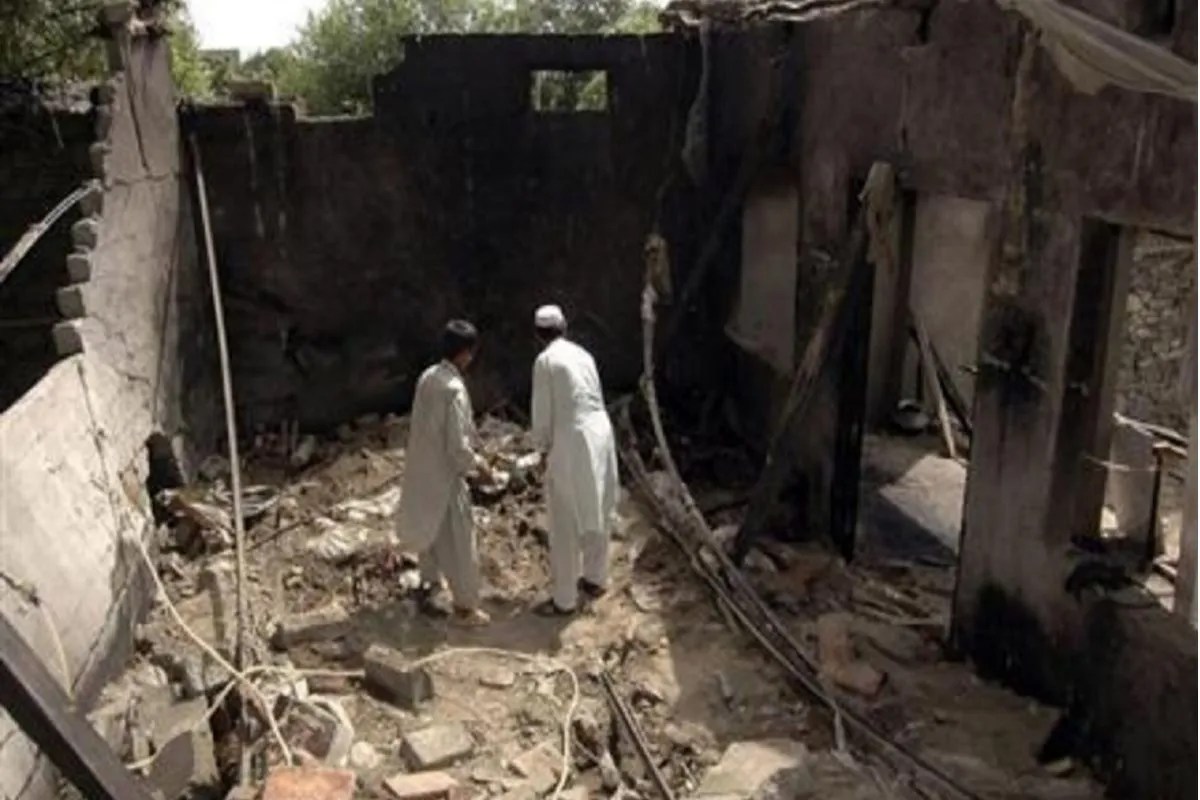
Three lives lost. Two others fighting for survival. That's what local reports say happened after separate alleged drone strikes hit Ziarat and Kech in Pakistan's Balochistan province, sparking fresh alarm across an already volatile region.
When you read a short headline about a drone strike in Balochistan, it's easy to treat it like just another flashpoint in a long-running conflict. Honestly, that misses the real story. Behind every single report of an aerial strike or armed quadcopter in Balochistan sits a tangled web of disputed accounts, severe access restrictions, deep-rooted grievances, and two-sided drone escalation that regular news briefs barely touch. Discover more on a connected issue: this related article.
If you're searching for answers on what happened, who was hit, and why these strikes keep happening, you're probably looking for clarity in a place where facts are notoriously hard to pin down. Let's break down what has been reported, what remains unverified, and why this pattern matters far beyond a single news cycle.
What Happened in the Alleged Balochistan Drone Strikes
According to reporting by The Balochistan Post and wire dispatches carried by outlets like Open Magazine and Genocide Watch, three civilians were reportedly killed and two others critically injured across separate drone incidents in Balochistan's Ziarat and Kech districts. Additional reporting by The New York Times highlights related perspectives on this issue.
In Ziarat district's Anzargi area, local accounts state that a drone strike killed a shepherd and left two other people seriously wounded. Separately, in Kech district's Dashtuk border area, a drone allegedly struck a vehicle, killing two civilians—identified by local sources as Shah Jan and Samad Jan.
Those incidents didn't pop up out of nowhere. Local reports and monitoring groups have pointed to a string of similar alerts across the province—including a September 24 strike in Balicha, Kech, that reportedly killed four young men and injured two others, an incident in Khadkocha, Mastung, that left two men seriously injured, and a blast in Panjgur linked by local sources to a military quadcopter carrying explosives that killed two children and injured three others.
Here's the catch you have to keep front and center: independent verification in remote parts of Balochistan is brutal. Telecom blackouts, military cordons, restricted journalist access, and competing narratives mean that details coming out of affected districts often rely heavily on local sources, family accounts, and regional rights monitors rather than open, on-the-ground international inspections.
Why Official Confirmations Are Often Missing or Contested
Whenever alleged drone strikes hit Balochistan, readers naturally ask why there isn't a neat, agreed-upon official report within hours. The short answer is information control and asymmetric counter-insurgency.
Security operations in restive districts frequently proceed with little or no independent oversight, and official statements from state authorities often frame security actions around counter-militancy or remain silent on specific alleged drone incidents. Meanwhile, grieving families and local activists routinely dispute claims that victims had ties to armed groups, pointing instead to civilian livelihoods—herding livestock, driving vehicles near border routes, or spending time outdoors.
Without neutral investigators on the scene right after an explosion, conflicting claims harden fast. That gap between official silence, local testimony, and broader human rights reporting is one of the biggest reasons rumors and panic spread so quickly after a strike.
Why Alleged Drone Strikes in Balochistan Keep Escalating
To understand why aerial and unmanned hardware keeps showing up in Balochistan's conflict, you have to look at how the fight itself has changed. Balochistan is Pakistan's largest province by area, sparsely populated across vast mountains and deserts, and strategically sensitive because it borders both Iran and Afghanistan while hosting major transit and infrastructure corridors.
For years, the conflict in Balochistan has revolved around separatist insurgencies—most visibly the Baloch Liberation Army (BLA)—clashing with Pakistani security forces, alongside broader complaints from residents over political marginalization, resource extraction, and alleged abuses.
Unmanned Systems Have Changed the Rules of Engagement
Drones and modified quadcopters are attractive to armed actors and state forces alike for a simple reason: they reach places where ground patrols or heavy vehicles face ambushes, mines, or rough terrain.
Interestingly, drone usage in Balochistan isn't moving in just one direction anymore. While local reports have repeatedly accused state forces of using drones and armed quadcopters in areas like Kech, Ziarat, Mastung, and Panjgur, insurgent groups have also started adopting drone tactics. In November 2026, for instance, the BLA claimed multiple drone strikes against military camps and security posts in Kalat and Mastung and released footage tied to those operations.
When both sides experiment with unmanned aerial systems in crowded or rural terrain, civilian risk goes up. A shepherd grazing flocks on a hillside or a family car on a rural road doesn't get the benefit of a courtroom or a warning siren before ordnance lands.
The Human Rights Backdrop Behind Every Headline
Drone reports sit inside a much wider human rights storm that organizations like Amnesty International, Human Rights Watch, and local monitoring groups such as Paank and the Human Rights Council of Balochistan regularly highlight.
Monitors have long documented thousands of cases of enforced disappearances, arbitrary detentions, and extrajudicial killings across Balochistan. For example, Paank's April 2026 human rights report recorded 109 cases of enforced disappearances and 26 confirmed extrajudicial killings in a single month, noting that ordinary people—students, laborers, drivers, shepherds, shopkeepers—frequently get swept into the violence.
When residents already live with fear of raids, checkpoints, and missing relatives, a sudden strike from above feels less like an isolated tactical event and more like another threat falling out of the sky. That's why panic sets in immediately whenever word of a drone spreads through a district.
Common Misconceptions About Drone Strikes in the Region
People outside South Asia—and even some casual readers following the news—often mix up different chapters of drone history in Pakistan. Clearing those up helps you read current coverage much more accurately.
One common mistake is assuming all drone strikes in Pakistan are foreign strikes from years past. Past U.S. drone campaigns in Pakistan's tribal belt along the Afghan border—tracked by researchers at institutions like the New America Foundation and the Bureau of Investigative Journalism—are a separate historical chapter that largely wound down years ago. Allegations involving drones in Balochistan involve local actors, provincial security dynamics, and modern drone or quadcopter warfare rather than that older campaign.
Another misconception is that a "drone strike" always means a high-altitude missile fired by a massive military aircraft. In practice, reports from the region often refer to smaller drones or armed quadcopters carrying explosives, which can still be lethal to anyone nearby and leave devastating physical and psychological scars on small communities.
Finally, don't assume a lack of immediate international wire coverage means nothing happened. Remote districts in Balochistan frequently suffer information bottlenecks, so credible details sometimes emerge slowly through local outlets, rights monitors, and community testimonies before wider coverage catches up.
How to Read Conflicting Reports Critically and Stay Informed
When you're tracking fast-moving, contested security stories like alleged drone strikes in Balochistan, the biggest trap is jumping to certainty based on a single social media clip or headline.
Start by separating confirmed facts from allegations and claims. Note who is making a statement—a local news outlet citing villagers, a human rights monitor, a militant group claiming an attack, or an official security briefing—and recognize what each source can and cannot verify from afar.
Look for corroboration across multiple independent channels over several days rather than reacting to the first viral post. Pay attention to specific locations, dates, and victim details, and watch for follow-up reporting from established human rights organizations and international wire services as more information surfaces.
Above all, keep the human cost in view without losing analytical discipline. Behind every disputed report in Ziarat, Kech, Mastung, or Panjgur are real families trying to figure out what happened to their loved ones—and a conflict that will only keep worsening until civilians are genuinely protected and held-back truths come to light.