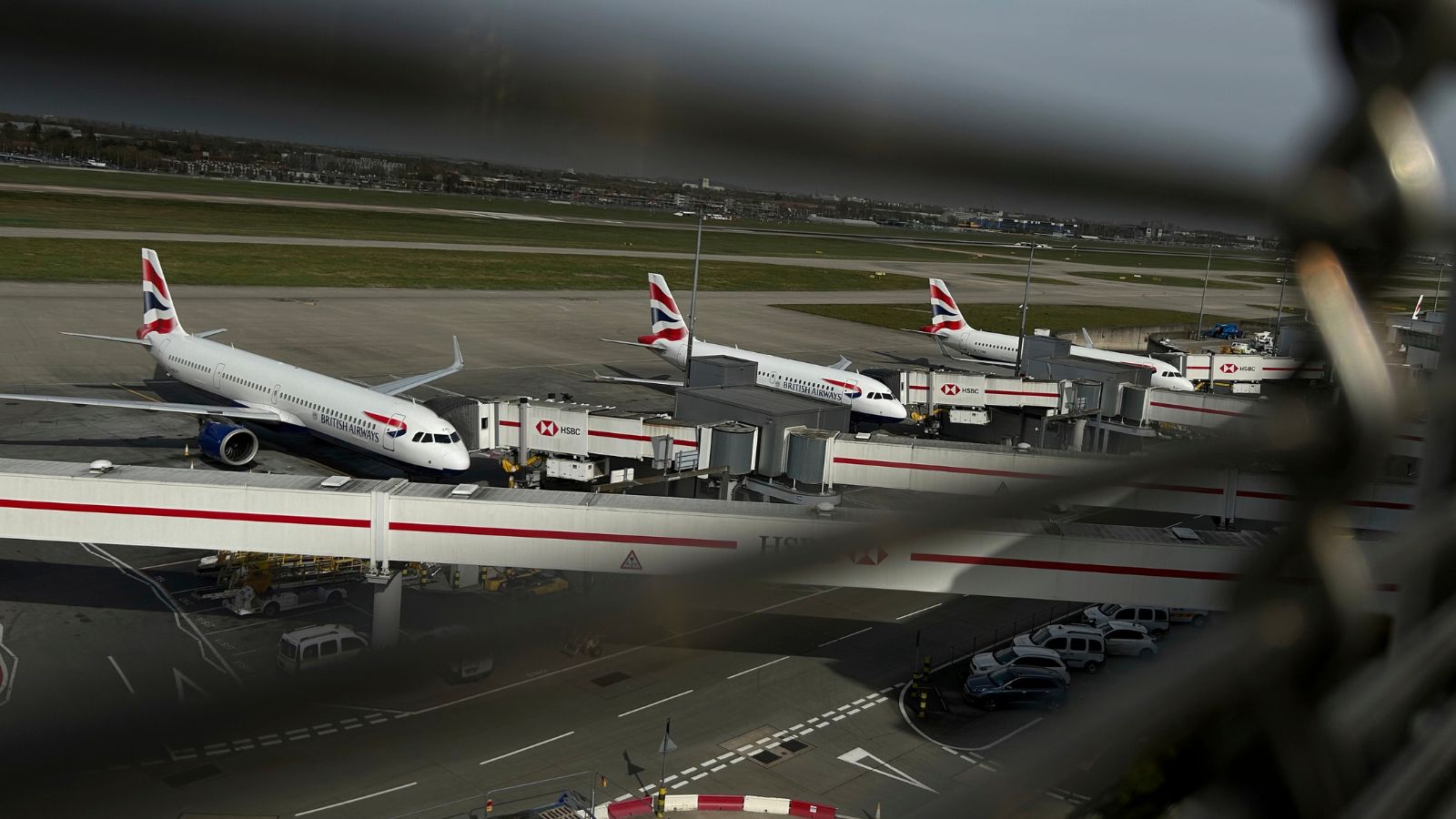
The plane touches down at Zürich Airport with a gentle, metallic shudder. Outside the window, the Swiss air is crisp, the mountains a jagged slate against the gray sky. Inside the cabin, a hundred seatbelts click open simultaneously—a modern symphony of arrival.
But for the British travelers on board, the real arrival doesn't happen when the tires hit the tarmac. It happens a few moments later, when the flight mode icon vanishes from the top of their smartphone screens.
Consider a traveler named Sarah. She is a freelance designer from Manchester, traveling to meet a client in Geneva. The moment her phone reconnects to the local grid, her chest tightens. It is an involuntary reflex, a conditioning born of the post-Brexit travel era. She waits for the inevitable text message from her network provider.
Welcome to Switzerland. To use your data today, it will cost you £6.00.
It sounds small. But over a five-day business trip, that is thirty pounds stripped away for the simple crime of checking a train timetable or sending a PDF to a client. If she steps over the border into France for dinner, the meter resets. For years, British travelers have navigated this invisible, shifting grid of digital checkpoints, where crossing a border meant opening your wallet to a telecom giant that did nothing to earn the fee.
The digital world promised a borderless existence, yet our devices became the very instruments used to tally our geographic transgressions.
Then comes the second hurdle of the journey: the queue. Sarah walks off the jet bridge and follows the signs toward passport control. She watches the European Union citizens breeze through the automated e-gates, their passports scanned by a flash of green light in a matter of seconds. She, holding a blue British passport, is directed to the long, snake-like line for "All Other Passports."
She stands there. She waits. The clock ticks. Her client meeting is in an hour. The physical border is just as punishing as the digital one, a reminder of a political divorce that translated directly into lost hours on a cold terminal floor.
This has been the tax on British travel for years—a double blow of financial friction and administrative drag. But a quiet, bureaucratic shift between London and Bern is changing the mechanics of how we move.
The Friction of the Modern Border
To understand why the new treaty between the United Kingdom and Switzerland matters, you have to look at how we define freedom in the twenty-first century. Freedom used to be measured in miles, in the vast expanses of open road. Today, it is measured in megabytes and minutes.
When the UK left the European Union, the safety net that prevented mobile networks from charging exorbitant roaming fees dissolved. Almost immediately, the major British carriers brought back the daily charges. Switzerland, though never an EU member, had often been bundled into European travel packages. After the split, it became a regulatory island.
The economic consequence was immediate, hitting small business owners, families, and casual tourists alike. It wasn't just about the money; it was about the cognitive load. Travel became an exercise in paranoia. People began downloading offline maps, disabling background data, and hunting for patchy public Wi-Fi networks in hotel lobbies like digital nomads searching for water in a desert.
We accepted it because we felt we had no choice. We normalized the friction.
But the friction was artificial. The infrastructure to connect a British phone to a Swiss cell tower already existed. The e-gates that could read a biometric British passport were already installed in Swiss airports. The barriers were not technological; they were political.
The newly minted UK-Switzerland mobility agreement dismantles these artificial walls. Under the terms of this deal, the daily roaming fees that have plagued travelers since the turn of the decade are being consigned to history. British carriers and Swiss networks have been brought to the table to ensure that a phone bill in Basel looks exactly the same as a phone bill in Birmingham.
More than that, the physical queues are evaporating. British citizens are being granted access to the Swiss e-gates, allowing them to bypass the manual stamping desks that turned a quick weekend getaway into a bureaucratic endurance test.
The Hidden Psychology of the Border Queue
Standing in a queue is not merely a waste of time; it changes how we interact with a destination.
Psychologists have long studied the impact of lines on human behavior. A long, stagnant queue creates a sense of vulnerability and exclusion. When Sarah stands in the "All Other Passports" line, she is being reminded, systematically, that she is an outsider. The delay sets a tone of anxiety that colors the rest of her trip.
By opening the e-gates to British travelers, Switzerland is making a psychological concession as much as a logistical one. It is an admission that despite the macroeconomic shifts of the past decade, the human connection between these two nations remains vital.
Consider what happens next when Sarah travels under the new framework. She lands. Her phone connects instantly to Swisscom or Sunrise without a threatening text message. She walks toward the border, places her passport on the glass of an automated gate, looks into a camera, and walks through in twelve seconds.
The city opens up to her immediately. She can navigate the tram system without worrying about data caps. She can call an Uber. She can text her client to say she is running early. The city becomes accessible again.
This is the true victory of the agreement. It restores spontaneity to travel.
The Balance Sheet of Connection
There will be those who argue that a roaming deal and an e-gate agreement are minor footnotes in the grand ledger of international trade. They will point to GDP figures, manufacturing supply chains, and financial services regulations as the true measures of a nation's health.
They are wrong.
International relations are ultimately lived by people, not percentages. A trade deal that helps a multi-billion-pound conglomerate but leaves an independent consultant paying fifty pounds a week to check her emails is a failure of imagination. This agreement recognizes that the modern economy is built on micro-movements—the weekend consultant, the ski tourist, the tech worker pitching a startup in Zürich.
Let us look at the numbers that ground this story. Millions of journeys are made between the UK and Switzerland every year. If you save every one of those travelers twenty pounds in roaming fees and forty minutes in a passport queue, the cumulative return to human productivity and well-being is staggering.
We often talk about globalization as a grand, sweeping force. But globalization is actually just a collection of small permissions. It is the permission to use your map app without a fee. It is the permission to walk through a gate without a border guard squinting at your photograph.
The UK-Switzerland deal is an admission that the post-Brexit world requires bespoke solutions to human problems. It proves that nations can rewrite the rules of engagement to favor the citizen rather than the corporation.
The Invisible Grid
We live our lives draped over an invisible grid of networks and jurisdictions. Most of the time, we don't see it. We only notice the grid when it snags us—when the phone goes dead, when the bill arrives, when the line stops moving.
For a long time, traveling from London to Geneva felt like dragging a heavy anchor through that grid. The anchor has finally been lifted.
The next time you sit on a flight watching the Alps rise through the clouds, you won't need to brace yourself for the digital tollbooth. You won't need to calculate the cost of a phone call home. The border will still be there, written in the law books and the history volumes, but it will no longer live in your pocket, ticking away your money, minute by agonizing minute.