Lightning safety on outdoor athletic fields requires an understanding of atmospheric electrical physics, structural risk factors, and behavioral decision trees. When an individual seeks shelter under an isolated tall object during an active thunderstorm, they trigger a catastrophic convergence of environmental variables.
Evaluating the mechanics of lightning casualties reveals that the primary hazard is rarely a direct downward leader strike alone. Instead, multiple lethal pathways operate simultaneously during a convective storm: direct attachment, upward streamers, side flashes, and ground current propagation. You might also find this similar article interesting: Stop Cheering For The Wrong Milestone In Football Officiating.
The Atmospheric Setup and Charge Separation Mechanics
Cumulonimbus clouds operate as massive electrostatic generators. Within these storm cells, colliding ice crystals, supercooled water droplets, and hailstones separate electrical charges through non-inductive charging mechanisms. Lighter, positively charged ice crystals are carried upward by convective updrafts, while heavier, negatively charged graupel accumulates in the middle and lower regions of the cloud.
This charge segregation establishes an intense electric field gradient between the cloud base and the conductive surface of the Earth. As highlighted in latest reports by Sky Sports, the effects are widespread.
- The Step Leader: When the localized electric field exceeds the dielectric breakdown strength of air (roughly three million volts per meter), a ionized channel of air called a step leader propagates downward from the cloud in discrete, rapid intervals.
- The Upward Streamer: As the negative charge nears the ground, positive charges accumulate on elevated objects protruding into the electric field. These objects launch upward streamers to meet the descending leader.
- The Attachment Process: Upon the physical connection of a downward leader and an upward streamer, a massive return stroke surges upward, neutralizing the charge differential with currents typically exceeding thirty thousand amperes.
The presence of a human body standing on open turf within this intensified electrical field alters local equipotential lines. Because the human body has a lower electrical resistance than surrounding air, it acts as a preferred pathway for secondary discharges and step potentials.
The Tree Shelter Hazard Vector
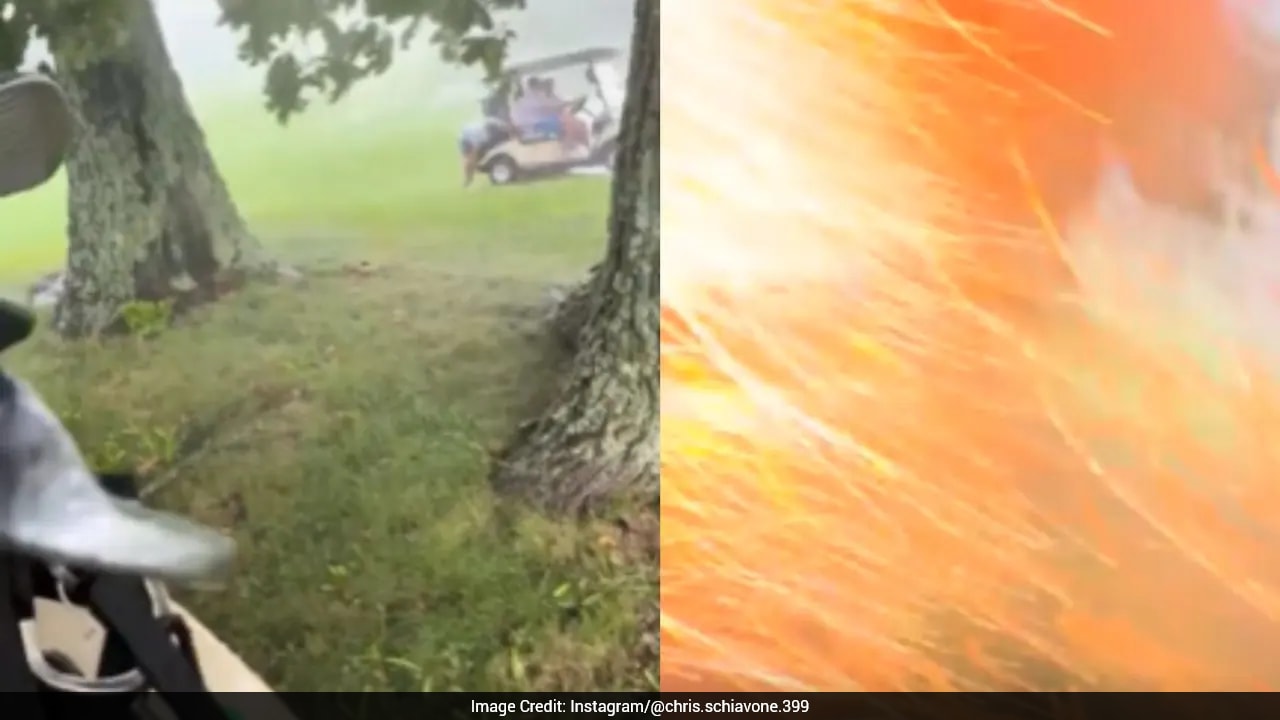
The instinctive behavioral response to seek cover from precipitation drives individuals toward dense vegetation, most notably isolated trees. This choice drastically elevates mortality risk due to specific physical properties of timber during high-voltage discharges.
Trees possess high electrical resistance compared to metallic conductors, but they are vastly superior conductors relative to air. When a lightning channel terminates on a tree, the immense electrical current must travel downward through the trunk to reach the Earth.
[Cloud Negative Charge]
       │
       ▼ (Step Leader)
[Isolated Tree Canopy]
       │
       ▼ (High Resistance Trunk Heating)
[Root System / Ground Current] ---> [Human Target (Step Potential / Side Flash)]
Because wood contains moisture and electrolytes, the passage of tens of thousands of amperes instantly superheats internal water into steam. This volumetric expansion causes explosive mechanical failure of the trunk, known as lightning splintering. Simultaneously, the electrical current generates three distinct secondary casualty vectors that impact anyone positioned within the immediate radius of the canopy:
- Side Flash: A fraction of the main current jumps from the tree trunk through the air to a nearby lower-resistance path, such as a human body.
- Step Potential: High current radiating outward through the soil creates a severe voltage gradient between a person's feet. The foot closer to the strike point experiences a significantly higher voltage than the foot further away, driving electrical current through the lower extremities and vital organs.
- Contact Potential: Touching the trunk directly forces the primary current to divert through the body to reach the ground.
Quantifying Human Vulnerability on Athletic Surfaces
Open recreational spaces like golf courses present acute environmental risks due to topographic and structural factors. Golfers operate as elevated vertical protrusions on flat, conductive terrain, frequently carrying or operating long graphite and metal implements that act as localized lightning rods.
The risk profile on a course is governed by exposure duration and shelter geometry. The absence of fully grounded, enclosed permanent structures across wide acreage forces athletes to rely on temporary rain shelters or vehicles. Standard open-air rain shelters constructed with wooden posts or lacking continuous metal framing provide zero protection against side flashes or ground currents. Conversely, completely enclosed metal-topped vehicles function as functional Faraday cages, safely routing electrical currents around the exterior passenger compartment and into the ground via the tires, provided occupants avoid touching internal metal wiring or exterior paneling.
Behavioral Decision Thresholds and Operational Protocols
Mitigating lightning casualties relies entirely on proactive temporal thresholds rather than reactive shelter-seeking once precipitation begins. Atmospheric physics dictates that lightning can strike up to ten miles away from the parent thunderstorm core, a phenomenon colloquially termed a bolt from the blue, though more accurately classified as anvil strikes occurring ahead of the primary precipitation shield.
Decision frameworks must replace intuition with standardized operational rules.
- The Flash-To-Bang Metric: Counting the seconds between observing a lightning flash and hearing the associated thunder provides a direct spatial measurement. Dividing this time value in seconds by five yields the approximate distance of the strike in miles.
- The Thirty-Thirty Rule: Operations must suspend immediately when the flash-to-bang count reaches thirty seconds or less, indicating the storm is within six miles. Resumption of outdoor activities must wait a minimum of thirty minutes following the final observed clap of thunder to ensure the upper-level charge distribution has fully dissipated.
Refusing to modify behavior based on game completion status or perceived storm velocity introduces a fatal operational bottleneck. Athletic organizations and individual participants must eliminate subjective risk evaluation, substituting strict adherence to meteorological warning thresholds and engineered structural safe zones.
Implement a zero-tolerance policy for remaining on exposed terrain once the flash-to-bang threshold drops below thirty seconds, enforcing immediate transit to a fully enclosed, grounded permanent facility or a hard-topped metal vehicle.