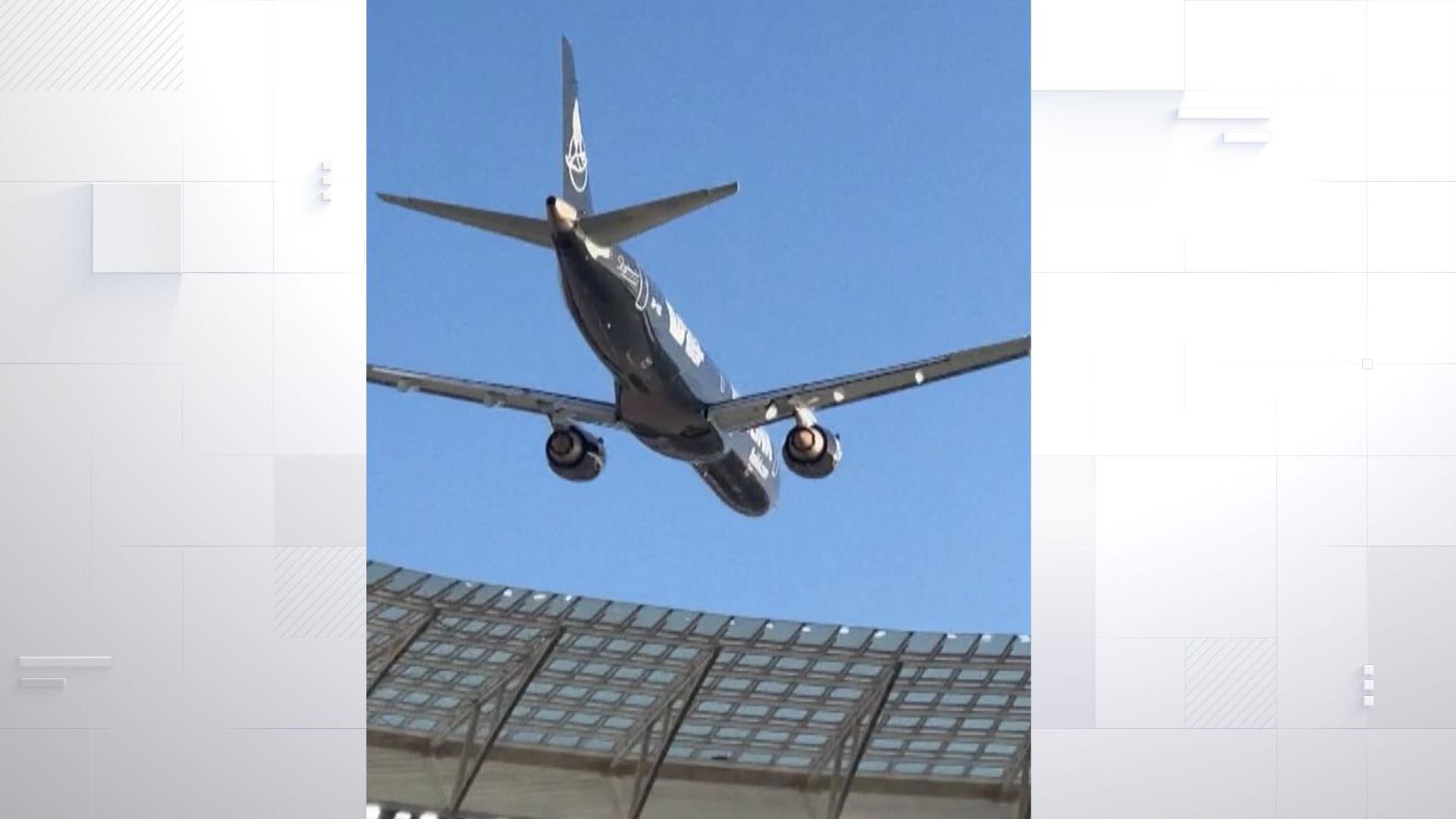
Pre-match entertainment in professional sports routinely pushes the boundary between theatrical display and calculated operational risk. When a pair of commercial passenger jets executed an ultra-low flypast over a packed stadium in Cape Town prior to a rugby test match between South Africa and New Zealand, public reaction immediately split. Spectators inside the venue and viewers online celebrated a breathtaking display of national aviation capability, while professional pilots and safety analysts raised severe concerns regarding low-altitude margins, regulatory oversight, and the narrowing buffer between managed risk and catastrophic failure. Deconstructing this event requires an examination through three analytical dimensions: the operational mechanics of low-level flight, the risk-management failures inherent to public spectacles, and the psychological divide between public perception of thrill and expert assessment of hazard.
The Operational Mechanics and Margin Calculus
Commercial aircraft are optimized for cruise altitudes and standardized departure and arrival corridors. Operating heavy transport category aircraft at altitudes measured in tens of feet above architectural structures introduces severe aerodynamic and mechanical variables that standard flight profiles do not encounter.
The low pass featured an Embraer E195 and an E190 operating in close formation over the stadium roof. Flight tracking data estimated the separation distance between the aircraft structures and the stadium roof to be between 12 and 14 meters, or roughly 40 to 50 feet. At this altitude, several physical phenomena dominate the flight envelope:
Ground effect alters the aerodynamic lift and induced drag as the aircraft compresses air between its wings and the ground or stadium structure. While ground effect can temporarily increase lift, passing over a massive, irregular concrete structure like a stadium creates sudden disruptions in airflow, shifting pressure gradients abruptly across the control surfaces.
The visual perspective from the cockpit differs vastly from instrument telemetry. At 40 feet above a stadium rim, a pilot's spatial orientation relies heavily on visual cues rather than synthetic vision. Any visual misjudgment or micro-burst of wind shear can invalidate the planned flight path within fractions of a second.
Low-altitude engine response times present a critical hazard. Jet turbines do not instantly translate throttle inputs into thrust. In the event of an unexpected low-level stall, wake turbulence encounter, or bird strike at 150 feet above ground level, the recovery window is measured in single-digit seconds—insufficient for standard emergency response protocols.
The operating carrier defended the maneuver by stating that the flights were fully coordinated with the South African Civil Aviation Authority and Air Traffic Navigation Services, utilizing triple-crew flight decks comprising senior captains, co-pilots, and safety officers. However, regulatory approval of a flight profile does not eliminate the underlying risk function. Approval indicates that a calculated bureaucratic process was satisfied; it does not alter the immutable laws of kinetic energy and structural recovery margins.
The Cost Function of Spectacle
Public event planners operate under an incentive structure where the marginal value of visual astonishment is extremely high, while the marginal cost of safety incidents is externalized entirely onto the attendees and crew. This creates a distorted risk-reward matrix.
The economic and promotional value of a viral pre-match flypast is substantial. Millions of impressions across digital platforms, global broadcast exposure, and immediate stadium engagement generate immense marketing equity for both the airline and the sports federation. The reward is realized immediately and with certainty.
Conversely, the probability of a catastrophic failure—such as a controlled flight into terrain or structure, a mid-air miscalculation, or structural ingestion of pyrotechnic debris—is mathematically low. However, the severity coefficient of that failure is infinite. Multiplying a low probability by an infinite severity yields an expected value that rational risk management systems treat as unacceptable.
Footage from the event revealed that one of the aircraft flew directly through residual smoke and particulate matter generated by stadium pyrotechnics set off from the roof. Ingesting chemical particulate or dense smoke into dual commercial turbine engines introduces an immediate risk of compressor stall or flameout. The decision to execute a low pass through an active pyrotechnic plume demonstrates a systemic breakdown in hazard identification, prioritizing visual synergy over foundational engine safety.
The Cognitive Divide Between Observers and Practitioners
The sharp polarization of opinion surrounding the stadium flypast highlights a fundamental disconnect in how different demographics evaluate danger.
Lay observers and sports fans process the event through the lens of performance art. To the spectator, a commercial airliner is an immense, infallible machine symbolising safety and control. An aircraft passing close to a stadium roof is perceived as a demonstration of supreme human mastery—a live-action spectacle that enhances the tribal identity of the sporting event. The psychological framing is one of entertainment, where tension converts into adrenaline and awe.
Aviation professionals, air traffic controllers, and safety investigators view the identical event through a systemic reliability framework. Practitioners know that aviation safety is built on redundancy, standardization, and the systematic elimination of unnecessary variables. Introducing a multi-ton commercial aircraft into a confined urban canyon surrounded by tens of thousands of non-consenting spectators introduces a single point of failure with no mitigation strategy. If an engine fails during a standard instrument departure, standard emergency procedures apply. If an engine fails 40 feet above a packed stadium, the pilot's options are constrained entirely by the geography of the crowd below.
Treating professional transport aircraft as stunt vehicles erodes the safety culture that commercial aviation has spent decades constructing. When regulatory bodies grant exemptions or approvals for promotional low passes, they signal that entertainment value can supersede conservative risk margins, setting a dangerous precedent for future operational boundaries.
Strategic Outlook
The normalization of low-altitude stadium flypasts requires structural reassessment by civil aviation authorities globally. The tension between public spectacle and operational safety cannot be resolved by relying on the individual competence of flight crews alone. Human skill is a finite variable that degrades under unexpected environmental stress.
Regulatory frameworks must shift from a compliance-based model of stunt approval to a zero-tolerance hazard threshold for heavy transport category aircraft operating outside standard corridors. Commercial airliners are engineered for mass transit, not theatrical display. Until aviation authorities decouple promotional marketing from transport operations, public events will continue to balance public safety against the desire for ephemeral thrills, leaving thousands of spectators unaware of the razor-thin margins keeping them safe.