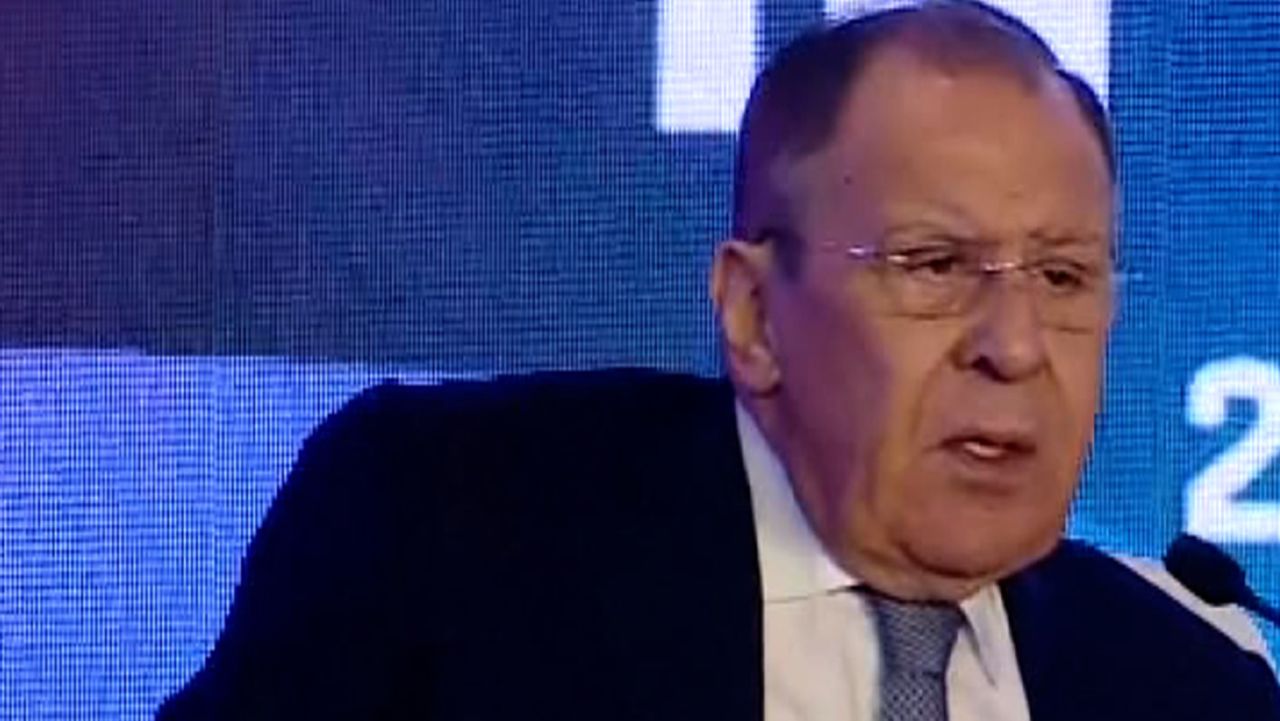
Geopolitics is currently stuck in a 1970s time warp. Sergei Lavrov claims that Western "regime change" efforts in Iran and Venezuela are purely about grabbing oil. The Western media counter-claims it is about "democracy." Both sides are selling you a fairy tale.
If the United States wanted Venezuelan or Iranian crude, they wouldn't need a coup. They would just need a checkbook. The global market is a liquid, fungible reality where even your worst enemies end up fueling your trucks through three layers of intermediaries. To suggest that the chaos in Caracas or Tehran is a simple smash-and-grab for barrels is to ignore how modern energy economics actually functions.
The truth is far more uncomfortable: It’s not about owning the oil. It’s about managing the decline of the petrodollar and the desperate attempt to keep the global financial plumbing from bursting.
The Myth of Resource Scarcity
The "Blood for Oil" narrative is a relic. It assumes we live in a world of peak oil supply. We don’t. We live in a world of peak demand and oversupply. Between the Permian Basin shale revolution and the steady march toward electrification, the strategic value of a single oil field has plummeted.
If Washington wanted to crush its rivals via energy, it wouldn't send the CIA; it would just keep pumping in Texas. When Lavrov says the West wants to "control" these resources, he’s projecting a Soviet-era mentality of physical hoarding. In reality, the U.S. has spent the last decade becoming the world's swing producer. We don't need Iran’s heavy crude. We certainly don't need Venezuela’s bitumen-like sludge that requires massive, expensive refining capacity just to turn into usable fuel.
The "oil" argument is a convenient mask for a much deeper structural panic: the loss of the ability to sanction.
Sanctions Are the Real Product
The U.S. doesn't want the oil; it wants the power to ensure no one else can buy it without permission. This isn't an extraction play. It’s a gatekeeping play.
By locking Iran and Venezuela out of the formal banking system, the West isn't trying to lower prices at the pump. It is trying to maintain the dominance of the SWIFT system and the USD. When a country sells oil in Yuan or Rubles, it threatens the very foundation of the American debt-based economy.
I’ve watched analysts spend years tracking tankers as if they were pieces on a Risk board. They miss the point. The tanker doesn't matter. The ledger that records the transaction is what matters. Lavrov knows this. He just finds it more politically expedient to scream "Imperialism!" than to admit that Russia’s own economy is equally desperate to bypass the dollar.
Why Regime Change is a Failed Business Model
Let’s look at the ROI. If the goal was profit, the Iraq War was the worst investment in human history. The trillions spent to "secure" oil fields resulted in China becoming the primary beneficiary of Iraqi production contracts.
If the "regime change" in Venezuela was about oil, it has been a catastrophic failure. PDVSA, the state oil company, is a rusted-out husk. Production has cratered. Any private firm looking to "seize" those assets would have to spend hundreds of billions just to get the pumps working again. No CEO with a fiduciary duty to shareholders would touch that balance sheet.
Imagine a scenario where a private equity firm tried to take over a bankrupt, contaminated, and sanctioned oil field in a war zone. They would be laughed out of the boardroom. Yet, we are told to believe the U.S. government is doing exactly that on behalf of "Big Oil." It doesn't track. Big Oil wants stability and predictable royalties, not the chaotic vacuum of a post-coup state.
The Venezuelan Sludge Trap
Venezuela’s "Orinoco Belt" is often cited as the largest reserve in the world. This is technically true and economically irrelevant.
- Extraction Cost: High.
- Refining Complexity: Extreme.
- Transport Infrastructure: Non-existent or crumbling.
It is "heavy" oil. It requires "diluents"—lighter oils—to even flow through a pipe. Ironically, Venezuela often has to import oil from the U.S. to make its own oil sellable. If this is a resource grab, it’s like breaking into a house to steal a safe that costs more to move than the money inside it.
The Geopolitical Theater of Distraction
Lavrov’s rhetoric serves a specific purpose: it simplifies a complex, multi-polar struggle into a 20th-century morality play. It paints Russia as the protector of sovereignty and the U.S. as the greedy oil baron.
The U.S. response—talking about human rights while ignoring the humanitarian disasters caused by its own sanctions—is the other half of the theater.
Neither side is talking about the real shift: the fragmentation of the global trade order. We are moving toward a "Balkanized" energy market. You have the "Western Bloc" (USD-based, renewables-focused, shale-backed) and the "Shadow Bloc" (China, Russia, Iran, Venezuela, trading in local currencies and using "ghost fleets").
The High Cost of the Status Quo
The danger of the "it's all about oil" narrative is that it prevents us from seeing the actual risks. The risk isn't that we will run out of oil or that one country will "own" it all. The risk is that the infrastructure of global trust—the ability to trade freely without a naval escort—is evaporating.
When we focus on Lavrov’s claims, we ignore the fact that the U.S. is currently weaponizing the financial system to a degree that is making even its allies nervous. When you kick a country out of the dollar-based world, you don't just hurt them; you give everyone else a reason to build a world where the dollar doesn't matter.
Stop Asking Who Owns the Oil
The question isn't "Who owns the oil?" The question is "Who controls the clearing house?"
If you want to understand the tension in Iran and Venezuela, stop looking at maps of pipelines. Start looking at the balance sheets of central banks. The battle isn't for the liquid in the ground. It's for the digital zeros on the screen.
The "resource war" is a ghost. We are in a currency war, and the oil is just the collateral damage.
Burn the old playbook. The era of the oil-driven coup is dead. We have entered the era of the financial blockade, and it is far more dangerous, far more subtle, and significantly more expensive for everyone involved.
Stop listening to the diplomats who talk like it's 1953. They are either lying to you or they are the only ones left who believe their own propaganda.