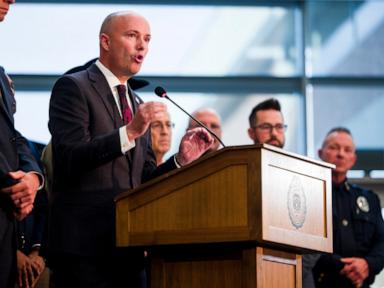
Americans are exhausted. They are tired of the screaming matches, the performative posturing, and the daily theater of contempt that passes for modern political discourse. When Utah Governor Spencer Cox steps forward to declare that citizens are desperate for something better, he is not merely offering a comforting platitude. He is pointing directly at a systemic rot that has hollowed out the American civic experiment. The underlying machinery of modern politics rewards division above all else, creating an environment where moderation is treated as treason and compromise is viewed as weakness.
To understand how the nation arrived at this juncture requires examining the financial and social incentives driving polarization. Conflict sells. Anger drives engagement. Algorithms deployed by major technology platforms are explicitly designed to amplify outrage because emotional agitation keeps eyeballs glued to screens. Political operatives realized long ago that demonizing an opponent yields higher fundraising returns than explaining a nuanced policy position. This is the structural reality underlying the political death spiral. It is an engineered crisis, sustained by profit motives and ideological tribalism. You might also find this similar story insightful: Why Western Freedom Did Not Create Anger But Built The Engine That Exposed It.
The Architecture of Contempt
Ideological disagreement has existed since the founding of the republic, but the nature of that disagreement has mutated. The core threat facing the United States is no longer simple divergence in policy preference; it is the culture of contempt. Contempt differs fundamentally from mere anger. Anger says someone is wrong. Contempt says someone is worthless.
Consider a hypothetical scenario in a local school board election. Two decades ago, candidates debated property taxes and curriculum priorities with sharp words, yet neighbors still sat together at Friday night football games. Today, a disagreement over library books frequently transforms into a campaign of personal destruction, complete with online doxxing and threats of social ostracization. The political has become totalizing. Party affiliation has eclipsed religion, profession, and geography to become the primary lens through which individuals define their identity and judge the moral worth of their neighbors. As reported in detailed reports by The Guardian, the results are significant.
This totalizing tribalism creates an echo chamber from which escape feels perilous. Stepping outside the party line risks immediate excommunication by the most vocal factions on social media. Consequently, elected officials are incentivized to pander to the extremes. Potholes are non-partisan, but fixing a pothole does not generate viral video clips or national cable news appearances. Puncturing this dynamic requires more than wishful thinking; it demands structural resistance against the incentive loops that reward extremism.
Institutional Decay and the Loneliness Epidemic
The collapse of traditional civic life compounds this polarization. Over the past thirty years, membership in bowling leagues, fraternal organizations, local churches, and neighborhood associations has plummeted. These mediating institutions once forced Americans from different walks of life to cooperate on mundane tasks, building a baseline of social trust that protected communities during high-stakes national disagreements.
As those physical gathering spaces disappeared, Americans retreated into digital silos. Humans are biologically wired for connection. When organic, local community structures vanish, people seek belonging in virtual tribes characterized by high ideological purity and intense hostility toward outsiders. This loneliness epidemic fuels the political fire. Outrage functions as a substitute for community, offering a false sense of purpose and camaraderie derived from fighting a common enemy.
Restoring civic health cannot happen purely through top-down legislative fixes. Rebuilding requires local intervention. Citizens must actively re-engage in physical, place-based institutions where ideological purity tests carry no weight. When people work together to clean up a park or run a local food bank alongside neighbors with opposing national voting records, the abstract monster on television transforms back into a human being with a family and a name.
The Cost of Performative Governance
Politics has transformed from a mechanism for collective problem-solving into a gladiator arena. The performers win. The policy architects lose. When legislative bodies prioritize media hits over committee work, actual governance grinds to a halt. Infrastructure crumbles, national debt mounts, and regulatory frameworks fail to adapt to technological shifts because lawmakers are too busy auditioning for their next cable news spot.
Voters sense this abdication of responsibility. The widespread public cynicism often mischaracterized as apathy is actually profound disappointment. People know the system is misfiring, yet they feel powerless against entrenched party machinery. Initiatives like the National Governors Association's cross-party efforts attempt to model a different baseline, proving that executives from opposing parties can still manage state affairs collaboratively without sacrificing core principles. Yet these examples remain isolated islands in a vast sea of partisan hostility.
Breaking the cycle demands personal friction. It requires citizens to adopt deliberate conversational disciplines, such as pausing to evaluate the underlying values driving an opponent's perspective before formulating a rebuttal. This is not about abandoning deeply held convictions or watering down truth for the sake of artificial harmony. True pluralism demands fierce, unyielding debate coupled with an absolute refusal to dehumanize the person sitting across the table.
The current trajectory points toward deeper alienation if left unchecked. Reversing course is an uphill battle against multi-million-dollar machine politics and algorithmic manipulation. Yet the sheer exhaustion of the electorate suggests the breaking point is near. The appetite for a functional alternative is real, waiting only for leaders and citizens courageous enough to step off the highway of outrage and build something durable in the quiet spaces underneath the noise.