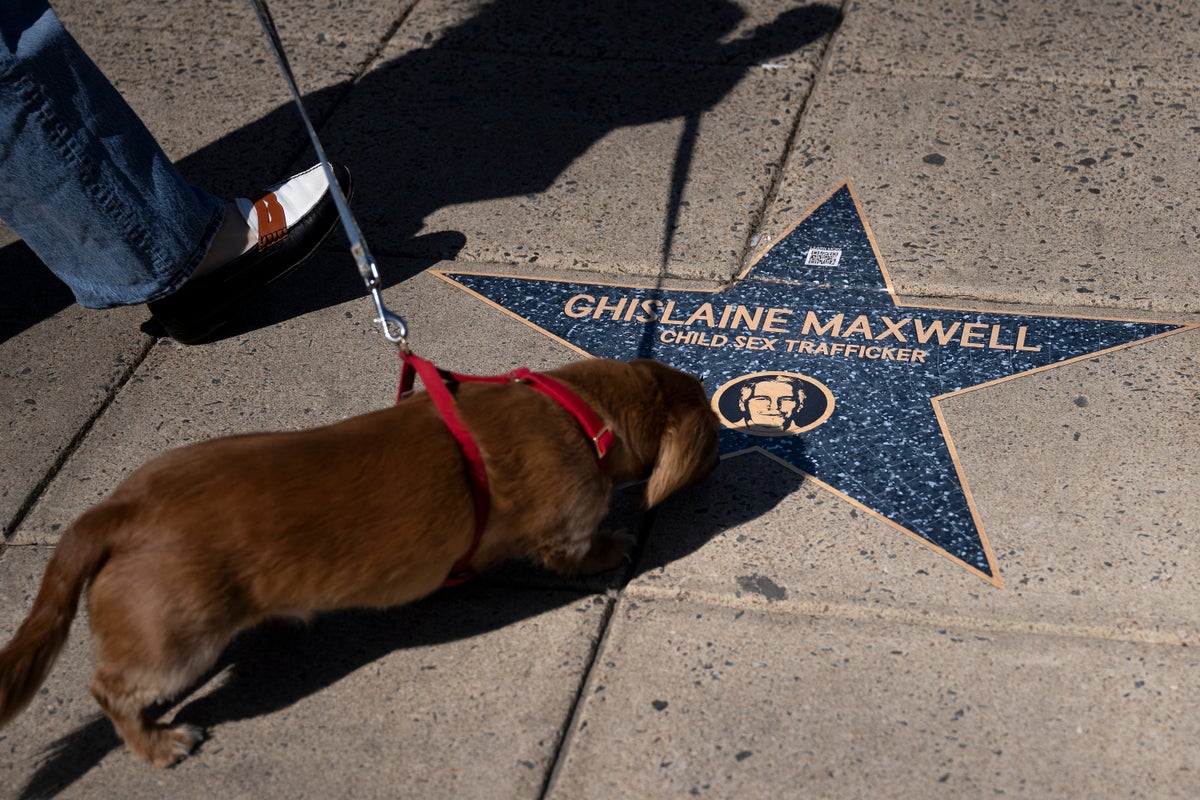
A series of gold-painted stars appeared overnight on a sidewalk just blocks from the White House, mimicking the aesthetic of the Hollywood Walk of Fame but bearing names associated with the Jeffrey Epstein scandal. While bystanders stopped to snap photos and social media accounts erupted with speculation, the installation is not a random act of vandalism or a "mysterious" phenomenon. It is a calculated piece of political theater designed to exploit the proximity of power and the public’s enduring obsession with a sex trafficking case that remains shrouded in unanswered questions.
The "walk of shame" features high-profile names of figures who were either mentioned in flight logs, visited the private island, or had documented business ties to the late financier. By placing these names on the doorstep of the federal government, the creators are forcing a confrontation with the uncomfortable reality of the case. They are betting on the fact that while the legal system has largely moved on, the court of public opinion is still hungry for accountability.
The Strategy of Proximity and Provocation
Locating this installation in Washington D.C. rather than New York or Florida—where the crimes actually occurred—is a deliberate choice. The District of Columbia is the center of the regulatory and judicial apparatus that failed to stop Epstein for decades. By laying these stars in the path of lobbyists and government staffers, the organizers are turning a sidewalk into a physical indictment.
This isn't just about memory; it's about optics.
The contrast between the "prestige" of a gold star and the infamy of the names written on them creates a jarring visual dissonance. This is a classic tactic used in psychological operations and street art. It borrows from the playbook of figures like Banksy or the Guerilla Girls, using a familiar cultural symbol to deliver a punch to the gut. The goal is to make the elite uncomfortable in their own backyard.
Behind the Golden Paint
The execution of the stars suggests a level of planning that goes beyond a casual prank. The materials used—heavy-duty stencils and weather-resistant metallic paint—indicate a desire for longevity, even if only for a few days before the city’s Department of Public Works arrives with pressure washers. This is an expensive, labor-intensive effort.
In the world of investigative reporting, you follow the money or the motive. The motive here is clearly to keep the Epstein narrative alive during a cycle where other global crises threaten to bury it. There is a segment of the public that believes the 2019 death of Epstein in a federal lockup was a convenient exit for those he could have implicated. The stars act as a physical manifestation of that lingering distrust.
The Problem of Guilt by Association
One of the most complex aspects of this "walk" is the lack of distinction between the names listed. The installation paints with a broad brush, placing individuals who were accused of direct misconduct alongside those who may have simply been passengers on a plane or guests at a dinner party. This is where the installation moves from advocacy into the territory of modern digital vigilantism.
- The Targets: Names of former presidents, royalty, and tech moguls.
- The Message: No one is untouchable, regardless of their status.
- The Risk: The blurring of lines between proven criminal behavior and social proximity.
Critics argue that these types of displays do more to spread conspiracy theories than to help victims. However, supporters of the stunt argue that the legal system's failure to provide a full accounting of Epstein’s network justifies these unconventional methods. When the official record feels incomplete, the public starts writing its own on the pavement.
Why This Resonates Now
The timing is not accidental. We are living through an era where the "elites" are viewed with record levels of skepticism. The Epstein case has become the ultimate symbol of a tiered justice system—one where the wealthy can negotiate non-prosecution agreements behind closed doors while the victims are left to fight for scraps of information for decades.
The sidewalk stars serve as a low-cost, high-impact reminder of that imbalance. They take advantage of the viral nature of modern news. A single photo of a star bearing a famous name, positioned near a landmark like the Hay-Adams hotel or Lafayette Square, can reach millions of people before the paint is even dry. This is information warfare on a budget.
The Logistics of Removal and Persistence
Washington D.C. is one of the most surveilled cities on the planet. Between federal cameras, private security for law firms, and the constant presence of Secret Service patrols, pulling off an unauthorized art installation requires precision. The "hit and run" nature of the stars suggests a small, mobile team that knows the blind spots of the city’s security grid.
When city crews eventually scrub the names away, they unwittingly participate in the performance. The act of erasure becomes a metaphor for the perceived cover-up that has defined the Epstein case since the first Miami Herald investigations broke the story wide open. The creators likely expected the removal. In fact, the removal is the final act of the piece.
Lessons from the Sidewalk
This isn't the first time art has been used to haunt the halls of power, and it won't be the last. In the 1980s, activists used "die-ins" to protest the government's response to the AIDS crisis. In the 1990s, guerilla posters targeted the tobacco industry. The Epstein stars are the 21st-century evolution of this tradition, updated for a world where a "like" or a "share" is the primary currency of protest.
The real story isn't the paint on the ground. The real story is the persistent, gnawing feeling among the public that the full truth of the Epstein network has never been told. As long as that vacuum exists, people will fill it with gold stars, wheat-paste posters, and digital leaks.
The city can clean the sidewalk. It is much harder to clean the stain left by a scandal that touched the highest levels of global society. If the authorities want these stars to stop appearing, the solution isn't more pressure washers; it's a level of transparency that has so far been conspicuously absent from the official record.
Check the next set of unsealed court documents against the names on the street to see which ones the "artists" got right.