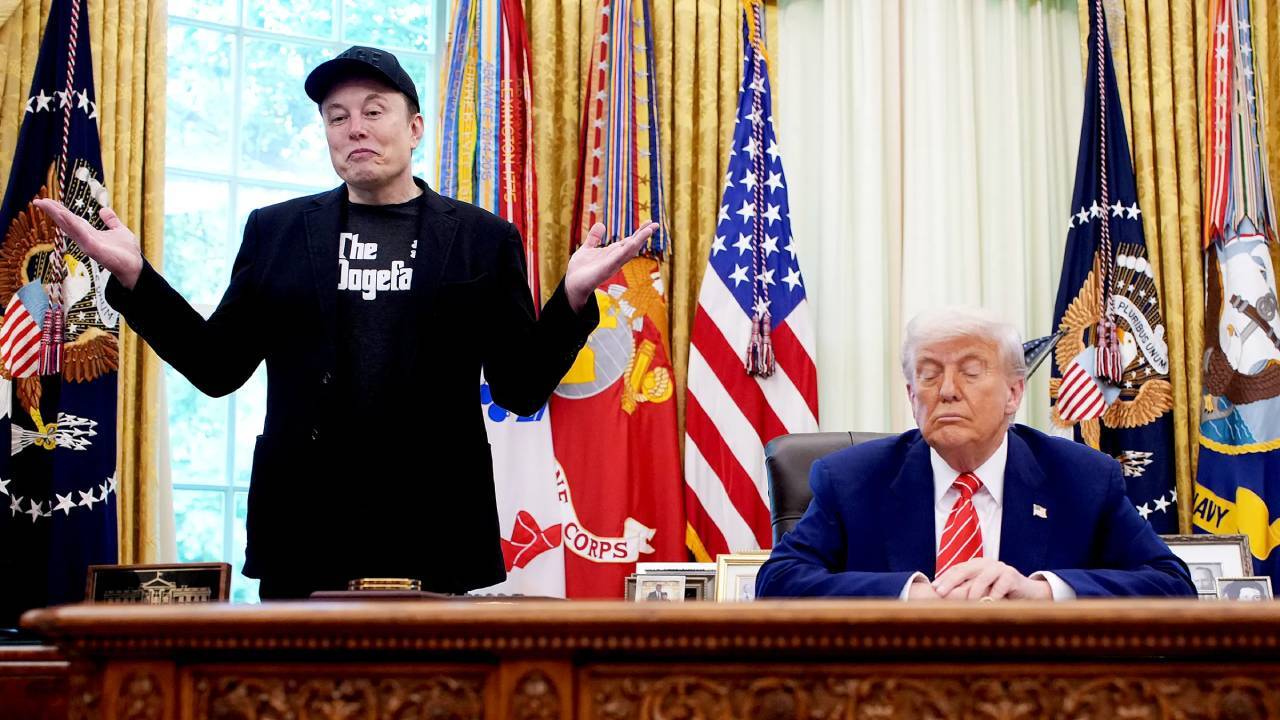
Political capital allocation carries an asymmetrical risk profile that traditional enterprise frameworks fail to model. When an executive deploys liquid capital and executive bandwidth into regulatory reform, the expected ROI must account for enterprise brand erosion, political counter-party risk, and severe operational distraction. Elon Musk’s publicly stated regret over his $200 million investment in Donald Trump’s 2024 campaign and his subsequent tenure leading the Department of Government Efficiency (DOGE) provides a pristine case study in political misallocation.
The structural failure of the DOGE enterprise exposes three fundamental analytical errors: underestimating sovereign friction, miscalculating cross-entity equity drag, and ignoring the liquidity constraints of executive mindshare.
The Three Structural Failure Mechanisms of Corporate Political Intervention
Political initiatives led by private enterprise leaders consistently fail when corporate operational frameworks are applied to sovereign entities without structural adjustments. DOGE’s breakdown traces directly to three specific systemic disconnects.
1. The Sovereign Friction Multiplier
In corporate engineering, reduction in headcount translates directly to margin expansion. Within federal architecture, statutory obligations and administrative law create a friction multiplier. Attempting to apply rapid, unstructured cost-cutting to federal agencies ignores civil service protections, statutory mandates, and legislative appropriations processes. The resulting legal challenges, administrative backlogs, and severance obligations neutralize theoretical savings.
2. Cross-Entity Brand Contagion and Valuation Drag
Consumer-facing enterprise valuations rely heavily on brand affinity and market perception. Assigning an executive's personal brand to partisan operational mandates triggers severe brand contagion across commercial entities.
- The Demand Shock: Tesla’s core customer demographic in major urban markets experienced ideological alienation, manifesting in immediate revenue declines and market share contraction.
- The Valuation Variance: While private aerospace holdings like SpaceX proved resilient due to sovereign defense lock-in, public equities exposed to consumer discretionary markets absorbed severe valuation discounts.
3. Mindshare Illiquidity and Executive Dilution
Executive focus is a non-fungible asset. Dividing top-tier leadership across multiple multi-billion-dollar enterprise engineering initiatives while simultaneously running a sovereign cost-reduction program introduces catastrophic operational latency. Production bottlenecks, product roadmap delays, and delayed responses to competitive threats in primary business ventures are the direct opportunity costs of political involvement.
Quantifying the Opportunity Cost Function
To understand why a $200 million political expenditure resulted in billions of dollars in enterprise value erosion, the underlying trade-offs must be formalized.
$$C_{\text{Total}} = C_{\text{Direct}} + \Delta V_{\text{Brand}} + O_{\text{CapEx}}$$
Where:
- $C_{\text{Direct}}$ represents capital injected into political infrastructure ($200 million).
- $\Delta V_{\text{Brand}}$ represents the negative delta in consumer equity valuation resulting from political backlash.
- $O_{\text{CapEx}}$ represents the unrealized returns from internal R&D, product execution, and manufacturing optimization foregone during political tenure.
When evaluating the DOGE intervention through this cost function, the direct capital allocation ($200 million) represents less than 1% of total enterprise drag. The real loss occurred in $\Delta V_{\text{Brand}}$ via reduced unit deliveries and $O_{\text{CapEx}}$ via delayed execution on autonomous driving and robotics roadmaps.
The Counter-Party Trap in Sovereign Partnerships
Sovereign leaders and corporate executives operate on completely divergent incentive structures. Executives optimize for long-term equity growth, cash flow efficiency, and sustained market dominance. Political actors optimize for short-term news cycles, legislative coalitions, and electoral survival.
Relying on political alliances to execute structural regulatory reform creates an inherent counter-party risk:
- Legislative Disalignment: Executive-led cost-cutting initiatives frequently collide with legislative spending priorities. When political leaders sign expansive fiscal bills that contradict efficiency goals, the external corporate leader is left holding reputational risk while their operational goals are neutralized.
- Asymmetric Retaliation: Public criticism of sovereign partners routinely results in administrative friction, threat of contract cancelations, or regulatory hostility.
- Termination Without Recourse: Sovereign political appointments lack board protections or operational governance. Strategic mandates can be terminated overnight based on shifting political winds, leaving the executive exposed to all external downsides with zero structural gains.
Executive Realignment and Asset Protection Playbook
Capital allocators and enterprise executives contemplating public sector engagement or political alignment must implement a risk-mitigation framework prior to deployment.
- Isolate Consumer-Facing Equity: Corporate entities with high consumer exposure must maintain strict neutrality boundaries. Any political allocation must occur through isolated wealth vehicles without executive branding tied to operational consumer lines.
- Cap Mindshare Exposure: Executives must limit direct political service roles to advisory boards with defined, time-bound deliverables rather than operational execution appointments.
- Stress-Test Political Counter-Party Incentives: Assume that political partners will prioritize legislative omnibus goals over strategic efficiency targets. If an initiative requires sustained policy alignment to generate a positive return, class it as a high-loss project and decline deployment.
The optimal strategic play for executives facing political distraction is rapid capital divestment from public policy ventures, re-concentration of mindshare on core technological moats, and immediate operational focus on core product pipelines.