In Israel’s parliamentary system, casting a ballot does not select a prime minister; it merely distributes leverage for a high-stakes negotiation governed by strict statutory clocks. Because the 120-seat Knesset is elected via closed-list proportional representation in a single nationwide district, no single party has ever achieved the 61-seat threshold required for a standalone majority. When polling stations close, the operational focus shifts immediately from voter mobilization to mathematical coalition engineering.
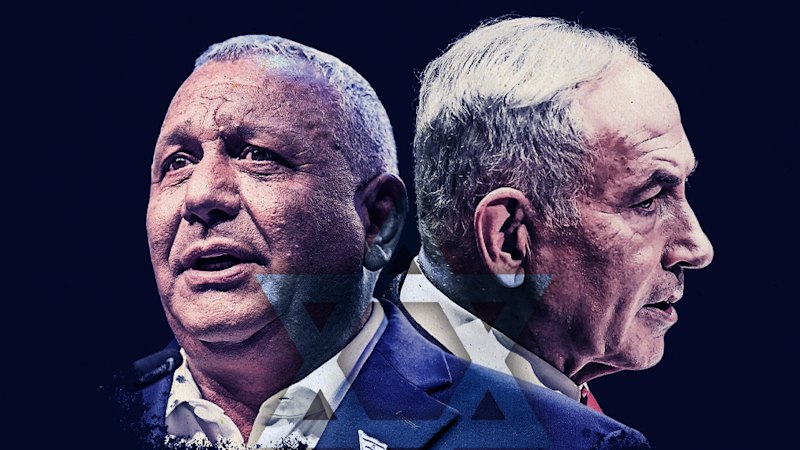
The standard journalistic coverage of an Israeli election night treats exit polls as a scoreboard. That framing misunderstands the underlying institutional design. Exit polls only establish the initial boundary conditions for a multi-stage bargaining game. Following the October 27, 2026 election for the 26th Knesset—which saw turnout surge to 77.98%—the electorate fractured across eleven qualifying factions, leaving Prime Minister Benjamin Netanyahu’s bloc at 53 seats, Gadi Eisenkot’s opposition camp at 48 seats, and Arab-led parties holding 19 seats. Understanding what happens after polls close requires mapping the exact legal, mathematical, and political mechanisms that convert fragmented vote shares into an executive branch.
Phase One: Vote Conversion and the Threshold Filter
Before political negotiations can legally begin, raw ballots must pass through a deterministic mathematical pipeline managed by the Central Elections Committee.
- The 3.25% Qualifying Threshold: Under Israel's electoral law, a party list must capture at least 3.25% of all valid votes cast nationwide to enter the Knesset. Votes cast for lists falling below this bar—such as the roughly 155,000 ballots cast for The Reservists and New Economic Party alliance or the 95,000 for Amcha Yisrael in the October 2026 cycle—are discarded entirely from the seat-allocation denominator. This creates a zero-sum distortion: when small parties fail to clear the bar, the effective seat count of surviving parties inflates without them winning a single additional vote.
- The Bader-Ofer Surplus-Vote Method: Dividing total valid qualifying votes by 120 leaves fractional remainders. Israel resolves these remainders using the Bader-Ofer formula, a highest-averages method favoring larger lists. To mitigate wasted fractional votes, parties sign pre-election surplus-vote agreements. For example, in 2026, paired lists such as Yashar and The Democrats, or Likud and the RZP–Zehut alliance, pooled their remainders. The system treats the pair as a single unit during initial remainder distribution, then applies the Bader-Ofer formula a second time internally to award the extra seat to the partner with the higher vote-per-seat ratio.
- Certification and Double-Envelope Ballots: Initial counts exclude "double-envelope" ballots cast by soldiers, diplomats, hospital patients, and prisoners. Because military personnel skew younger and often differ demographically from the general electorate, the counting of double-envelope votes routinely shifts one to three seats between blocs in the 48 to 72 hours after election day. Official results are only binding once certified and presented to the President—a milestone reached eight days after the vote, on November 4, 2026.
Phase Two: The Presidential Consultation Funnel
Once the Central Elections Committee certifies the final tally, institutional authority transfers to the President of Israel. While largely ceremonial in day-to-day governance, the presidency acts as the primary gatekeeper during government formation under Basic Law: The Government.
The President summons representatives from every faction that crossed the 3.25% threshold. During these televised consultations, each party leader formally recommends a Knesset member to receive the mandate to form a government.
A common analytical error is assuming the President must select the leader of the single largest party. In practice, the Basic Law directs the President to assign the mandate to the Knesset member with the highest probability of assembling a viable 61-seat coalition. A party leader with 27 seats (such as Likud in 2026) holds no automatic priority over a rival with 21 seats (such as Yashar) if the smaller party commands broader coalition commitments. The consultations are a formal counting of explicit endorsements, though party leaders frequently withhold recommendations or attach strict policy conditions to preserve negotiating leverage.
Phase Three: The Statutory Mandate Clocks
After completing consultations, the President formally designates a candidate to form a government. This triggers a rigid, three-tier statutory countdown designed to prevent indefinite caretaker rule.
- The Primary Mandate (28 to 42 Days): The first designated candidate receives 28 days to negotiate coalition agreements and present a government to the Knesset. If negotiations stall, the President holds discretionary authority to grant a single extension of up to 14 additional days, capping the initial window at 42 days.
- The Secondary Mandate (28 Days): If the first candidate fails to secure 61 votes, returns the mandate, or loses a Knesset confidence vote, the President has three days to either transfer the mandate to a second Knesset member or inform the Knesset Speaker that no candidate can form a government. A second designee receives a strict, non-extendable window of 28 days.
- The Parliamentary Override (21 Days): Should both presidential designees fail, the process shifts from executive appointment to legislative initiative. For 21 days, any group of 61 or more Knesset members may submit a written request to the President nominating a specific MK—including one who previously failed—to form a government. If 61 legislators sign the petition, the President is legally compelled to grant that candidate a final 14-day window.
If the 21-day parliamentary window expires without a 61-signature petition, or if the final candidate fails to pass a confidence vote within 14 days, the Knesset dissolves automatically. Snap elections are then triggered by law, resetting the entire cycle. Between 2019 and 2022, repeated failures across these statutory windows forced five consecutive national elections.
The Asymmetry of Caretaker Governance
Throughout every phase of post-election bargaining, the outgoing prime minister and cabinet remain in office as a transitional, or caretaker, government. This institutional continuity creates a structural asymmetry in bargaining power.
A caretaker government retains full executive authority to conduct military operations, manage diplomacy, and administer state agencies, subject only to Supreme Court doctrines of "restraint" regarding irreversible long-term appointments or major policy shifts near an election. Because the incumbent prime minister continues to occupy the office until a successor wins a Knesset vote of confidence, an incumbent facing an opposition bloc that lacks internal cohesion benefits directly from stalemate.
In the aftermath of the 2026 vote, where Netanyahu’s bloc fell short at 53 seats but the anti-Netanyahu Jewish opposition secured only 48 seats, this dynamic becomes the central variable. The incumbent does not need to build a 61-seat coalition to remain in power; the incumbent only needs to prevent rivals from assembling one. Every day negotiations drag on extends the caretaker tenure.
The Coalition Viability Matrix: Mathematical vs. Political Coalitions
In game theory, a minimum winning coalition requires simply summing seat counts until the total reaches 61. In Israeli politics, mathematical viability rarely aligns with political feasibility due to rigid ideological veto players and pre-election red lines.
To evaluate any post-election outcome, analysts must separate seat arithmetic into three structural constraints:
- The Arab Party Veto Constraint: In 2026, the Joint List (11 seats) and Ra'am (8 seats) captured a combined 19 seats. While Ra'am previously broke historical precedent by joining a governing coalition in 2021, right-wing and center-right factions—including Avigdor Lieberman’s Yisrael Beiteinu (7 seats) and Naftali Bennett’s Together list (12 seats)—frequently impose strict red lines against relying on non-Zionist or Arab factions for a parliamentary majority. When 19 seats are excluded from coalition math by ideological vetoes, the remaining 101 Jewish-majority seats must produce a 61-seat majority—requiring a 60.4% supermajority among the remaining factions.
- Sectoral Resource Extraction: Ultra-Orthodox (Haredi) parties—Shas (6 seats) and United Torah Judaism (7 seats) in the 26th Knesset—operate primarily as transactional sectoral actors rather than broad ideological movements. Their participation requires concrete budget allocations for religious institutions and statutory exemptions from mandatory military conscription. Conversely, secular nationalist parties like Yisrael Beiteinu and centrist security factions like Yashar campaign explicitly on universal military conscription. A coalition cannot simultaneously satisfy Haredi conscription exemptions and secular-centrist draft enforcement without triggering an immediate confidence crisis.
- Personal Boycott Commitments: Since 2019, Israeli party platforms have centered heavily on personal eligibility—specifically whether factions will sit in a cabinet led by Benjamin Netanyahu. These personal boycotts fracture natural ideological alignments. Parties that share nearly identical economic and security platforms refuse to merge into a single bloc solely over the identity of the prime minister, artificially inflating the bargaining power of small kingmaker factions.
Executing the Swearing-In and Confidence Vote
Negotiations conclude only when a candidate signs formal coalition agreements with enough factions to guarantee at least 61 votes—or a simple plurality of votes cast if opposition members abstain, though a 61-seat floor is the operational standard to pass a state budget.
These coalition agreements are public contracts detailing ministerial portfolios, deputy ministries, Knesset committee chairmanships, and specific legislative commitments. Once signed, the designated prime minister notifies the President and the Knesset Speaker.
The Knesset then convenes for a formal vote of confidence. The incoming prime minister presents the cabinet lineup and the government's basic policy guidelines. Unlike systems where ministers are confirmed individually, the Knesset votes on the government as a single collective unit. If a majority approves, the prime minister and ministers take their oaths of office immediately, terminating the caretaker government's authority.
Limitations of Coalition Agreements
A signed coalition agreement and a successful confidence vote do not guarantee a four-year governing term. In fact, the 25th Knesset—which completed its full term in 2026—was the first Israeli legislature to do so since 1988.
Coalition agreements are not legally enforceable in court; they are political truce documents held together entirely by mutual deterrence. Two structural mechanisms routinely break newly formed Israeli governments:
- The State Budget Deadline: Under Basic Law: The State Economy, if the Knesset fails to pass an annual or biennial state budget by a strict statutory deadline (typically March 31 of the budget year, or within a set period after government formation), the Knesset dissolves automatically. Small coalition partners routinely weaponize the budget vote, threatening to trigger snap elections unless last-minute financial or legislative demands are met.
- The Norway Law and Defection Dynamics: Ministers frequently resign their Knesset seats under the "Norwegian Law" to allow the next candidate on their party list to enter parliament and handle committee work. While this expands parliamentary manpower, it introduces lower-ranked list members who often possess weaker party discipline, increasing the risk of backbench defections that can erase a narrow 61- or 62-seat majority overnight.
Strategic Forecast and Analytical Playbook
When evaluating an Israeli post-election deadlock—such as the 53–48–19 split produced in October 2026—observers must ignore daily media leaks regarding ministerial demands and track three hard indicators instead:
- Watch the Budgetary and Conscription Red Lines, Not Ministerial Titles: Portfolios are divisible assets; statutory conscription laws and judicial oversight rules are binary. If centrist opposition leaders refuse to soften military draft requirements for Haredi youth, ultra-Orthodox factions will remain locked inside Netanyahu’s 53-seat bloc, blocking any opposition path to 61 without Arab party support.
- Monitor the 61-Signature Override Window: When neither bloc commands an organic majority, the first two presidential mandates frequently serve merely as warm-up rounds to exhaust party demands. The decisive inflection point occurs during the 21-day parliamentary phase, when the credible threat of a fifth or sixth election forces reluctant rivals to consider a rotating "national unity" government between the largest center-right and centrist factions.
- Factor in External Security Shocks: In Israel's institutional environment, an acute military escalation on the northern border, in Gaza, or with Iran alters the political cost function overnight. Severe security crises erase pre-election personal boycotts, providing opposition leaders with the public justification required to enter an emergency unity cabinet under an incumbent prime minister—converting an unsolvable parliamentary deadlock into a broad crisis coalition within 48 hours.