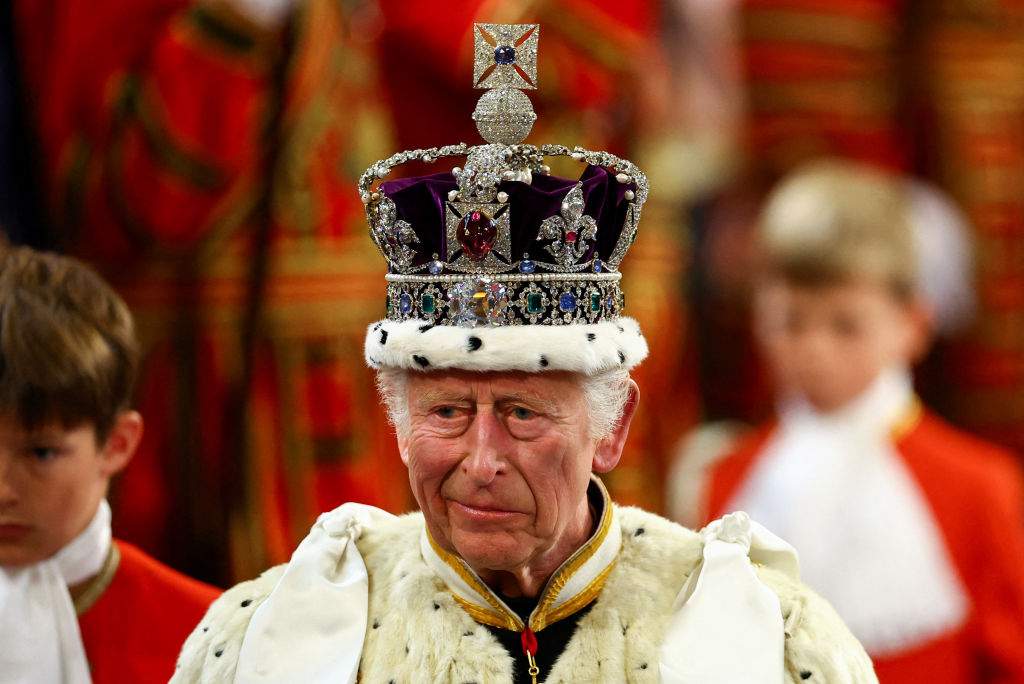
The heavy oak doors of the Sovereign’s Entrance look impermeable, but every April, a thin slip of paper slides out from beneath them that punctures the grand illusion of monarchy. It is a tax bill. For centuries, the inner workings of British royal finances were treated less like public record and more like state secrets, wrapped in velvet and hidden behind the high stone walls of Buckingham Palace. But the modern world demands a ledger. When King Charles III published his annual financial report, it was not just an exercise in accounting. It was a high-stakes performance of transparency designed to answer a question that has haunted the House of Windsor for generations: what, exactly, does a king owe to the people he rules?
Money and monarchy have always had an uncomfortable relationship. We want our royals to embody timeless grandeur—glistening coaches, pristine uniforms, historic palaces maintained with immaculate precision. Yet, we simultaneously check our watches and calculate the cost per minute. This tension is where the modern palace operates.
Consider a hypothetical taxpayer named Sarah. She sits at a kitchen table in Manchester, squinting at an energy bill, calculating whether she can stretch her budget to cover a leaking roof. To Sarah, a million pounds is an abstract concept, a lottery fantasy. To the estate she helps fund, a million pounds is rounding error. When the King’s financial spreadsheet lands in the news cycle, the numbers can feel alienating. But looking closer reveals a fascinating, deeply human struggle for relevance playing out through British pound sterling.
The core of the issue centers on the Sovereign Grant. This is the official mechanism that funds the King’s official duties. It is calculated as a percentage of the profits from the Crown Estate—a massive, ancient portfolio of land, coastline, and properties worth billions. The Crown Estate belongs to the reigning monarch, but only in right of the Crown. It is not their private property to sell off on a whim. Instead, its revenues go straight into the government Treasury, and the government hands back a slice to pay for royal travel, palace maintenance, and staff.
Lately, that slice has become a lightning rod. Thanks to a massive boom in offshore wind farms situated on seabed owned by the Crown Estate, profits have soared. Under the old rules, the royal household would have received a staggering windfall. Sensing the optics of a royal fortune ballooning during a national cost-of-living crisis, the palace and the government renegotiated. The King’s share was cut from 25 percent to 12 percent. It was a calculated move of financial self-preservation.
But the real complexity lies in what the King pays out of his own pocket.
King Charles voluntarily pays income tax on his private income, primarily the revenues derived from the Duchy of Lancaster. This vast portfolio of land, property, and assets has passed down through monarchs since the Middle Ages. It exists solely to provide the ruler with an independent income. The tax bill published by the palace represents this voluntary contribution. It is an act of fiscal concession, a nod to the idea that even a king must render unto Caesar.
Yet, critics point out the asterisk next to every royal concession. While the King pays income tax voluntarily, he remains exempt from inheritance tax on assets passed from monarch to monarch. When Queen Elizabeth II passed away, her immense private wealth transferred to Charles entirely untouched by the 40 percent levy that strips down the estates of ordinary British citizens. The justification is institutional stability; breaking up the royal collections and estates every generation would erode the fabric of the monarchy itself. But to the family trying to hold onto a modest semi-detached home after a grandparent passes, that explanation can taste like ash.
This is the invisible friction of the modern constitutional monarchy. The palace must constantly perform a delicate balancing act. They must spend enough to look like royalty—a threadbare monarchy loses its mystique—but not so much that they look rapacious. Every flight taken, every roof repaired at Windsor Castle, and every state banquet served is scrutinized by a public that is increasingly literate in the language of return on investment.
The numbers on the King's tax return are huge, yet the debate they spark is intimately small. It is a conversation about fairness, tradition, and the unwritten contract between the governor and the governed. We watch the King sign his name with a fountain pen, aware that the ink costs more than some people's weekly groceries, yet we also recognize the heavy, isolating weight of an institution that binds a human being to a lifetime of public accounting.
The spreadsheets will continue to populate, the percentages will shift with the political winds, and the debate will simmer through every economic downturn. Ultimately, the publication of a royal tax bill changes very little about the mechanics of wealth in Britain. But it pulls back the curtain just enough to remind us that behind the crowns, the scepters, and the centuries of ritual, there is a family sitting down with their accountants, acutely aware that the cost of their survival is paid out in the faith of the people outside the gates.