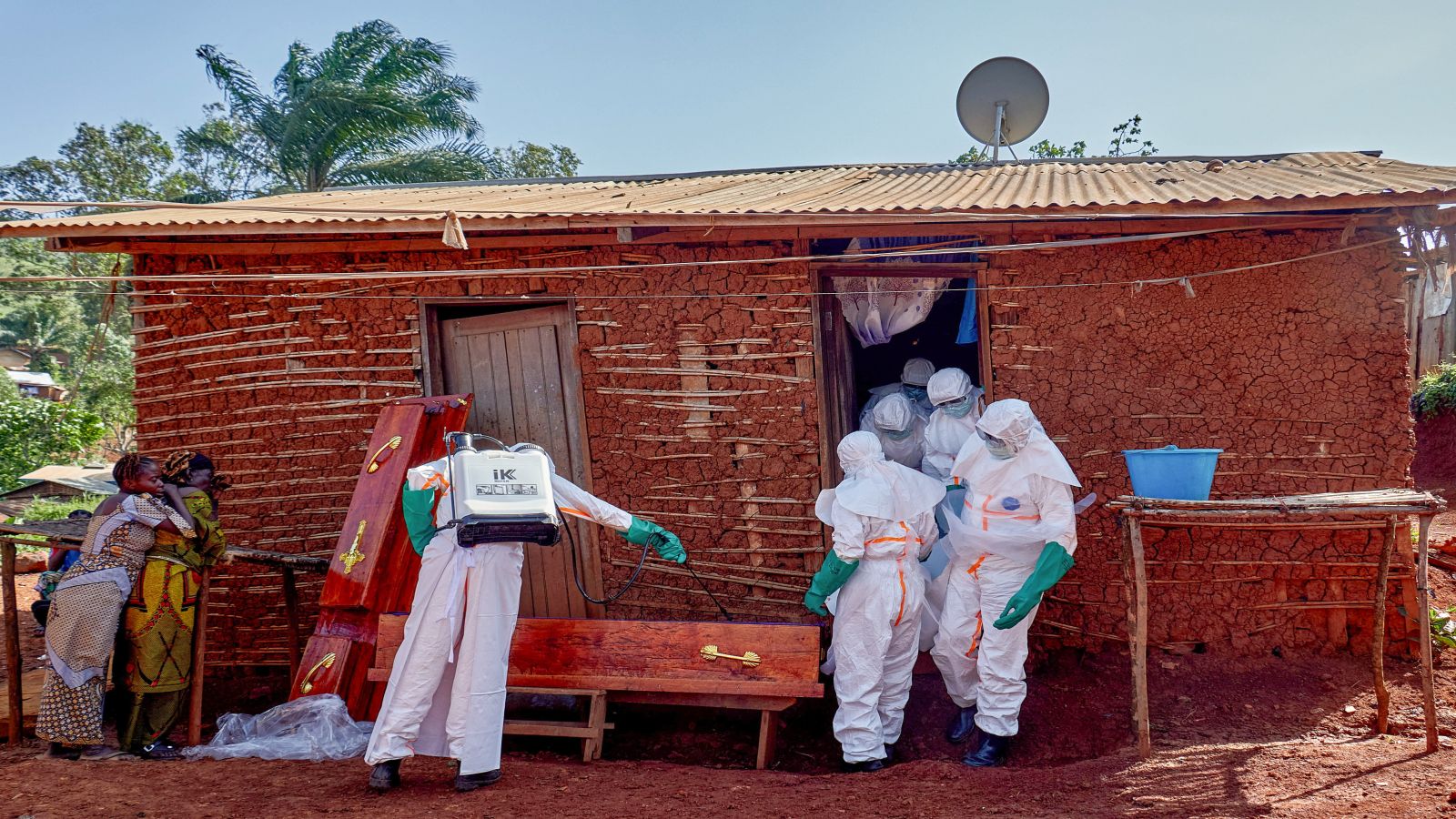
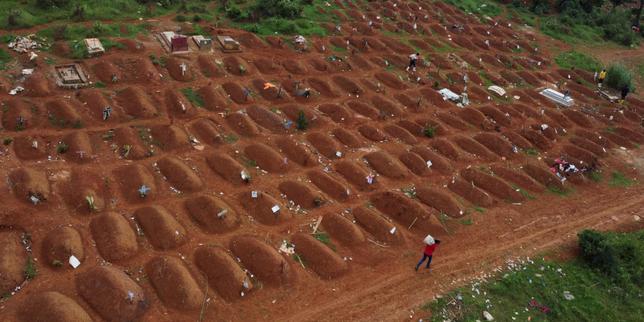
The baseline math of an Ebola outbreak is simple, brutal, and entirely public. A virus with a fatality rate hovering near 50 percent meets a healthcare infrastructure already hollowed out by decades of conflict. But the official numbers published by global health bodies rarely capture the secondary crisis unfolding in the clinic backrooms of the Democratic Republic of the Congo. Frontline healthcare workers are dying not just because the virus is lethal, but because the operational framework designed to protect them is fundamentally broken. Bureaucratic delays in hazard pay, acute shortages of personal protective equipment, and a deep-seated community mistrust have transformed medical duty into a high-stakes gamble.
To understand why containment efforts consistently stutter, one must look past the press releases detailing vaccine doses shipped and international funds pledged. The disconnect between top-down strategy and ground-level reality is vast.
The Anatomy of an Isolation Ward Failure
An isolation ward is supposed to be a fortress of sterile discipline. In reality, it is often a clinic with a plastic tarp separating the living from the dying. The structural integrity of an Ebola treatment center relies on strict zoning. Hot zones house active patients. Green zones are reserved for staff who have decontaminated.
When a supply chain fails, these zones blur. A delay in the arrival of standard surgical gloves forces workers to double-up on degraded inventory. If a single tear occurs during a twelve-hour shift in equatorial heat, the barrier vanishes. Healthcare workers are not catching Ebola because they lack training. They are catching it because the physical tools required to maintain biosecurity are rationed like wartime ammunition.
Consider the mechanics of the protective suit itself. The heavy, impermeable layers cause rapid dehydration and heat exhaustion within forty-five minutes. In many rural stabilization centers, running water is a luxury delivered by truck. When the trucks run late, the decontamination protocol is compromised. A nurse who has just spent an hour intubating a bleeding patient cannot wait indefinitely to be sprayed down with chlorine solution. They make choices based on survival instincts, and sometimes those choices are fatal.
The Broken Compact of Hazard Pay
Money inside an emergency health response behaves predictably. Millions of dollars flow from international donors to UN agencies and central ministries in Kinshasa. Yet, by the time that capital trickles down to a district nurse in North Kivu or Equateur province, it frequently evaporates.
[International Donors] -> [Global Agencies] -> [Central Ministries] -> [Local Clinics (Delays & Dilution)]
Hazard pay is designed to offset the extreme risk of working directly with filoviruses. When paid regularly, it stabilizes the workforce. When it stops, the system collapses. Local medical staff frequently go weeks, sometimes months, without receiving their promised stipends.
This is more than an administrative oversight. It is a security threat. Medical workers who cannot buy food for their families are forced to moon-light in private, unregulated clinics. In those gray-market facilities, they treat standard fevers without any protective gear. If that fever turns out to be early-stage Ebola, the private clinic becomes a super-spreader node. The virus hitches a ride on the very people trained to stop it.
The response machinery often treats these workers as an infinite resource. They are not. The psychological toll of watching colleagues die while operating on empty pockets creates a profound crisis of compliance. Striking for back-pay during an active epidemic is a desperate measure, but it is an increasingly common one.
The Weaponization of Community Mistrust
International medical interventions often arrive with the subtlety of an occupying army. White SUVs speed through villages. Foreign technicians arrive in biohazard suits that resemble alien armor. For a population that has survived generations of militia violence and state neglect, this sudden influx of well-funded attention is deeply suspicious.
Local health workers are caught squarely in the crossfire of this suspicion. Neighbors view them as complicit in a foreign conspiracy designed to profit off local misery. In extreme cases, this mistrust hardens into physical violence. Treatment centers are burned. Doctors are targeted.
+------------------------------------------------------------+
|                  THE MISTRUST FEEDBACK LOOP                |
+------------------------------------------------------------+
|                                                            |
|   Top-Down Intervention (White SUVs, Foreign Technicians)  |
|                             │                              |
|                             ▼                              |
|   Local Suspicion & Rumors ("Ebola is a business")          |
|                             │                              |
|                             ▼                              |
|   Violence Targetting Local Staff & Facilities             |
|                             │                              |
|                             ▼                              |
|   Response Retracts / Deployment Decreases                 |
|                             │                              |
|                             ▼                              |
|   Virus Spreads Unchecked in Communities                   |
|                                                            |
+------------------------------------------------------------+
The tragedy is that the local nurse is the only effective bridge across this chasm of communication. They speak the language. They know the families. But when the international response centers sideline local leadership in favor of external experts, that bridge is burned. The local staff are left exposed, wearing the uniform of a response that the community fears, without the protection of either international security or local goodwill.
The Failure of the Vaccine Distribution Model
The development of highly effective Ebola vaccines like Ervebo was heralded as the end of large-scale epidemics. The science is definitive. The logistics are a disaster.
The vaccine requires an uninterrupted ultra-cold chain, meaning it must be stored at temperatures between -60°C and -80°C until shortly before administration. In a country with a fractured electrical grid, this requires a massive deployment of specialized solar-powered freezers and generators.
Because these assets are scarce, distribution relies heavily on the ring vaccination strategy. This method involves vaccinating only the immediate contacts of a confirmed case, followed by the contacts of those contacts.
| Strategy Component | Ideal Execution | Field Reality |
|---|---|---|
| Contact Tracing | Rapid identification within 24 hours | Delayed by weeks due to dense forest geography and insecurity |
| Cold Chain | Stable -70°C storage from depot to field | Generator failures, fuel theft, and road washouts |
| Target Population | Precise vaccination of high-risk circles | Community resistance and demands for universal access |
When contact tracing fails because villages are inaccessible or hostile, the ring breaks. Healthcare workers are then left to manage an expanding outbreak with a preventative tool that is locked in a freezer miles away. The focus on high-tech solutions without matching investment in basic road infrastructure and local refrigeration turning points is a recurring strategic blind spot.
The Self-Preservation Pivot
Faced with systemic failure, healthcare workers are quietly rewriting their own protocols. Survival now dictates a shift away from official guidelines. Some clinics have begun reducing the hours patients are monitored to minimize staff exposure during peak heat periods. Others secretly source their own antibiotics and IV fluids through informal trade networks when central supplies dry up.
This is a rational response to an irrational environment. When the institutions tasked with managing a global health emergency fail to guarantee the survival of their primary asset—the human beings on the line—the asset protects itself.
The international community treats Ebola containment as a series of technical hurdles to be cleared with funding packets and innovation. But an epidemic is not contained by technology. It is contained by a nurse willing to walk into a hot zone at three in the morning. If that nurse suspects the system will abandon them the moment they stick their needle, they will eventually step away from the bed. And that is when the virus wins.