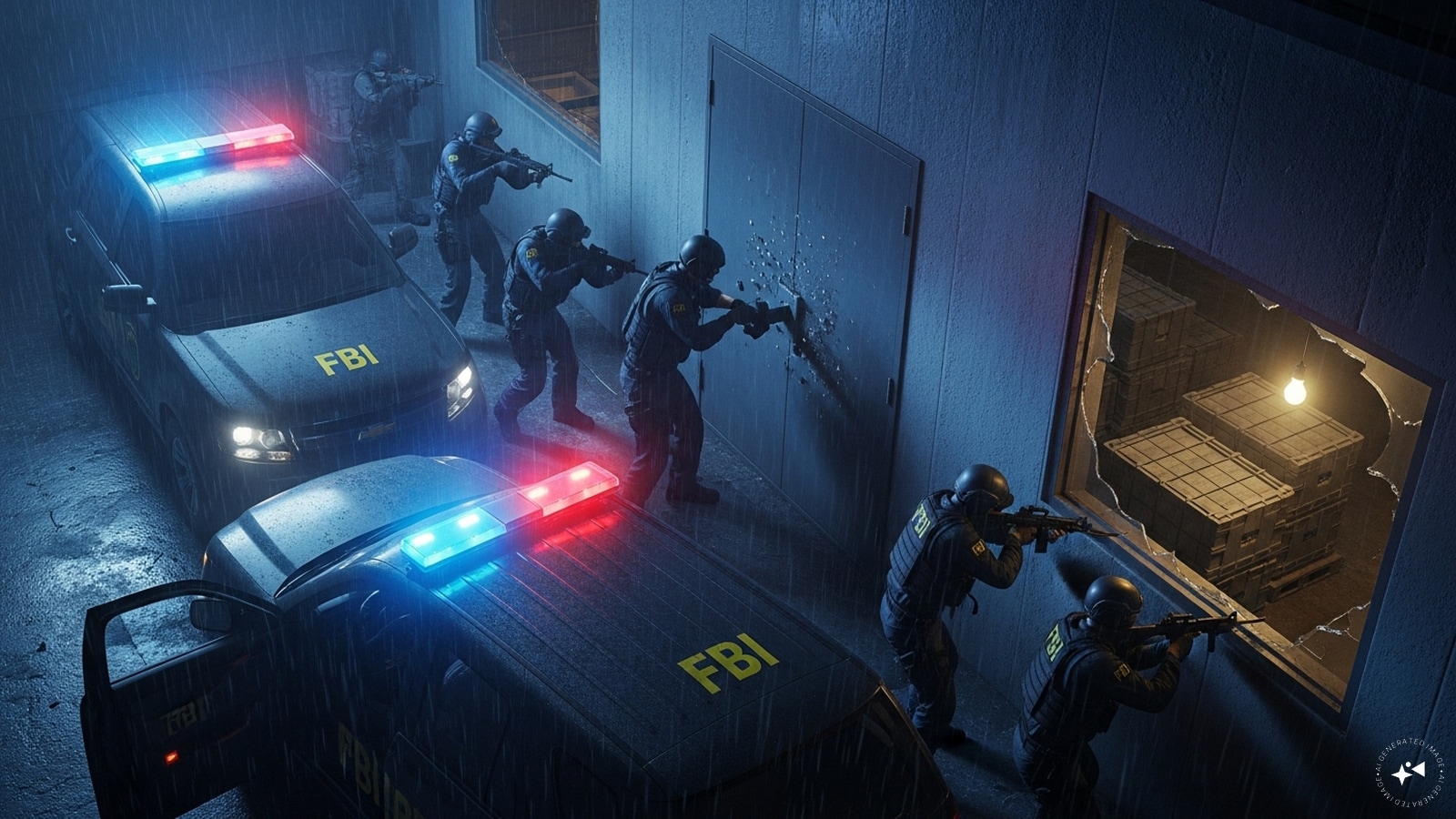
A stack of weathered posters sits in a backroom in Washington, D.C. The faces on them are familiar to a certain kind of person—the investigators who spend their lives staring at grainy security footage and the victims who see these eyes in their nightmares. For decades, the bounty for the FBI’s "Ten Most Wanted" fugitives stayed frozen at a symbolic $100,000. It was a lot of money in 1950. By 2026, it had become a rounding error.
Everything changed when the Bureau looked at the math of modern villainy.
The price of a ghost just went up. Way up. To catch the worst of the worst, the FBI has quadrupled its standard reward to $250,000. For the high-value targets, the numbers climb into the millions. This isn't just about inflation or adjusting for the cost of living in a world where a starter home costs half a million dollars. It is a desperate, calculated attempt to break the one thing criminals rely on more than any weapon: silence.
Silence is expensive.
The Digital Shadow on the Wall
Among the murderers and cartel kingpins, a new kind of silhouette has appeared on the list. For the first time in history, a cyber fugitive has taken a seat at the table once reserved for bank robbers and serial killers.
Consider a hypothetical person named Elena. She lives in a mid-sized city, works a desk job, and spends her evenings scrolling through news she wishes weren't true. She doesn't know anything about the traditional underworld. She’s never seen a brick of cocaine or a stolen getaway car. But Elena has a neighbor. This neighbor doesn't have a job, yet he drives a car that costs more than Elena’s house. He stays up all night. The glow of four monitors bleeds through his curtains at 3:00 AM.
Elena suspects he’s a hacker. She suspects he’s the reason her grandmother’s retirement account was drained last winter. But she stays quiet. Why risk the retaliation? Why deal with the paperwork for a $100,000 reward that might get taxed into oblivion and leave her looking over her shoulder for the rest of her life?
The FBI is betting that $250,000—or $1 million for the digital masterminds—is the tipping point. It is the "get out of town" money. It is the "pay off the mortgage and disappear" money. By raising the stakes, the Bureau is turning neighbors, disgruntled employees, and jilted lovers into the most sophisticated surveillance network on the planet.
The Evolution of the Hunt
The Ten Most Wanted list started in 1950 as a way to use the collective eyes of the American public to find men who had vanished into the cracks of society. In those days, a fugitive was a physical entity. They were in a diner in Topeka or a motel in Vegas. You could touch them. You could catch them because they had to eat, sleep, and move through physical space.
Today, the most dangerous people on earth might never leave their bedrooms.
The inclusion of a cyber fugitive marks a tectonic shift in how we define a "dangerous" person. A man with a gun can harm a dozen people in a room. A person with a keyboard can shut down a hospital's power grid, freeze the logistics of a national food supply, or erase the life savings of ten thousand families before their morning coffee gets cold. They are ghosts in the machine, protected by encrypted layers and international borders that don't recognize the authority of a badge.
The FBI realizes that traditional shoe-leather cabinet work isn't enough to catch someone who exists as a string of code. They need a human catalyst.
Money is the universal language. It speaks across borders. It whispers to the person sitting in a dark apartment in Eastern Europe or a high-rise in Southeast Asia. When the reward hits a quarter of a million dollars, the person sitting next to the fugitive starts looking at them differently. They stop seeing a friend or a colleague. They start seeing a lottery ticket.
Why $250,000?
Critics might argue that government spending is already out of control. Why throw more money at a list that has been around for seventy-five years?
The answer lies in the cost of the chase.
When a fugitive remains at large for a decade, the man-hours spent by federal agents, the travel expenses, the international coordination, and the technology used to track them run into the tens of millions. It is a massive drain on public resources. If a $250,000 check can shave five years off a manhunt, it is the most fiscally responsible move the Department of Justice can make. It is an investment in closure.
But there is a psychological layer to this as well.
The "Ten Most Wanted" list is as much a branding tool as it is a law enforcement utility. It signals priority. By hiking the reward, the FBI is telling the world—and the criminals—that the status quo has shifted. It is a declaration of war against the feeling of safety that fugitives cultivate when they’ve been in hiding for too long.
Imagine the fugitive. Let’s call him "V." He’s been on the run for six years. He has a routine. He has a fake ID that works. He has a small circle of people who look the other way because he pays them well. Suddenly, he sees the news. He sees his face on a screen, and under it, a number that makes his heartbeat skip. He looks at his circle. He wonders which one of them is doing the math. He wonders if the person who delivers his groceries knows that one phone call could change their life forever.
Pressure.
The FBI doesn't just want the tip; they want the paranoia. A paranoid fugitive makes mistakes. They move when they should stay still. They reach out to people they shouldn't trust. They try to disappear deeper, and in doing so, they leave fresh tracks in the snow.
The Human Toll of the Unfound
We often talk about these rewards in the context of "justice," a word so big and abstract it almost loses its meaning. To understand why that $250,000 matters, you have to look at the people left in the wake of the "Most Wanted."
Justice isn't a headline. It’s the ability for a mother to finally stop looking at the front door every time she hears a car pull into the driveway. It’s the end of the "what ifs."
Every name on that list represents a trail of broken glass. For the victims of the first-ever cyber fugitive, the damage is invisible but no less violent. It’s the small business owner who had to fire forty employees because a ransomware attack crippled their servers. It’s the elderly couple who lost their home because their identity was auctioned off on the dark web. These people don't care about the policy change or the budget allocation. They care about the fact that the person who ruined their lives is still out there, breathing free air, probably laughing at the audacity of it all.
The reward is a lighthouse. It signals to the victims that the world hasn't forgotten. It says that the search hasn't become a cold file in a dusty drawer.
The First Digital Outlaw
Bringing a cybercriminal onto the Ten Most Wanted list is a recognition of a new reality. We are no longer just protecting our bodies; we are protecting our digital selves. Our lives are stored in clouds and transmitted through undersea cables. The person who can hijack that flow of information is more powerful than any highwayman of the 19th century.
This first cyber fugitive isn't just a hacker; they are a pioneer of a new kind of chaos. By placing them alongside the most violent offenders in the country, the FBI is erasing the distinction between "white collar" and "violent" crime. If you destroy a thousand lives from behind a screen, you belong in the same cage as the man who used a crowbar.
The hunt has moved from the streets to the circuits.
The Betrayal Economy
The FBI is banking on a fundamental truth about human nature: everyone has a price.
Loyalty is a luxury. In the underworld, it’s usually bought with fear or money. The FBI is simply outbidding the competition. By offering a life-changing sum, they are creating a "betrayal economy." They are making it more profitable to be a witness than an accomplice.
It is a cold, hard calculation. It’s not poetic. It’s not particularly noble. It’s a transaction. The government buys information; the informant buys a new life.
But for the fugitive, the world just got much smaller. The shadows are less welcoming. The "Wanted" posters, once a relic of a bygone era of law enforcement, have been updated for the digital age. They are on every phone, every news feed, and every social media platform.
The $250,000 question is no longer if someone will talk, but when.
Somewhere, right now, a phone is ringing in a field office. Someone is looking at a neighbor, a roommate, or a stranger in a cafe. They are looking at their phone, then at the face across the room, then back at their phone. They are thinking about their debt, their dreams, and the secret they’ve been keeping.
The silence is breaking.
Would you like me to analyze the specific criteria the FBI uses to select which cybercriminals make it onto the Ten Most Wanted list?