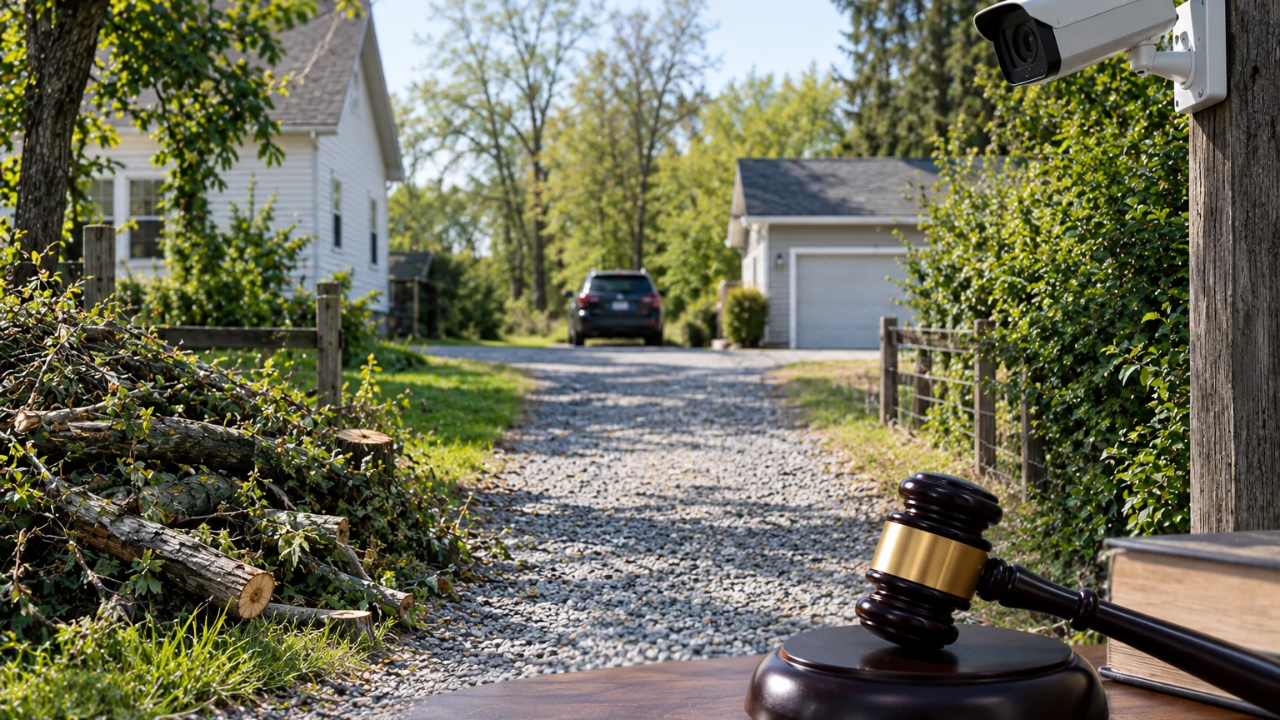
We like to think of our homes as fortresses. Behind closed doors and drawn curtains, the rest of the world fades away. But the true boundary of a home has never been the drywall or the shingles. It is the invisible line where your property meets your neighbor's.
For one Minnesota couple, that line became a battlefield.
It started with a dispute. The kind of slow-burning friction that creeps in over property lines, encroaching branches, and the unspoken tension of living inches away from another human life. Property is supposed to provide security. Instead, it provided a stage for a legal war that wound its way through the courts, carrying a price tag of $27,000 in costs and a headline-grabbing $20,000 privacy award.
Then came the reversal.
To understand why a neighborhood disagreement can escalate into a financial catastrophe, you have to look past the court filings. You have to look at how we live right next to people we barely know.
The Anatomy of a Neighborhood Feud
Proximity breeds contempt. Or, at the very least, it breeds irritation. When you share a fence line, every small annoyance is magnified. A stray leaf blower. A car parked slightly too close to the driveway. A tree root crossing an underground border.
In the Minnesota case, what began as ordinary friction metastasized. Legal fees piled up—$27,000 is no small sum for a domestic dispute. It represents a used car, a college tuition payment, months of mortgage payments, burned up in the machinery of the legal system.
And for a brief moment, justice seemed to offer a tally. A $20,000 privacy award. A judicial acknowledgment that peace of mind had been breached, that the sanctity of the home had been compromised, and that a price could be placed on quiet enjoyment.
Courts love neat numbers. They like to assign dollar amounts to intangible hurts.
When the Law Steps Back
Law is cold. It relies on precedent, statutes, and narrow definitions of harm. When the appeals court reversed that $20,000 award, it did not mean no harm was done. It meant that the legal system had reached its limit.
Privacy in a suburban yard is a slippery concept. How much visual access is too much? Where does reasonable landscaping end and harassment begin?
When the appellate court wiped away the award, it exposed a harsher reality: the law is a blunt instrument for solving human friction. You can sue your neighbor, you can spend tens of thousands of dollars arguing over square footage and line-of-sight, but at the end of the day, you still have to live next to them.
The legal victory, even when temporary, changes nothing about the core relationship. It only hardens the battle lines.
The Cost of Isolation
We live in an era where we can order groceries, work remotely, and interact with hundreds of people online without ever seeing their faces. Yet, physically, we are packed tighter than ever into subdivisions and apartment complexes.
We crave privacy, but we build our private spaces directly against strangers.
When a dispute arises, the temptation is to retreat behind higher fences, louder cameras, and steeper legal threats. We treat our neighbors like hostile foreign powers. We measure the angle of their windows. We document every perceived infraction.
Every dollar spent on legal fees is a monument to a failure of communication. It is easier to write a check to an attorney than it is to knock on a door, swallow your pride, and have an uncomfortable conversation about a shared boundary.
The Unwritten Rules
Long before zoning laws and property deeds, communities survived on unwritten rules. A wave across the yard. A borrowed cup of sugar. A shared understanding that living close to others requires a certain amount of stubborn tolerance.
When those social contracts break down, the law steps in. But the law cannot restore neighborly grace. It can only tally the damage.
The Minnesota couple's ordeal serves as a cautionary tale for anyone who thinks a court ruling can fix a broken relationship. The $27,000 bill remains, regardless of what happened to the privacy award. The emotional exhaustion remains. The space between the houses remains just as narrow.
The sun goes down on two Minnesota homes. The wind rustles through the trees on either side of the property line, ignoring the deeds, the case numbers, and the appellate decisions. Inside, two sets of people try to sleep, separated by a few yards of grass and a wall of silence.