Fever does not knock. It arrives in the dead of night, slipping through the thatch of a forest-edge home like an uninvited ghost, turning a child's skin into hot parchment. By morning, the quiet panic has begun. In the eastern reaches of the Democratic Republic of Congo, where the green press of the jungle breathes down the necks of bustling market towns, silence is the first terrifying symptom of an outbreak. People stop talking. They whisper. They hide their sick behind woven mats, terrified of the treatment centers, terrified of the men in yellow suits, terrified of the invisible enemy that turns the human body inside out.
We have seen this script before. It is an old, cruel play performed on a stage built of mud roads, fractured health systems, and international fatigue. Ebola is not merely a medical event. It is a social fracture. It exploits every crack in human trust. When a virus causes hemorrhagic fever, it attacks not just organs, but the very fabric of community—turning traditional burial rites into vectors of death, turning a mother’s comforting touch into a lethal gamble. For a more detailed analysis into this area, we suggest: this related article.
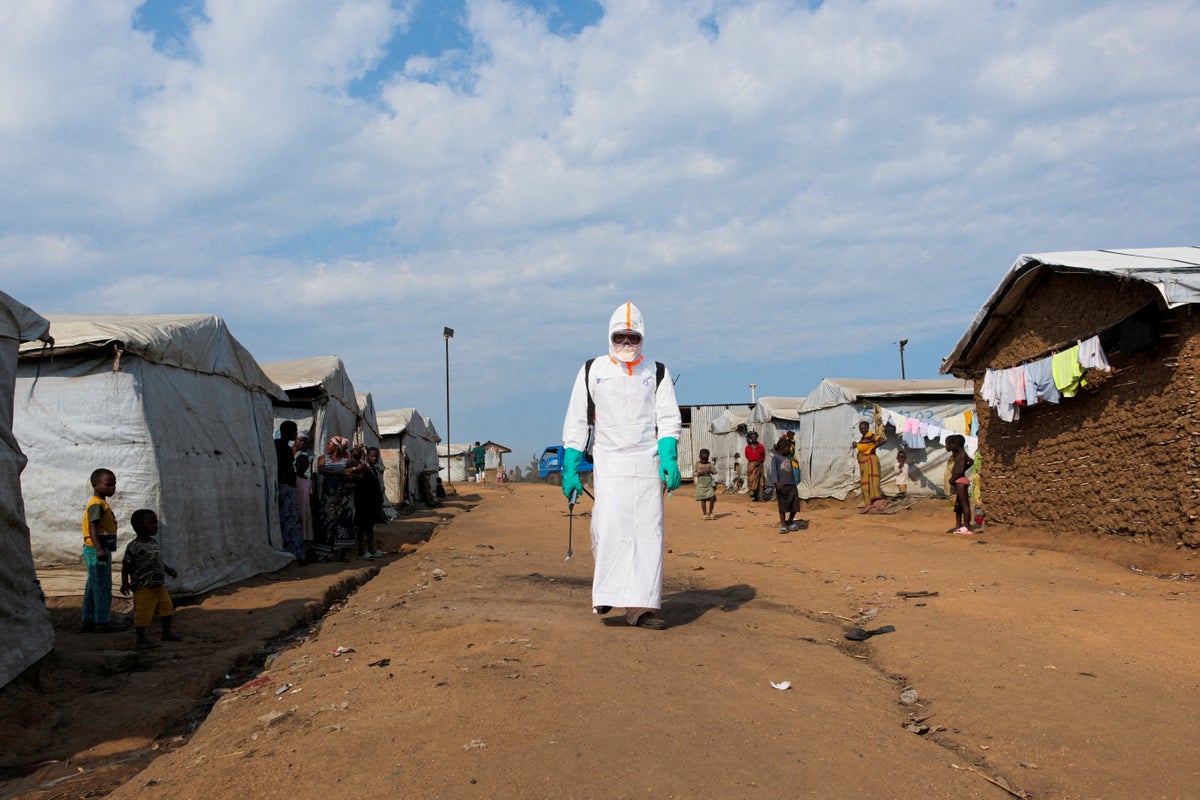
To understand what is happening on the ground right now, you have to look past the cold arithmetic of epidemiology and into the dust of Beni or Butembo. Imagine standing at the edge of a treatment ward where the air smells heavily of chlorine and chlorine-bleached fear. Every surface is a hazard. Every breath is monitored. In past eruptions, health workers fought not just the pathogen, but the terrifying rumor that the treatment centers themselves were slaughterhouses. That is the true weight of the crisis. It is a battle fought in the microscopic arena of cells, but won or lost in the macroscopic theater of human belief.
And yet, money talks. Sometimes, it screams. For further details on this topic, comprehensive analysis can be read on NPR.
The British government recently announced a decision to almost triple its funding to tackle the latest deadly Ebola outbreak tearing through parts of the Democratic Republic of Congo. This is not pocket change tossed into an overseas collection box. It is a massive influx of capital designed to starve the fire of oxygen before it leaps the oceans. When financial support surges from modest sums to millions of pounds, the machinery of survival shifts gears. Ambulances get fuel. Contact tracers get tablets and motorcycles. Laboratories go from waiting weeks for gene-sequencing results to processing samples before the sun sets.
Money buys speed. In the world of infectious disease, speed is everything.
Consider the mathematics of exponential growth. A single infected person walking through a crowded regional market on a Saturday can plant dozens of new seeds. Without rapid isolation, those dozens become hundreds within a fortnight. By the time international headlines flash red, the wave is already cresting. When funding multiplies, it buys a tripwire. It places trained nurses at border crossings with thermal scanners. It pays local community leaders—the elders, the church pastors, the market women—to become educators rather than spreaders of fatal myths.
To make sense of this, think of a forest fire. You do not put out an inferno with a teacup of water. You need airdrops, firebreaks, and an army of boots on the ground. The British funding acts as that heavy artillery. It provides personal protective equipment that does not tear in the humid heat. It funds cold-chain storage for experimental vaccines that can ring-fence an outbreak, immunizing the contacts of the infected before the virus can find its next host.
History teaches us a sobering lesson about this specific region. The Democratic Republic of Congo has battled this hemorrhagic ghost more than a dozen times since the virus was first identified near the Ebola River in 1976. The Congolese people are among the most resilient public health veterans on earth. Doctors, nurses, and burial teams in Kivu and Equateur possess a hard-won expertise born of repeated trauma. They know the terrain. They know the vernacular names for the terror. But resilience alone does not buy disposable syringes. Courage does not fund refrigeration units.
That is why external financial commitment matters. It shoulders a burden that a developing health infrastructure simply cannot bear alone. When a nation is juggling chronic conflict, economic strain, and displaced populations, a localized health emergency can easily cascade into a continental nightmare.
The invisible stakes extend far beyond the borders of Central Africa. Pathogens do not check passports. In our hyper-connected age, a rural outbreak is only ever a single international flight away from a global metropolis. But focusing solely on global self-preservation misses the deeper moral imperative. Every life lost in a Congolese village is a repository of history, a parent, a child, a keeper of local lore, extinguished too soon by a biological accident of geography.
When the new funds hit the ground, they will not arrive as gleaming banknotes. They will manifest as damp boxes of gloves, as fuel drums bouncing along rutted tracks in the back of Toyota pickups, as loud-speakers broadcasting survival tips in Swahili and Lingala. They will pay the hazard allowances of young nurses who lace up their boots every morning knowing the risks, choosing duty over despair.
We are watching a high-stakes race against time. The virus moves at the speed of human contact. The response must move faster.
The red dust settles on the boots of a surveillance officer as he logs another suspected case into his ledger. He looks up at the towering canopy of the rainforest, beautiful and indifferent. Somewhere out there, invisible to the naked eye, a strand of RNA seeks its next replication. But for the first time in weeks, the ledger in his hand is backed by the resources to fight back. The silence is finally being broken by the roar of arriving help.