The Midnight Dock
At 11:47 PM, the air at the Port of Los Angeles tastes like diesel exhaust and saltwater.
A crane operator named Marcus sits eighty feet in the air, his hands resting on twin joysticks that control a steel claw capable of lifting forty tons. Below him, rows of corrugated shipping containers stretch toward the horizon like giant, rusted Lego bricks. Each box holds a fragment of the global economy: electric motor components from Vietnam, winter jackets from Bangladesh, ceramic tiles from Italy, auto fasteners from Mexico.
Marcus works in quiet rhythm. Lower. Clack. Hoist. Swivel. Drop.
Then, the clock strikes midnight.
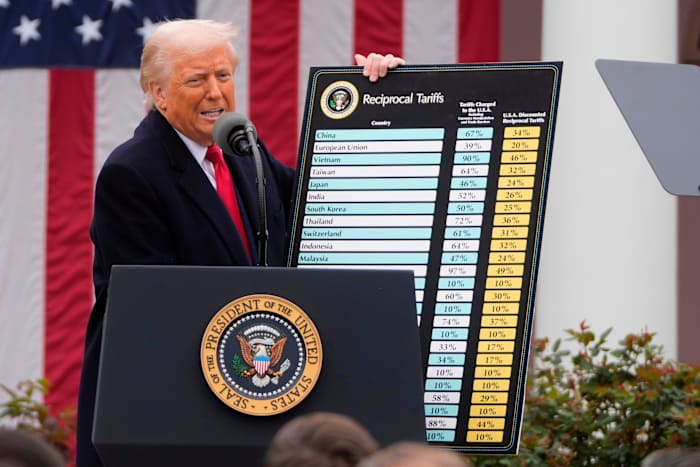
A few thousand miles away, a pen hits paper—or rather, a bureaucratic clock runs out. The baseline ten percent baseline levy, a temporary blanket tax that quietly nudged prices upward across the domestic market for months, expires. In its place comes a sweeping slate of double-digit tariffs targeted at dozens of specific nations.
Down on the tarmac, nothing physically changes. The ocean spray keeps hitting the rusted hull of the container ship. The crane engines keep humming. But on paper, the cargo inside those metal boxes suddenly carries a radically different price tag. A shipment of precision valves that cost thirty thousand dollars to clear customs at 11:59 PM now costs forty-two thousand dollars at 12:01 AM.
That twelve-thousand-dollar difference does not vanish into thin air. It instantly morphs into a phantom debt, bouncing from the importer to the distributor, down to the small business owner, and ultimately, onto the receipt of someone standing in line at a local hardware store two months from now.
The Ledger on the Kitchen Table
To understand macroeconomic trade policy, you have to leave Washington and travel to a small cabinet shop outside Columbus, Ohio.
Elena stands over a wooden desk cluttering her back office, staring at a spreadsheet that refuses to balance. Her family has built custom kitchen cabinetry for twenty-two years. They employ nine full-time carpenters and two apprentices. They do good work. They use local hardwood whenever they can, but the specialized soft-close drawer slides—the metal hardware that makes modern kitchens feel expensive—come from a supplier overseas.
There is no domestic manufacturer making those specific drawer slides at scale. None.
When a ten percent tariff landed on those parts earlier in the year, Elena absorbed the cost. She cut back on office coffee, delayed buying a new delivery van, and trimmed her own holiday bonus. She swallowed the loss because she didn't want to renegotiate signed contracts with homebuilders who were already feeling the squeeze of high interest rates.
Now, her supplier sent an email marked URGENT. With the expiring baseline levies replaced by targeted, double-digit penalties on key manufacturing hubs, those drawer slides are jumping by twenty-five percent starting Monday.
Panic is quiet. It doesn't sound like a press conference or a shouting match on cable news. It sounds like a quiet sigh in a dimly lit office while the rest of the shop floor has gone home for the night.
"You have three choices in a moment like this," Elena says, tracing the line item with a red pen. "You can raise your prices and risk losing jobs to bigger national chains. You can swap out the hardware for cheaper, lower-quality alternatives that will break in three years. Or you can take the hit yourself until you can't pay your own mortgage."
This is the invisible reality of trade war arithmetic. On television, tariffs are framed as strong-arm negotiations between sovereign superpowers—a game of economic chess played by world leaders in tailored suits. But on the ground, tariffs are simply a tax paid by local businesses on goods they cannot source anywhere else.
The Mirage of the Immediate Pivot
There is a popular political narrative that when taxes rise on foreign goods, domestic factories instantly spring up like wildflowers after rain.
If it were only that simple.
Building a modern manufacturing supply chain is not like turning on a light switch. It is more like growing an oak tree. Imagine a company that makes specialized rubber seals for agricultural tractors. To manufacture those seals domestically, a company needs specialized machinery that often takes eighteen months to order, build, and calibrate. They need a facility with specific environmental permits, a reliable local power grid, and above all, a workforce trained in precision polymer engineering.
You cannot conjure a trained machinist out of thin air simply because a trade policy changed overnight.
When double-digit tariffs drop with short notice, businesses do not suddenly pivot to an American factory that doesn't exist. They scramble. They hoard inventory. They file frantic exemption requests with federal agencies, drowning in paperwork while praying their cash reserves outlast the bureaucratic review process.
Or, as is increasingly common, they reroute their supply lines through third-party nations—paying extra shipping costs, broker fees, and processing charges just to change the country-of-origin stamp on the crate.
The economic drag isn't just the tax itself. It is the friction. The uncertainty. The endless hours business owners spend agonizing over trade policy updates instead of designing better products or training their workers.
Who Actually Pays the Bill?
Let's break down the mechanics, because confusion here is widespread and deliberate.
Governments do not send a bill to foreign capitals when a tariff is enacted. The host nation of the foreign exporter does not write a check to the U.S. Treasury.
Instead, the process works like this:
- The Border Gate: A container arrives at a domestic port of entry.
- The Import Lien: The domestic company buying the goods—the American importer—must pay the tariff percentage to U.S. Customs and Border Protection before the cargo is released.
- The Ripple: The importer now has less capital. To protect their margins, they bump up the wholesale price.
- The Retail Shelf: The retailer buys the wholesale product at the higher price and adjusts the sticker price for the end consumer.
If a pair of work boots costs fifty dollars to manufacture overseas, and a thirty percent tariff is applied at the port, fifteen dollars is added right at the dock. By the time that boot travels through freight distributors, regional warehouses, and retail storefronts, each layer adding its standard percentage markup to cover overhead, that fifteen-dollar tax at the port can easily turn into a thirty-dollar price hike at the register.
Taxes flow downhill. They always have.
The Human Factor in Global Friction
Back at the Port of Los Angeles, the night shift carries on.
Marcus finishes his turn on the high-crane and walks down the steel stairs to the break room. Outside, trucks are idling in a line that stretches past the harbor gates and onto the freeway ramps. Drivers sit in their cabs, staring at smartphone screens, waiting for paperwork to clear.
"Every time the numbers change up top, the lines down here get longer," Marcus says, pouring himself a cup of black coffee from a stained pot. "Nobody knows which container is cleared, which one is held for valuation checks, or who is paying the new rate. Everyone is just tense."
That tension is the true cost of volatile trade policy. It lives in the pit of a crane operator's stomach as he waits to see if his shift will be cut next month. It lives in the late-night calculations of Elena in Ohio as she decides whether to lay off her youngest apprentice. It lives in the hesitation of an entrepreneur who decides not to launch a new product line because the cost of raw materials might swing by thirty percent before their first production run finishes.
Economies do not run on policy papers or podium declarations. They run on trust, predictability, and human effort. When trade policies shift abruptly—expiring baseline taxes one day, stacking heavy tariffs on dozens of nations the next—the machinery of daily commerce stutters.
The crane claw lowers again into the dark belly of the ship, locking onto another box. Inside, sealed in plastic and packed in cardboard, are the tiny metal parts that keep a hundred small businesses alive. The ship doesn't care about the laws of the land. The ocean doesn't care about the ledger. But as that container lifts into the damp California night air, its burden is heavier than it was an hour ago—and somewhere down the road, someone who never signed a trade deal will have to carry the weight.