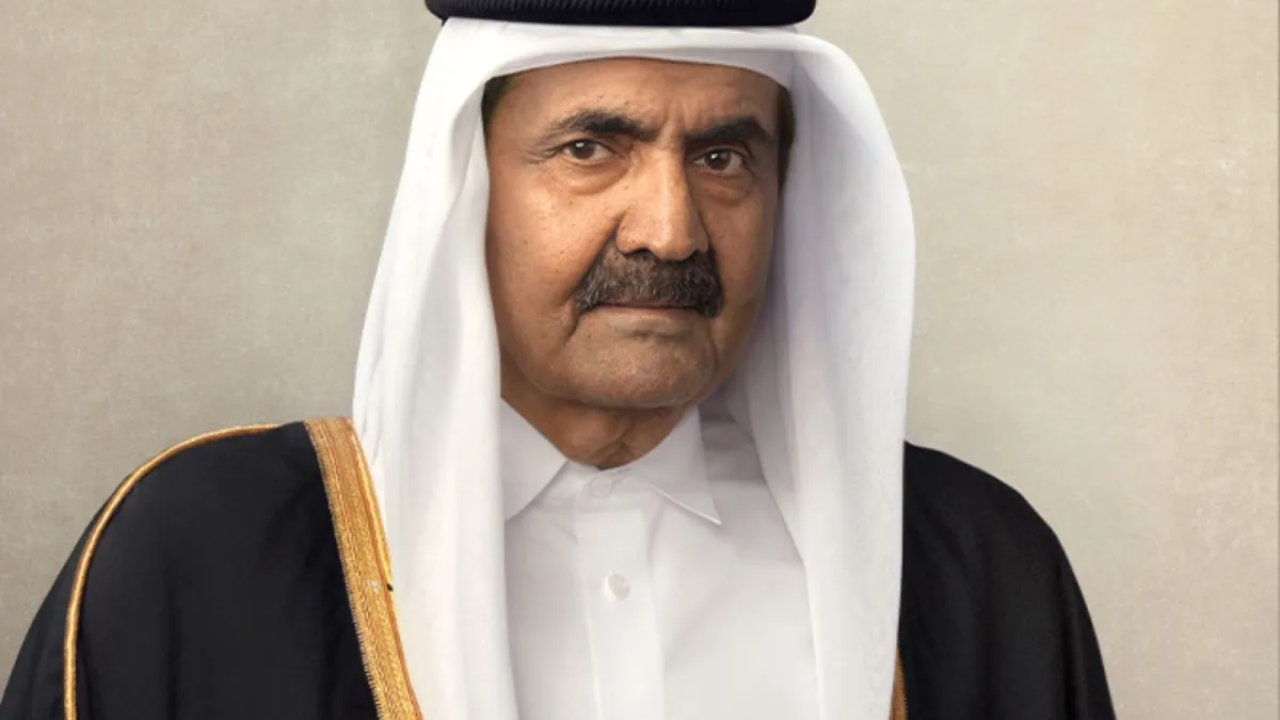
Qatar has enacted a mandatory four-day suspension of its public sector alongside a nationwide period of mourning following the passing of former Emir Sheikh Hamad bin Khalifa Al Thani. While casual observers view these decrees as standard regional protocol, the sudden halting of a hyper-capitalized state apparatus represents a calculated exercise in sovereign continuity and institutional stress-testing. This administrative freeze stops the gears of civil bureaucracy but deliberately isolates the country's core economic engines, ensuring that global energy markets and sovereign wealth deployments remain completely unaffected.
Behind the formal announcements lies a complex operational blueprint designed to balance deep cultural reverence with the rigid demands of global commerce.
The Economic Machinery Behind an Absolute Public Sector Shutdown
Suspending government ministries and public institutions for nearly a week introduces immediate friction into a domestic economy. In Qatar, the public sector employs a vast majority of the national workforce, directing everything from municipal infrastructure approvals to state-backed corporate investments. When these offices close unexpectedly, hundreds of administrative processes grind to an immediate halt.
The immediate domestic consequence is a backlog of regulatory clearances, corporate registrations, and legal transactions. For local businesses relying on ministry approvals for logistics or hiring quotas, a four-day freeze stretches into a multi-week operational bottleneck. Civil courts pause their dockets, commercial licensing departments lock their digital portals, and state-directed development projects pause their administrative oversight.
Yet this total domestic pause is illusions of stagnation. The Qatari state functions on a dual-track operational model. While civil servants receive mandatory leave, critical economic sectors operate under explicit exemptions written into the foundational emergency decrees. The Qatar Central Bank maintains essential clearing systems to prevent liquidity freezes in the commercial banking sector. Customs officials at major ports of entry like Hamad Port and Hamad International Airport transition to skeleton crews focused strictly on high-priority cargo and national security, ensuring that the physical supply chains sustaining the peninsula do not fracture during the period of national reflection.
The Separation of Hydrocarbon Infrastructure from Civil Bureaucracy
The true measure of Qatar's institutional resilience during a period of national mourning is found in the North Field. QatarEnergy and its various subsidiaries do not pause their operations when the state declares a public holiday. The extraction, liquefaction, and maritime dispatch of liquefied natural gas run on a continuous, automated cycle that operates independently of domestic political events.
Global energy security depends on this insulation. A multi-day disruption to Qatar’s gas exports would trigger immediate price spikes in European and Asian energy markets, destabilizing long-term supply agreements. To prevent this, operational command centers in Ras Laffan operate under strict protocols that treat state mourning periods similarly to severe weather events or geopolitical disruptions.
Engineers, plant operators, and maritime logistics crews remain on-site. The long-term supply contracts signed with global utilities contain rigid delivery windows that recognize no domestic administrative pauses. By shielding the hydrocarbon infrastructure from the public sector shutdown, the state demonstrates to international partners that its foundational economic promise remains immutable, even during moments of profound domestic transition.
The Architectural Legacy of Modern Gulf Diplomacy
Understanding the gravity of the nation's response requires analyzing the specific transformations enacted during the reign of the former Emir. Sheikh Hamad bin Khalifa Al Thani did not merely govern Qatar; he fundamentally redesigned its position in the global geopolitical order. Prior to his ascension in 1995, the state operated largely within the geopolitical shadow of larger regional neighbors, possessing immense latent wealth but limited international leverage.
The strategic shift executed under his direction focused on diversification of influence. The establishment of the Al Jazeera network challenged traditional state-controlled media models across the Middle East, giving Doha a potent tool for soft-power projection. Concurrently, the state pursued an aggressive foreign policy characterized by high-stakes mediation, positioning itself as an indispensable intermediary between Western powers and non-state actors or isolated regimes.
This diplomatic doctrine was paired with the creation of the Qatar Investment Authority in 2005. The sovereign wealth fund systematically acquired trophy assets across Europe, North America, and Asia, transforming natural resource revenues into permanent global financial influence. The current institutional architecture of the state is a direct product of this era, meaning the mourning period is less about administrative disruption and more about reinforcing the legitimacy of the governance model he established.
Sovereign Wealth Mobilization and Market Security
During periods of national mourning or sudden leadership transitions, global financial markets naturally scan for signs of institutional instability. The Qatar Investment Authority manages hundreds of billions of dollars in global assets, making its stability a matter of international significance.
The internal governance of the sovereign wealth fund is structured to withstand domestic shocks. Investment committees and portfolio managers operate under mandates that decouple day-to-day asset management from civil service schedules. While a ministry building in Doha sits empty, trading desks in London, New York, and Singapore continue to manage the state's international exposure without interruption.
This operational continuity prevents speculative runs on Qatari financial assets. The local stock market, the Qatar Stock Exchange, typically mirrors the public sector shutdown with brief technical pauses to align with banking availability, but the underlying valuation of state-adjacent enterprises remains anchored by the sovereign wealth fund's massive capital reserves. The message sent to international markets is clear: the financial foundation of the state is entirely distinct from its bureaucratic superstructure.
Traditional Tribal Allegiance and Modern Governance
The four-day suspension of public work also serves a vital internal sociological purpose within the Gulf monarchical framework. It creates the necessary structural space for traditional mechanisms of allegiance and mourning to occur without the distractions of modern corporate and administrative life.
In Qatari political culture, the transition of leadership and the remembrance of foundational figures require physical gatherings, tribal consultations, and public expressions of unity. By clearing the calendar of civil duties, the state permits its citizens to engage in these traditional rituals, which reinforce the social contract between the ruling family and the domestic populace.
This integration of traditional tribal structures with highly modernized bureaucratic systems is the core stabilizing mechanism of the state. The mourning period allows the administrative apparatus to reset while the traditional leadership structures validate their continuity. The temporary silence in government offices provides a stark contrast to the highly visible, ordered continuation of the state's global commitments, proving that modern institutional design has successfully adapted to preserve foundational cultural imperatives.
The administrative freeze will conclude, the ministries will reopen, and the civil workforce will return to clear the accumulated backlogs. The true significance of the shutdown lies not in the temporary cessation of daily paperwork, but in the demonstrated reality that the state can halt its domestic bureaucracy entirely while its global economic, financial, and strategic operations continue to move without a single aggregate contraction.