Two small words carry more weight than a crate of diplomatic cables.
In principle.
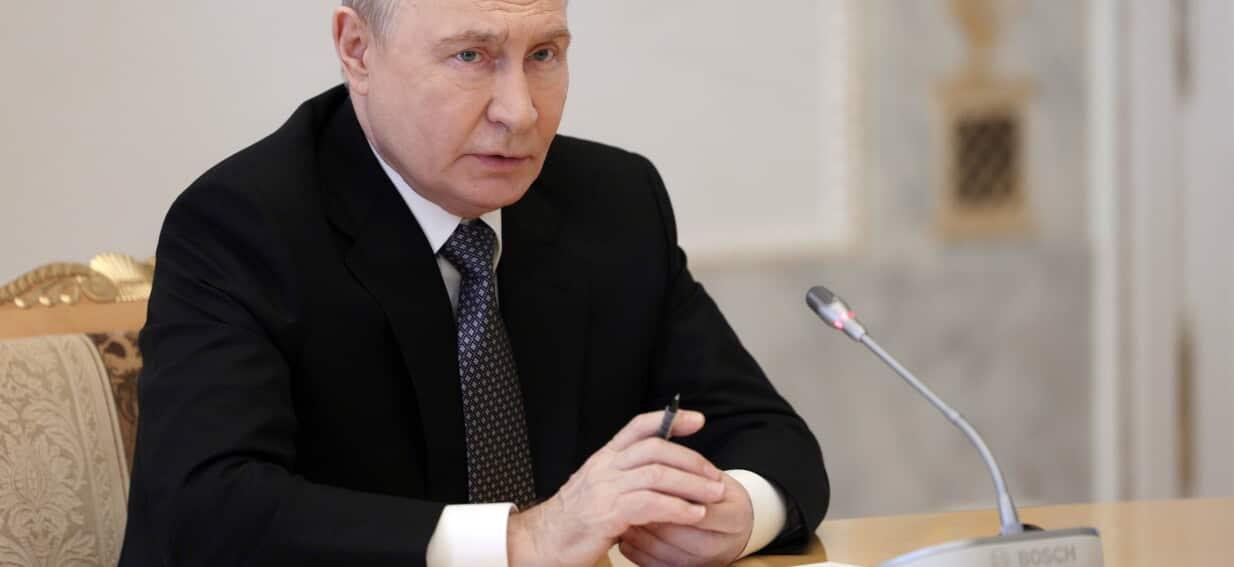
When a news wire flashes that Vladimir Putin agrees "in principle" to revive trilateral talks with the United States and Ukraine, most readers scroll past before their coffee cools. Another headline. Another round of cautious phrasing from capitals thousands of miles apart. Yet I have sat in enough briefing rooms and watched enough border checkpoints at dusk to know how deceptive quiet diplomacy can be. Diplomats speak in hedges the way sailors read cloud cover: not to predict the exact hour of a squall, but to decide whether to reef the mainsail now or wait until the rigging groans.
I will admit something upfront that confuses even seasoned observers: I do not know with certainty whether a revived three-way table will hold long enough to produce a binding signature. Geopolitics rarely moves in straight lines, and promises made "in principle" have a long history of stretching like taffy under pressure. Anyone who claims to read the private calculus inside the Kremlin, the White House, or Kyiv with total precision is selling certainty they do not possess.
Still, uncertainty is not emptiness. When three parties that have spent years trading artillery, sanctions, and mutual suspicion even float the idea of sitting in the same diplomatic orbit again, something beneath the surface has shifted. The question is not merely who sits across from whom. The question is what "in principle" costs each side, what it hides, and what it means for the people living under sirens or waiting on ration lines.
The Weight of Two Quiet Words
Imagine a hypothetical negotiation room in Geneva or Vienna—a long oak table, three stacks of bound folders, pitchers of water sweating condensation onto blotters. (Note: This room and setting are a hypothetical composite built to illustrate how trilateral talks operate behind closed doors.) In this hypothetical room sit three delegations carrying incompatible memories of the exact same war. For Moscow, security is framed around buffer zones, spheres of influence, and resistance to Western alignment on its borders. For Kyiv, survival and sovereignty are non-negotiable; a compromise that rewards invasion feels less like peace and more like an amputation dressed up in legal prose. For Washington, the calculus weaves together alliance credibility, domestic politics, global energy and trade reverberations, and the risk of wider escalation.
When a leader says yes "in principle," they are opening a door by an inch while keeping their foot braced against the frame.
In diplomatic shorthand, "in principle" means willingness to talk about a framework without surrendering a single precondition. It signals openness without obligation. If the talks stall over territorial lines, security guarantees, or sequencing, the side that agreed "in principle" can say it came in good faith while blaming the others for rigidity. If momentum builds, that same phrase serves as the foundation stone of a broader settlement.
Think of it like two chess players agreeing to sit down for a match after months of throwing pieces across the room. Sitting at the board does not mean anyone has conceded checkmate. It means both recognize that moving pieces on a grid beats smashing the board—at least for now.
Why revive a trilateral format at all when bilateral channels, backchannels, and shuttle diplomacy already exist? Because wars involving major powers rarely end through two-way mirrors alone. Washington and Moscow can trade strategic signals, and Kyiv and Washington coordinate closely on aid and intelligence, yet a durable settlement eventually requires all three axes—Russia, Ukraine, and the United States—to test where their red lines collide and where minimal overlap might exist.
What Cold Headlines Leave Out
A standard wire report gives you the skeleton: who spoke, what phrase was used, which capitals are watching. What it leaves out is the texture of living inside a prolonged conflict.
I have stood on cold platforms in Eastern Europe in late autumn when the air smelled of damp wool, diesel generators, and woodsmoke. When night falls early and grid repairs lag behind strike schedules, geopolitics stops being an abstract chess match. It becomes whether the radiator in a fifth-floor apartment ticks warm at midnight. It becomes whether a grandmother on a fixed pension can afford two bags of coal or whether her grandson is three hundred miles east in a trench filled with freezing mud.
Even far from the front lines, the tremors travel. Supply chains bend. Grain and fertilizer routes shift. Insurance premiums on shipping lanes climb. Families in Ohio or Bavaria or anywhere else feel the echo at the grocery checkout or the fuel pump, even if they never trace the price tag back to a diplomatic communique.
That is why trilateral talks matter beyond foreign ministries. A revival of talks does not automatically silence a single drone or heal a single ruined street. False dawns are cruel in war zones; hope raised and dashed leaves people angrier and more exhausted than before. Yet the absence of any path toward negotiations carries its own toll: an endless grind of attrition where tomorrow looks identical to yesterday, only with longer casualty lists and deeper rubble.
Consider what happens next when a leader signals openness "in principle" rather than offering a concrete concession:
- Domestic audiences read the signal differently. Hardliners may hear weakness or betrayal; war-weary citizens may hear a faint crack of light; skeptics may hear tactical delay designed to buy time or split partners.
- Leverage gets re-weighed in real time. Every shift on the battlefield, every sanctions package, every winter forecast changes what each side thinks it can extract at the table.
- Trust remains absent. Nobody enters a trilateral room expecting sudden affection. Each delegation brings lawyers, intelligence summaries, and deep suspicion that the other sides are probing for cracks.
Why Three Sides Make Everything Harder—and Necessary
Two-party negotiations are hard enough. Add a third major actor with its own domestic pressures and strategic aims, and the geometry turns into a triangle where pulling one corner tugs on both others.
Let us look at the friction points that usually derail trilateral efforts before they even reach agenda items. First is the question of legitimacy and agency. Ukraine insists that decisions about its land, its constitution, and its future cannot be bargained away over its head. Russia pushes for broader regional security arrangements that address its grievances with the West, not only bilateral terms with Kyiv. The United States has to balance supporting a partner under attack against avoiding direct military clash with a nuclear-armed state and managing global commitments elsewhere.
Second is sequencing. Do you talk about a ceasefire first and borders later? Do security guarantees come before territorial compromises, or after? In high-stakes conflicts, order of operations is everything. Agreeing to talk "in principle" lets negotiators dodge the hardest sequencing trap on day one while testing whether anyone is serious enough to stay past day three.
Third is credibility. After broken truces, torn-up assurances, and years of bitter rhetoric, words carry heavy skepticism. A signature on paper means little unless paired with verification, enforcement mechanisms, and incentives that make breaking the deal costlier than keeping it.
Yet dismissing trilateral talks as mere theater misses how diplomatic breakthroughs sometimes begin. History is full of negotiations that started as cynical maneuvers or cautious probes and slowly—grudgingly—became the only vehicle available when exhaustion set in. Not every summit saves lives immediately. Some merely keep a channel open so a crisis does not spiral even further out of control.
Reading Between the Lines Without Fooling Yourself
So how should a thoughtful reader approach news that Putin agrees "in principle" to revive trilateral talks with the US and Ukraine?
Start by holding two ideas in your head at once. Do not treat a conditional "in principle" nod as a peace treaty. Premature celebration ignores the steep cliffs ahead—unresolved sovereignty claims, deep mutual distrust, and the gap between saying you will talk and agreeing on terms anyone can live with. At the same time, do not wave it away as pure noise. In protracted conflicts, shifts in diplomatic posture rarely happen in a vacuum; they reflect calculations about costs, pressure, endurance, and room to maneuver.
Watch what follows the headline over the coming weeks rather than the headline alone. Look for whether envoys actually meet, whether concrete topics replace generalities, and whether actions on the ground match or contradict the rhetoric at the table.
Diplomacy at its best is not magic. It is painstaking, unglamorous, often infuriating work done by people who know how much worse things can get if everyone walks away.
Snow gathers silently on a windowsill while inside a room three lamps glow against the dark, each casting a different shadow across the map.