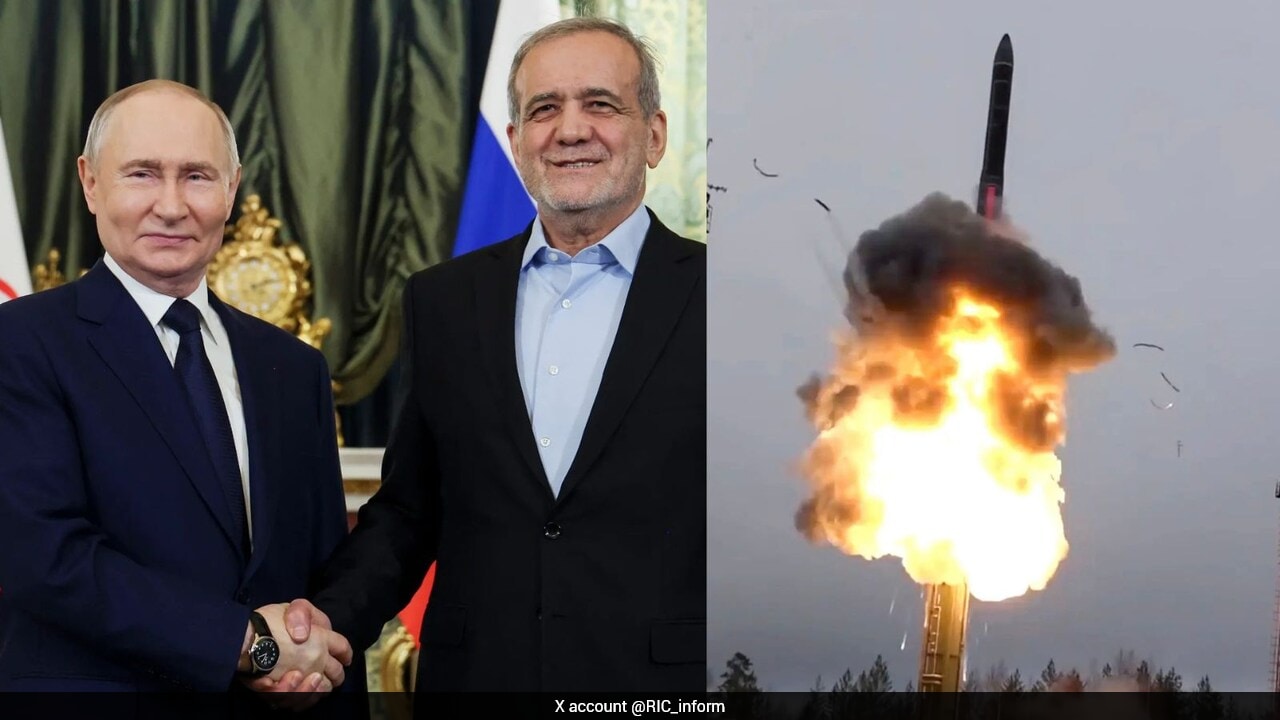
The maritime architecture of the Middle East faces an unprecedented structural threat as classified intelligence reveals a clandestine pipeline of military technology flowing from Moscow to Tehran. Under a covert multi-year initiative designated Project C430L, Russian aerospace engineers have systematically addressed Iran's most persistent technological deficit: the mastery of supersonic ramjet propulsion. This transfer bypasses decades of isolation, providing the Iranian military with the practical know-how required to manufacture high-speed cruise missiles specifically tailored to hunt United States aircraft carriers and surface combatants.
For years, Western defense planners operated under the assumption that geographical barriers, export controls, and technological complexity would indefinitely cap the velocity and precision of Iran's anti-ship inventory. While Tehran successfully proliferated mass-produced loitering munitions and ballistic missiles, developing a sustained supersonic cruise engine remained an elusive engineering summit. Ramjet systems demand extreme materials science, precise thermodynamic balancing, and advanced combustion control to operate at multiples of the speed of sound. Enter NPO Mashinostroyenia, a heavily sanctioned Russian design bureau long associated with strategic rocketry. Leaked documents and travel records indicate that senior Russian specialists coordinated directly with the Iranian Ministry of Defense, transforming an isolated national inventory into an active collaborative enterprise.
Mechanics of the C430L Pipeline
The operational reality of Project C430L deviates sharply from generic perceptions of arms trafficking. Rather than dropping off static assembly blueprints or crates of finished hardware, Moscow deployed intellectual capital. Veteran propulsion engineers—many of them veterans of Russia's own premier supersonic defense programs—frequently traveled to Tehran to evaluate physical telemetry, review flight-test data, and troubleshoot combustion instabilities.
By 2025, the pipeline operated as a two-way technical exchange. Iranian defense contractors shipped extensive test performance datasets northward, where Russian specialists analyzed combustion metrics, fuel routing, and air-intake efficiencies before dispatching corrective protocols back to Tehran. This direct transfer of empirical troubleshooting bridges the gap between theoretical design and operational deployment. A supersonic cruise missile relies on maintaining stable ram compression at low altitudes, a feat that defeats most standard guidance systems. By integrating Russian patents concerning variable geometry inlets and supersonic engine management, Iran has effectively compressed a thirty-year indigenous research cycle into a fraction of that timeframe.
Strategic Realignment and the Caspian Artery
This technical convergence underscores a broader geopolitical transformation. The partnership is no longer transactional or reactive; it is structural. In exchange for unmanned aerial vehicle innovations and battlefield commodities deployed in Eastern Europe, Moscow is offering strategic assets that fundamentally alter the military balance in the Persian Gulf and the broader Middle East.
Logistical support flows securely through the Caspian Sea, an isolated maritime basin entirely devoid of American naval presence. Continuous cargo transits across these waters move sensitive electronics, energetic materials, and guidance sub-components beyond the reach of standard interdiction forces. Furthermore, concurrent intelligence-sharing operations—including satellite tracking and signals intelligence—provide Iranian targeting cells with real-time positional data on United States naval formations, maximizing the utility of every platform launched from coastal batteries.
Defensive Vulnerabilities at Sea
The tactical implications for the United States Navy are profound. Traditional carrier strike group defense relies on layered intercept architecture, utilizing Aegis combat systems, electronic countermeasures, and surface-to-air missiles to detect, track, and destroy incoming threats at range. However, supersonic cruise missiles flying at wave-top altitudes compress engagement windows drastically.
When a projectile travels at multiple times the speed of sound while hugging the sea surface, radar horizons and reaction times shrink from minutes to seconds. Even if an interceptor succeeds, the kinetic energy and explosive payload of a supersonic vehicle closing at high Mach numbers can cause catastrophic structural damage upon impact. The convergence of Russian propulsion mechanics and Iranian operational launcher networks creates a precision anti-access bubble that forces American commanders to rethink deep-water power projection in constrained littorals.
The architects of Project C430L have fundamentally rewritten the defensive calculus of the region. As technical exchanges persist and production lines absorb these imported efficiencies, the era of uncontested maritime dominance in the Gulf draws to a definitive close, leaving surface fleets exposed to a new tier of high-speed deterrence.