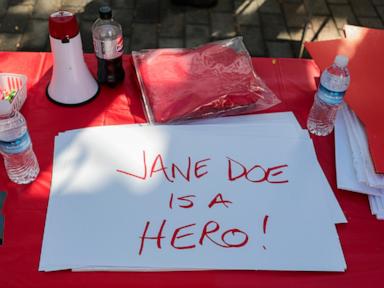
Courts rarely issue public warnings about federal prosecution inside an order granting litigant anonymity, yet the October 2026 ruling permitting Jane Doe to proceed under a pseudonym in her civil lawsuit against Cornell University, Chi Phi fraternity members, and co-defendants did exactly that. That judicial intervention signals a deeper operational reality in high-profile campus litigation: pseudonymity is no longer just a private shield for a plaintiff's identity. It functions as a structural containment mechanism designed to keep civil dockets open, deter external intimidation across multiple parties, and manage institutional liability where criminal prosecution, statutory definitions, and campus reporting systems collide.
Standard news coverage of the ruling typically treats pseudonymity as a binary outcome—either the plaintiff stays anonymous or does not—and reads the judge's warning against threats as an incidental admonition. A rigorous analytical breakdown separates the order into its true moving parts: the Open-Courts Balancing Test, the Asymmetric Retaliation and Deterrence Matrix, and the Institutional Friction Loop surrounding the underlying October 2024 allegations and September 2026 civil suit.
The Open-Courts Balancing Test and Docket Preservation
Public access is the baseline rule in civil litigation so that courts remain accountable and parties cannot quietly settle or adjudicate disputes behind closed doors. When a plaintiff requests to litigate under a pseudonym, the court weighs privacy and safety risks against the public's right to know who is invoking the judicial system.
In the Cornell civil litigation arising from alleged events at the Chi Phi house in October 2024, several structural factors tilt that balance toward pseudonymity:
- Severity and Intimacy of the Allegations: Claims involving alleged drugging, sexual assault, and gang rape implicate intensely personal facts that carry severe social stigma and psychological risk if tied publicly to a named private individual.
- Reported Retaliation Dynamics: When counsel and court filings point to threats and intimidation directed at the plaintiff and people connected to the dispute, physical and digital safety becomes an active variable rather than a hypothetical concern.
- Non-Opposition by Named Defendants: When defendants do not oppose pseudonymity for the plaintiff, the adversarial friction over that specific procedural question drops sharply, allowing the court to focus on docket integrity and third-party conduct.
- Least-Restrictive Alternative to Sealing: Granting a pseudonym preserves public visibility into the legal claims, motions, and rulings without sealing the entire docket or closing proceedings to the public.
The first limitation of pseudonymity is practical rather than doctrinal. High-salience cases generate intense media scrutiny, social media speculation, and offline discussion across campus and alumni networks. A court order can restrict a party's legal name in the caption, yet it cannot erase prior public commentary, leaks, or external identification efforts. Pseudonymity lowers the friction of continuing litigation, but it does not create total informational insulation.
The Asymmetric Retaliation and Deterrence Matrix
What makes the judge's order analytically distinct is how it addresses retaliation not as a one-directional problem, but as a multi-party risk environment. The ruling pairs plaintiff pseudonymity with a warning that harassing or threatening Doe, defendants, or attorneys can implicate federal criminal law, while inviting proposals to protect sensitive personal data—such as home addresses, phone numbers, and email addresses—for individually named defendants and other participants.
Consider how different actors experience exposure in a viral campus lawsuit:
- The Pseudonymous Plaintiff: Faces acute harassment, online mobbing, and personal safety threats, yet retains a degree of caption-level anonymity not shared by individually named defendants.
- Individually Named Defendants: Are publicly identified in civil pleadings—and have denied wrongdoing or moved to dismiss or challenge claims—while still facing doxxing, misidentification risks, and reputational damage even before factual findings are made.
- Attorneys, Witnesses, and Tangential Parties: Become targets when online actors treat litigation participants or bystanders as proxies for the broader dispute.
The cause-and-effect chain here is direct. Unchecked online harassment degrades witness willingness, distorts discovery, and turns civil courtrooms into secondary arenas of intimidation. By placing a clear legal warning inside the order and opening the door to protective redactions of contact details across participants, the court tries to raise the legal cost of external interference while keeping the merits of the civil dispute on track.
A second limitation emerges immediately from this asymmetry. Extending contact-data protections to defendants helps curb physical harassment and doxxing, yet it does not unwind the reputational effects of being named in a high-profile civil complaint. Courts can regulate docket disclosures and warn against unlawful threats, but they cannot fully police speech outside the courtroom without colliding with First Amendment boundaries.
The Institutional Friction Loop Behind the Lawsuit
A pseudonymity ruling sits on top of a much larger institutional collision. The civil complaint filed in September 2026 brings together Cornell University, the Chi Phi fraternity, a sorority, a local bar, and seven individual male students around events alleged to have occurred in October 2024, nearly two years earlier.
Several structural fault lines explain why this dispute has generated sustained public and policy scrutiny:
- Criminal Thresholds vs. Civil Standards: Prosecutorial decisions turn on statutory elements and evidentiary standards beyond a reasonable doubt, whereas civil litigation evaluates claims under different legal theories, pleading rules, and burdens of proof. Public disputes over how early statements and interview transcripts were summarized or interpreted fuel intense debate over why no criminal charges were brought.
- Statutory Intoxication Rules: Debates surrounding New York's treatment of voluntary intoxication and incapacitation highlight how statutory definitions shape whether conduct is legally actionable, prompting legislative pushback and proposals to clarify standards around incapacitation.
- Divergent Reporting Channels and Data Shifts: Reporting streams across campus police, state crime tallies, and federal campus crime disclosures do not always align on face value, and abrupt year-to-year drops or changes in published report archives invite scrutiny even when compliance has not been adjudicated.
- Campus Governance vs. Legal Exposure: Fraternity party bans and institutional reviews address immediate campus risk and political pressure, yet they operate alongside contested motions to dismiss, factual disputes over consent and substance use, and separate legal challenges to campus disciplinary outcomes.
Distinguishing known procedural facts from broader hypotheses is essential here. It is established that a judge allowed Jane Doe to remain anonymous while warning against threats, that the civil suit names multiple institutional and individual defendants who dispute the claims, and that reporting figures and statutory debates have drawn heavy scrutiny. What remains contested—and must be resolved through evidence, motions, and statutory or administrative processes rather than media commentary—is liability on each specific claim and the exact institutional causes behind statistical shifts.
For university leaders, legal counsel, and policymakers watching how high-conflict campus cases unfold, the immediate strategic play is to separate docket and personal-safety governance from substantive legal and data accountability: enforce strict protective protocols around personal contact data for all litigation participants, publish clear methodological explanations for any shifts or archive changes in campus safety statistics, and avoid treating interim procedural orders or temporary campus restrictions as substitutes for rigorous evidentiary resolution.