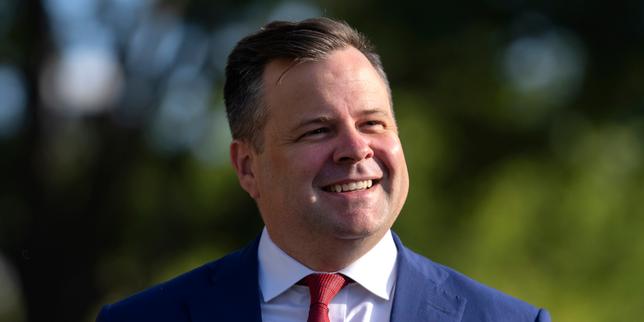
Donald Trump has signaled a total departure from traditional espionage by selecting Bill Pulte to lead the Office of the Director of National Intelligence (ODNI). This move places a private-sector figure known for aggressive social media philanthropy and outsider business tactics at the peak of a $100 billion intelligence apparatus. It is a decision that bypasses the deep-seated bureaucracy of the CIA and NSA, prioritizing personal loyalty and private-sector disruption over the quiet, institutional expertise that has defined the intelligence community since the end of World War II.
A Departure from the Shadows
For decades, the Director of National Intelligence has been a role reserved for career diplomats, generals, or seasoned politicians. The job requires balancing the competing interests of 18 different agencies while managing delicate relationships with foreign allies. By choosing Bill Pulte, Trump is not just picking a director; he is installing a disruptor. Discover more on a similar topic: this related article.
Pulte built his public profile through "Twitter Philanthropy," a method of direct, high-speed interaction with followers that stands in stark contrast to the guarded, classified nature of the ODNI. This isn't just about a change in personality. It represents a fundamental shift in how the executive branch views the collection and dissemination of sensitive data.
The intelligence community is often described as a "black box." Information goes in, gets analyzed by career professionals, and emerges as a polished briefing. Trump has long expressed skepticism toward this process, frequently clashing with agency leaders over findings related to foreign interference and global threats. By putting a loyalist with a background in private equity and real estate at the helm, the administration is effectively tearing down the walls between political intent and raw intelligence. Additional reporting by Al Jazeera delves into similar perspectives on this issue.
The Mechanics of Outsider Control
The ODNI was created in 2004 to fix the communication breakdowns that led to 9/11. Its primary function is integration. To do this effectively, a director needs the respect of the career officers at Langley and Fort Meade. Pulte enters the building with none of that traditional capital.
His background in the PulteGroup—a massive homebuilding enterprise—and his later ventures into private investment suggest a "bottom-line" mentality. In the world of intelligence, the bottom line is often murky. How do you quantify the value of a human asset in a hostile capital or the reliability of a satellite intercept?
Critics argue that a business-first approach risks "politicizing the product." This occurs when intelligence is gathered or presented to support a specific policy goal rather than to inform the president of uncomfortable realities. If the director’s primary qualification is loyalty to the president’s vision, the incentive to provide dissenting views evaporates.
Digital Influence as a New Weapon
Pulte’s mastery of social media is perhaps the most overlooked aspect of this appointment. We are living through an era where Open Source Intelligence (OSINT) often rivals classified reports in speed and accuracy.
Private individuals using commercial satellite imagery and social media tracking can now identify troop movements or missile tests before the formal briefings hit the Resolute Desk. Pulte understands the power of the crowd. There is a high probability that he will attempt to modernize the ODNI by leaning more heavily on these non-traditional, unclassified sources.
- Speed over Secrecy: The private sector moves at a pace the government cannot match.
- Verification: Crowdsourced data can act as a secondary check on institutional findings.
- Public Narrative: Intelligence is increasingly used as a tool of public diplomacy. Pulte’s ability to "viralize" information could turn intelligence releases into potent political weapons.
However, the risks are substantial. Professional intelligence is built on the rigorous verification of sources. Social media is a breeding ground for disinformation. If the ODNI begins to prioritize the "optics" of an intelligence find over its verifiable truth, the credibility of the United States on the global stage could be permanently damaged.
The Institutional Pushback
The "Deep State" is a frequent target of Trump’s rhetoric, but it is actually a collection of thousands of career civil servants who stay in their jobs regardless of who is in the White House. These people hold the institutional memory of the country.
When a leader like Pulte arrives, the friction is immediate. We have seen this play out before with temporary or controversial appointments in the first Trump term. The result is often a "brain drain," where the most experienced analysts leave for the private sector, taking decades of expertise with them.
The friction usually manifests in three ways:
- Leaking: Disaffected officers may use the press to voice concerns about the direction of the agency.
- Slow-rolling: Bureaucratic hurdles are used to delay the implementation of radical new policies.
- Compartmentalization: Agencies may become more protective of their "crown jewel" secrets, fearing that a political appointee might mishandle them.
Pulte’s task will be to break this resistance. To do so, he will likely rely on a small circle of trusted advisors, further isolating the ODNI from the rank-and-file experts who do the heavy lifting of analysis.
Redefining Global Partnerships
American intelligence does not operate in a vacuum. The "Five Eyes" alliance—consisting of the US, UK, Canada, Australia, and New Zealand—is the most powerful intelligence-sharing network in history. It relies entirely on trust.
Allies share their most sensitive secrets because they believe the US will handle them with professional discretion. When a political loyalist is placed in charge, foreign services get nervous. They worry that their sources might be compromised to win a domestic political argument or that the US will stop sharing the full picture if it contradicts the administration's narrative.
If London or Canberra begins to withhold information, the US becomes more vulnerable. No amount of private-sector "disruption" can replace the eyes and ears of a global network built over eighty years.
The Financial Angle
There is also the question of the budget. Pulte is an investor. He looks at costs and returns. The intelligence budget is notoriously bloated and opaque.
There is a legitimate argument for reform here. Huge sums are spent on legacy satellite systems and redundant analytical centers. A director who isn't beholden to the defense contractors could, in theory, streamline the community. But intelligence isn't a factory. You cannot simply "optimize" a covert operation. The "waste" in intelligence is often the price of redundancy, which is necessary when the cost of failure is a national security catastrophe.
The Shift to Technocracy
Pulte’s appointment reflects a broader trend in the Trump 2.0 cabinet: the move toward a technocratic, loyalist elite. The idea is to run the government like a private equity firm. You identify the assets, fire the middle management, and redirect the resources toward the owner’s primary objectives.
In the case of the ODNI, the "owner" is the President, and the "objectives" are often counter to the traditional goals of the intelligence community. This creates a volatile environment.
We should expect a significant increase in the use of Artificial Intelligence and automated data processing under Pulte’s tenure. These tools fit the Silicon Valley-adjacent mindset he brings to the table. While AI can process vast amounts of data, it lacks the human nuance required to understand the motivations of a foreign dictator or the cultural underpinnings of a regional conflict.
Security Clearances and the Vetting Process
One of the immediate hurdles for any outsider entering the intelligence world is the security clearance process. This is not a mere formality. It involves an exhaustive look into a person’s finances, foreign contacts, and past behavior.
By bypassing the traditional vetting channels—or by using executive authority to grant clearances over the objections of professional security officers—the administration sets a new precedent. This lowers the bar for entry into the nation’s most sensitive rooms. If the director of the ODNI does not adhere to the same standards as a junior analyst at the NSA, the entire moral and legal framework of classified information begins to crumble.
The New Architecture of Power
The appointment of Bill Pulte is not an isolated event. It is a brick in a new wall. Trump is building a command structure that is vertically integrated, where every agency head is an extension of the Oval Office’s will rather than a buffer against it.
This is the end of the "independent" intelligence director. The role has been reimagined as a strategic communications post combined with a budgetary hatchet man.
The implications for the 2028 election and beyond are massive. If the intelligence apparatus is successfully harnessed for political purposes, the very nature of truth in American public life will change. Information will no longer be a neutral set of facts used to weigh options; it will be a curated product designed to support a predetermined outcome.
The move is bold, risky, and entirely consistent with a leader who views the existing structures of government as his primary opposition. The veteran analysts at Langley are currently updating their resumes, and for the first time in twenty years, the lights in the ODNI headquarters are burning late into the night for all the wrong reasons.
The intelligence community is about to learn that in the new Washington, "disruption" is the only metric that matters.