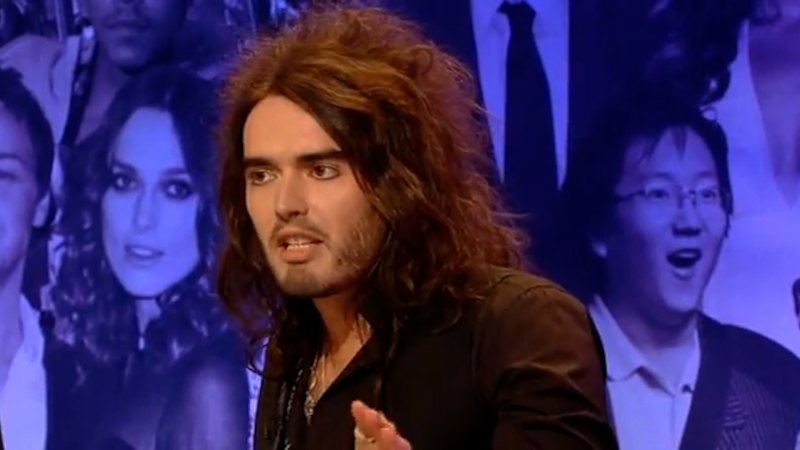
In late December 2007, Channel 4 broadcast an episode of The Big Fat Quiz of the Year featuring Russell Brand and Noel Fielding teamed up as the "Goth Detectives," trading off-the-cuff banter about sexual assault while the studio audience roared and fellow panelists laughed along. Nineteen years later, following Russell Brand’s November 2026 conviction on one count of rape and three counts of sexual assault, that exact archive footage resurfaced online, forcing Fielding to issue a public apology and exposing how 2000s British television monetized predatory personas as harmless comedy.
The clip is jarring not because it was leaked from an unedited green room, but because it was curated, approved, and broadcast during prime holiday programming. Watch the sequence closely. Host Jimmy Carr and panelist Jonathan Ross set the frame by making remarks about 21-year-old singer Lily Allen being seated near Brand and Fielding, with Ross quipping that moving her away might ensure she could "go home with her dress still on." From there, Brand and Fielding riffed casually on rape and sexual coercion, treating the subject as surrealist wordplay. Nobody in the edit suite cut it. Nobody at the compliance desk flagged it. At the time, it was simply another Tuesday in British panel-show television.
The Architecture of the 2000s Panel Show
To understand why that broadcast happened—and why it took nearly two decades for the clip to trigger institutional panic—you have to look at the economics of British television in the mid-2000s. Channel 4 had built its commercial identity on post-watershed provocation. Shows like The Big Fat Quiz of the Year, 8 Out of 10 Cats, and Never Mind the Buzzcocks operated as high-margin comedic pressure cookers. Producers booked six prominent entertainers, plied them with alcohol, filmed for upwards of four hours, and distilled the sharpest, most transgressive exchanges into a tight ninety-minute broadcast.
In that environment, shock value functioned as currency. Comedians were not merely permitted to push boundaries; their market value depended on it.
Brand’s entire ascent during that window was engineered around the persona of the hyper-sexualized, boundary-destroying libertine. Industry executives did not view his stage act as a red flag; they viewed it as a differentiator. Between 2006 and 2008, Brand moved from cult stand-up and MTV presenter to hosting Big Brother’s Big Mouth, fronting a prime-time BBC Radio 2 show, and landing major Hollywood roles. Television commissioners rewarded escalation. When Brand leaned into jokes about non-consent or sexual aggression, the room interpreted the remarks as ironic performance art—a knowing wink at his own tabloid reputation.
Fielding occupied a different lane, yet the pairing worked because of their contrasting aesthetics. Known for the whimsical, psychedelic surrealism of The Mighty Boosh, Fielding softened Brand’s sharper edges. Together, the "Goth Detectives" became a recurring television double act, winning the 2006 quiz and returning in 2007 as fan favorites. When Fielding played along with Brand’s riffs on sexual assault, the dynamic signaled to viewers that the banter was absurd rather than literal. That comedic framing acted as a protective shield, insulating both men and the broadcasters employing them from scrutiny.
Why Archive Footage Hits Differently After a Verdict
Archive television rarely stays buried anymore, and the timeline of November 2026 demonstrates how quickly legacy clips can destabilize active entertainment franchises. On November 9, 2026, Brand was sentenced to 10 years and six months in prison after being found guilty of rape and sexual assault. Within days, social media users began excavating his peak-fame appearances alongside his closest television collaborators.
The 2007 Big Fat Quiz segment accumulated hundreds of thousands of views almost overnight. Suddenly, the public was no longer watching two edgy comedians riffing in a vacuum; they were watching a convicted rapist joke about rape on national television while his co-host riffed alongside him.
For Channel 4, the timing created an acute corporate crisis. Noel Fielding was no longer an alternative cult comedian on the fringes of late-night television. Since 2017, he has served as the co-host of The Great British Bake Off, one of the network’s flagship, family-friendly properties. The 2026 series was heading into its November 24 finale—an installment that had already generated heavy promotional momentum around Nigella Lawson joining the program—when headlines about Fielding’s past remarks with Brand began eclipsing coverage of the show itself.
Internal panic at broadcasters during these moments follows a predictable pattern. Executives who profited from the edgy era suddenly distance themselves from the very archives they still own and syndicate. Industry reports indicated that Channel 4 staff were deeply alarmed by the language in the resurfaced clip, worried about the reputational bleed onto a wholesome tentpole franchise. Yet that corporate shock ignores a basic reality of television production: Channel 4 commissioned the quiz, edited the tape, and kept the footage circulating in the public domain for nineteen years.
The Anatomy of a Damage-Control Statement
By November 14, 2026, facing mounting pressure over his silence following Brand's sentencing, Fielding released a formal statement addressing both the conviction and the 2007 broadcast. His response followed the established playbook of modern reputation management, hitting three specific beats designed to sever his current public persona from his past comedic choices.
First, he established ignorance of the crimes, stating he was "horrified and deeply disturbed" to learn of Brand's offenses, which he insisted he knew nothing about until they became public. Second, he emphasized temporal distance, noting he had maintained "no contact with him for many years." Third, he addressed the footage directly, expressing regret over what he described as "horrible and inappropriate" jokes made alongside Brand.
Jonathan Ross issued a parallel statement around the same time, addressing both the resurfaced Big Fat Quiz remarks and other archival clips involving disgraced television figures, stating he was "genuinely unaware" of their off-camera conduct.
These statements highlight a persistent gray area in entertainment accountability. It is entirely plausible that a panel-show co-host had no knowledge of what another performer was doing behind closed doors in dressing rooms or private residences. Comedians work together on sets, share green rooms for an afternoon, and go their separate ways. Holding every co-worker legally or morally responsible for another person's secret crimes is neither fair nor accurate.
At the same time, the "we didn't know" defense sidesteps the cultural mechanics that made those crimes easier to commit and harder to report. When top-tier broadcasters and beloved entertainers routinely treat sexual violence as punchline material, they establish a workplace norm. Junior crew members, young guests, and potential targets watching from the sidelines receive a clear message about what the industry considers funny, acceptable, and untouchable. The jokes did not cause the assaults, nor do they prove complicity in them, but they actively contributed to an environment where predatory behavior was camouflaged as harmless rock-and-roll excess.
The Myth of the Innocent Era
Whenever a mid-2000s clip sparks outrage in the 2020s, defenders inevitably reach for historical relativism. You hear the same refrain across every industry post-mortem: It was a different time. Humor was darker then. You cannot judge 2007 by 2026 standards.
That argument falls apart under basic scrutiny. Even in 2007, the British television industry knew where the ethical lines were drawn—it simply chose not to enforce them when ratings were strong.
Less than a year after the 2007 Big Fat Quiz aired, Brand and Jonathan Ross triggered one of the largest regulatory scandals in BBC history with the October 2008 "Sachsgate" prank calls on BBC Radio 2. When Brand and Ross left lewd voicemail messages on actor Andrew Sachs’s answering machine bragging about Brand sleeping with Sachs’s granddaughter, the backlash was immediate and ferocious. Ofcom fined the BBC £150,000, Brand resigned from his radio post, and Ross was suspended without pay for twelve weeks.
The timeline proves that audiences and regulators in the late 2000s were fully capable of recognizing when comedy crossed into cruelty and harassment. The difference was not a lack of moral awareness; it was a matter of whose dignity triggered institutional alarm. Mocking a beloved veteran sitcom actor on a state-funded radio station drew swift punishment. Joking abstractly about raping women—or directing sexualized banter at a 21-year-old female musician on a commercial panel show—passed through the broadcast filter without a single formal reprimand.
What Broadcasters Still Refuse to Fix
The resurfacing of the 2007 Big Fat Quiz clip is not an isolated glitch; it is a symptom of how television networks manage risk. Broadcasters treat reputational fallout as a talent problem rather than a structural one. When a star is convicted, networks scrub their streaming platforms, remove past episodes from on-demand catalogs, and wait for co-stars to issue contrite press releases.
What rarely changes is the underlying commissioning model that elevates unchecked ego over duty of care.
During Brand’s peak years across Channel 4 and the BBC, multiple women later testified to experiencing abusive behavior in and around his workplaces, while industry insiders whispered about his conduct for over a decade before major investigations finally broke the story open in 2023. Yet because he delivered ratings, sold out arenas, and generated tabloid headlines, producers continually handed him live microphones and editorial leeway. In television, talent that generates buzz is routinely insulated from standard HR oversight.
Furthermore, the panel-show format itself remains largely unchanged. While overt rape jokes have vanished from mainstream network broadcasts due to tighter compliance standards and shifting audience tolerances, the structural incentives persist. Panels are still dominated by established names riffing for shock laughs under heavy alcohol or high-stress taping schedules, with junior guests often thrown into the deep end without meaningful pre-show briefing or editorial protection.
When Channel 4 executives express dismay today over a 2007 clip threatening the brand equity of The Great British Bake Off, they are confronting a ledger they helped write. Television archives do not expire, and modern audiences no longer accept the excuse that a joke was harmless simply because an audience laughed at the time. Until networks apply the same scrutiny to rising stars in real time that they apply to disgraced stars after a prison sentence, the industry will keep apologizing for broadcasts it once proudly aired.