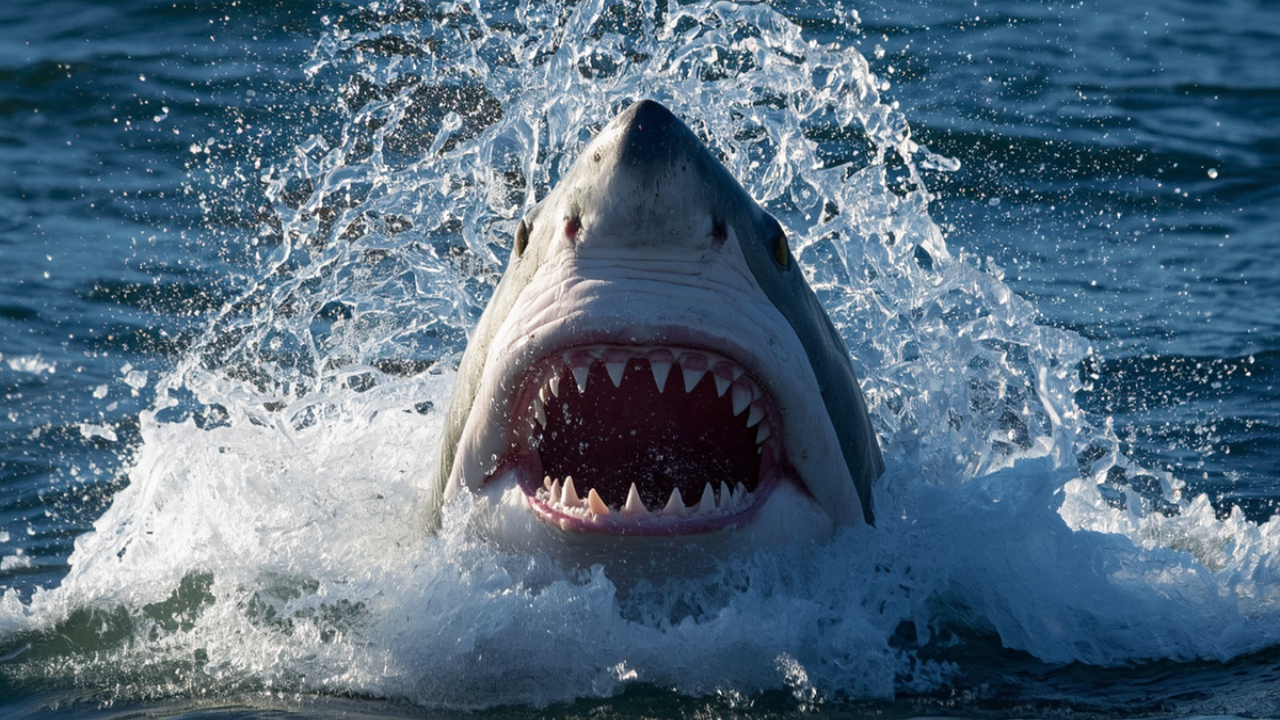
The designation of a coastline as "shark-infested" is a statistical illusion driven by human population density and localized hydrodynamics rather than an objective index of apex predator aggression. When public data sources quantify coastal risk, they measure human-shark interactions, which function as a direct product of overlapping spatial utilization. Evaluating the absolute volume of unprovoked encounters without normalizing for beach attendance or species-specific hunting mechanics distorts genuine ecological risk.
To systematically analyze the coastlines with the highest frequencies of encounters in the United States, we must isolate the underlying variables. These variables resolve into a clear ecological and behavioral equation: the intersection of apex predator feeding mechanics, nearshore bathymetry, and recreational human density.
The Human-Shark Interaction Function
The frequency of unprovoked shark encounters along any given stretch of coast can be mathematically modeled as a function of spatial-temporal overlap. The baseline probability of an interaction relies on three independent operational vectors:
- The Biomass Density Vector: The concentration of migratory or resident elasmobranchs within 500 feet of the shoreline, driven by thermal preferences and prey availability.
- The Anthropogenic Density Vector: The absolute volume of human recreational water users (surfers, swimmers, and waders) occupying the surf zone.
- The Environmental Visibility Modifier: Water turbidity, tidal efflux, and local bathymetry that increase the probability of a predatory mistake.
When media narratives characterize specific beaches as inherently dangerous, they routinely fail to account for the Anthropogenic Density Vector. A beach with 1,000,000 annual bathers and 10 documented minor interactions possesses a lower per-capita risk profile than a remote shoreline with 1,000 annual bathers and 2 severe interactions.
High-Frequency Hotspots: The Atlantic and Gulf Coast Dynamics
The Volusia County Micro-System: New Smyrna and Daytona Beach
Volusia County, Florida, consistently reports the highest raw numbers of unprovoked shark bites globally, historically accounting for a substantial percentage of the state's annual totals. This concentration is not indicative of an anomalous population of aggressive man-eating predators; it is an optimization of environmental and human variables.
The Ponce de Leon Inlet acts as a high-velocity hydrodynamic engine. Tidal changes flush nutrients and baitfish out of the Indian River Lagoon system directly into the Atlantic surf zone. This creates a highly concentrated, predictable feeding corridor for juvenile and adult blacktip (Carcharhinus limbatus) and spinner sharks (Carcharhinus brevipinna).
The physical mechanisms generating interactions here follow a distinct sequence:
- Longshore sandbars create consistent, high-energy breaking waves that attract dense populations of surfers.
- The breaking surf suspends sediment, severely lowering underwater visibility to less than three feet.
- Juvenile blacktips hunt schooling baitfish within this turbulent, opaque zone, relying on lateral lines and electroreceptors rather than visual confirmation.
- Human extremities paddling through the surf trigger rapid, predatory strike reflexes.
The structural result is a high frequency of minor, non-fatal "hit-and-run" puncture wounds. These are misidentifications rather than sustained predatory sequences.
The Space Coast and South Carolina Lowcountry: Brevard and Horry Counties
Progressing south to Brevard County or north to the Grand Strand of South Carolina (centered around Myrtle Beach), the structural framework shifts slightly but retains the same fundamental mechanics.
In these regions, broad, shallow continental shelves maintain warm water temperatures throughout the summer, extending the seasonal residency of coastal migratory sharks. Horry County experiences surging tourist populations during peak summer months, coinciding perfectly with the nearshore migration of smaller coastal elasmobranch species following menhaden schools. The primary driver of interactions here is simple statistical exposure: high human density occupying shallow, baitfish-rich waters during peak solar hours.
Macro-Predator Apex Systems: The Pacific and Island Dynamics
The Hawaiian Archipelago: Maui and Oahu Target Profiles
The risk matrix changes fundamentally when transitioning from the Atlantic coast to the volcanic topography of Hawaii. Hawaii ranks second nationally in total unprovoked encounters, but the underlying mechanisms and severity metrics diverge sharply from the southeastern United States.
The Hawaiian Islands lack a wide, shallow continental shelf. The marine architecture is defined by immediate, steep underwater drop-offs that bring deep pelagic waters into close proximity with the shoreline. This bathymetry dictates the presence of large, apex predators—specifically adult tiger sharks (Galeocerdo cuvier)—rather than small, coastal opportunists.
Tiger sharks exhibit an opportunistic, non-selective foraging strategy. The physical variables governing interactions in Hawaiian waters include:
- Deep-Water Approaching Corridors: Large predators can approach the shoreline undetected due to deep water depth adjacent to coral reefs.
- Turbid Runoff Channels: Heavy rainfall events cause localized agricultural and urban river runoff, discharging organic matter into bays. Tiger sharks utilize these murky plumes to stalk prey, increasing the probability of encountering human ocean users who are unable to see the approaching animal.
The California Pelagic Nexus: Central and Southern Ocean Profiles
California's encounter data is concentrated across counties such as San Diego, Santa Barbara, and Monterey. The system here is entirely driven by the sub-adult and adult populations of the white shark (Carcharodon carcharias).
The operational mechanics along the Pacific coast are highly structured around prey availability and life-stage development:
[Juvenile White Sharks] ---> Utilize Southern California nearshore waters as thermal nurseries (High interaction frequency, low severity)
[Adult White Sharks]    ---> Patrolling Central/Northern pinniped colonies near deep drop-offs (Low interaction frequency, high severity)
The primary variable governing encounters with adult white sharks is the "ambush from below" hunting strategy. White sharks silhouette their prey against the surface from deeper water layers. Surfers paddling on boards closely match the visual signature of a pinniped (seal or sea lion). Because of the sheer mass and kinetic force involved in an adult white shark test-bite, the severity and lethality metrics of California encounters are statistically higher than those of Atlantic coast interactions, despite occurring at a fraction of the raw volume.
The Confluence of Oceanographic Frontiers: The Outer Banks and Cape Cod
The final macro-environment involves geographic anomalies where distinct ocean currents converge, creating highly productive biological zones.
North Carolina's Outer Banks
The Outer Banks represent a significant oceanographic collision point where the warm, northbound Gulf Stream meets the colder, southbound Labrador Current. This convergence creates a highly dynamic marine ecotone.
The narrow strip of barrier islands forces the deep ocean currents close to land. Swimmers and surfers enter waters that act as a mixing bowl for multiple distinct hunting guilds. Bull sharks (Carcharhinus leucas), which tolerate varying salinities, patrol the shallow sounds and inlets, while larger pelagic species hunt along the ocean-facing sandbars. The risk factor here is highly variable and depends entirely on daily wind-driven current shifts that bring different thermal water masses close to shore.
Cape Cod and the Marine Mammal Recovery Factor
The emerging hotspot of Cape Cod, Massachusetts, represents a direct ecosystem response to successful federal conservation mandates. The passage of the Marine Mammal Protection Act led to a multi-decade recovery of the gray seal (Halichoerus grypus) population along the New England coast.
This surging biomass of high-fat prey has predictably altered the migratory patterns of adult white sharks. The sharks now cruise the shallow, nearshore troughs of Cape Cod's Atlantic-facing beaches to intercept seals moving between the open ocean and beach haul-outs. This creates a high-stakes bottleneck where human recreational swimmers are inadvertently positioning themselves within an active, large-predator hunting ground.
Comparative Matrix of Regional Risk Dynamics
The structural differences between these coastlines highlight why aggregating them into a single "shark-infested" list is analytically flawed. The variance in risk profiles is distinct across geographies:
| Geographic Region | Primary Implicated Species | Principal Environmental Driver | Typical Interaction Severity |
|---|---|---|---|
| Florida East Coast (Volusia County) | Blacktip, Spinner sharks | Hydrodynamic inlet currents, baitfish aggregation, low surf visibility | Low (Minor puncture wounds, predatory mistake) |
| Hawaii (Maui, Oahu) | Tiger sharks | Steep bathymetric drop-offs nearshore, organic river runoff | High (Large apex predator predatory investigation) |
| California Coast (Central to Southern) | White sharks | Proximity to pinniped rookeries, silhouette mistargeting | High (High kinetic force ambush behavior) |
| New England Coast (Cape Cod) | White sharks | Exploding gray seal populations in shallow nearshore troughs | High (Interception of mammalian prey source) |
Strategic Risk Mitigation Protocols
To minimize exposure to unprovoked encounters, coastal safety managers and recreational water users must look past raw numbers and implement protocols designed around these specific ecological mechanisms.
Avoid entering the water within 48 hours of heavy coastal rainfall or near active river mouths and inlets, as these areas feature elevated turbidity and concentrated organic material that trigger hunting behaviors. Do not swim in areas with an active presence of marine mammals or schooling baitfish, which are easily identifiable by diving seabirds. Finally, minimize early morning and late evening water entry along deep-water coastlines; these low-light periods optimize the visual ambush strategies of apex predators while minimizing a human's ability to spot an approaching animal.


