Salt crusts on the iron railings of a cargo vessel before the sun even clears the horizon in the South China Sea. If you have ever stood on the deck of a merchant ship at four in the morning, watching the radar sweep green across an empty expanse of black water, you know that silence is never truly empty. It hums. It hums with the vibration of diesel engines pushing forty thousand tons of steel toward a port three thousand miles away, and it hums with the unspoken anxiety of men who know that a single diplomatic miscalculation in a distant capital can turn a routine shipping lane into a choke point overnight.
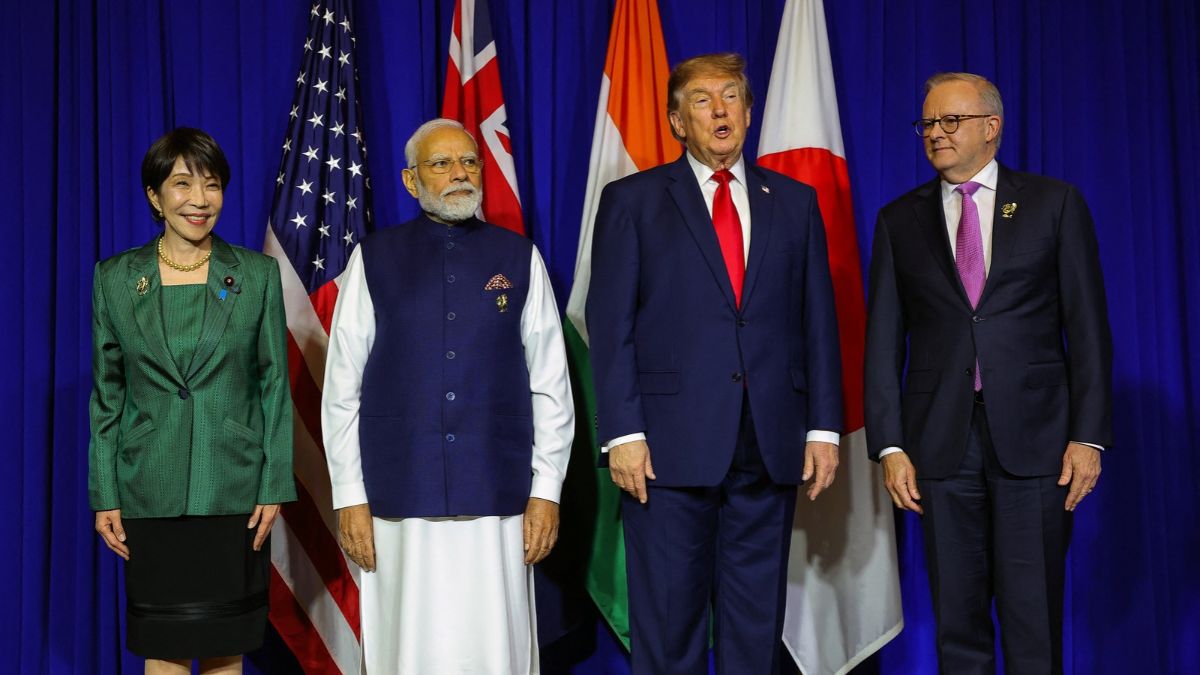
We rarely think about those men when we pour our morning coffee or order a replacement battery for our laptops. We think about convenience. We think about prices. Yet nearly sixty percent of the world’s maritime trade passes through these exact waters, funneled through narrow straits that look like thin blue threads on a classroom globe. When Prime Minister Narendra Modi recently described the Quadrilateral Security Dialogue—known simply as the Quad—as a constructive and trusted partnership, and pointed toward upcoming talks in Manila to set concrete goals for its next phase, the headlines read like standard diplomatic boilerplate. Handshakes. Podiums. Polite applause.
Look closer, though, and the polite language dissolves into something urgent, human, and deeply personal.
The Fisherman’s Horizon and the Diplomat’s Map
To understand why four nations—India, the United States, Japan, and Australia—are converging on the Philippine capital to draw up hard, actionable blueprints, leave the conference rooms behind. Picture a hypothetical fisherman named Mateo, mending his nets on a wooden pier in Zambales, on the western coast of Luzon. Mateo does not read white papers on Indo-Pacific maritime security. He reads the swell of the tide, the color of the clouds gathering over the horizon, and the silhouette of steel hulls patrolling waters where his grandfather once cast lines without a second thought.
For Mateo, geopolitics is not an abstract chessboard. It is the difference between returning home with a hold full of yellowfin tuna or returning with empty hands because a larger, grey-painted vessel decided his traditional fishing grounds were suddenly off-limits. When diplomacy fails at the highest levels, the shockwaves do not hit ambassadors first. They hit Mateo. They hit the nurse in Manila waiting for a delayed shipment of medical isotopes. They hit the factory worker in Chennai whose assembly line stalls because semiconductors are stuck on a rerouted freighter.
For years, critics dismissed the Quad as a talk shop—a loose gathering of democracies that issued high-minded joint statements about a free and open Indo-Pacific while hesitating to commit to specific, enforceable actions. That skepticism was fair. We have all seen international coalitions formed with fanfare only to drown in their own bureaucracy, producing endless working groups while realities on the water hardened into permanent fixtures.
Modi’s framing of the Manila talks signals a deliberate break from that pattern. By calling the alliance constructive and trusted, and emphasizing concrete goals for the next phase, New Delhi is acknowledging a blunt truth: good intentions do not keep sea lanes open. Execution does.
Why Manila Changes the Equation
Why hold this next critical phase of negotiations in Manila? Geography tells half the story, and history tells the rest.
The Philippines sits at the literal crossroads of the Pacific and the Indian Ocean approaches—a sprawling archipelago of more than seven thousand islands that acts as both a bridge and a barrier. Historically, Manila walked a tightrope, balancing its longstanding security treaty with Washington against massive economic overtures from Beijing. Watching that tightrope walk over the past decade felt like watching someone cross a canyon on a fraying rope during a gale. Every shift in domestic politics brought a wild swing in foreign policy, leaving neighbors guessing and maritime boundaries increasingly contested.
That era of ambiguity is over.
By bringing the Quad’s strategic planning to Manila—even though the Philippines is not one of the four core members—the group is planting a flag in the exact theater where rules-based order faces its sharpest daily tests. Think of the Quad not as an exclusive country club, but as an emergency power grid. When a neighborhood suffers rolling blackouts, you do not build a generator in a quiet suburb ten miles away; you wheel it directly to the hospital on the fault line. Manila is on that fault line.
During my years covering maritime logistics across Southeast Asia, I once spent three days stuck in a port terminal in Batangas waiting for customs clearance during a regional typhoon warning. You learn quickly in those fluorescent-lit waiting rooms that global supply chains are shockingly fragile. They are held together by trust—trust that charts are accurate, trust that rescue beacons will be answered, trust that coastal waters will not be mined or blockaded on a whim. When that trust erodes, insurance premiums skyrocket, shipping companies add surcharges, and the cost of living quietly creeps upward for families from Tokyo to Toronto.
The Architecture of Quiet Deterrence
What do concrete goals actually look like when four vastly different nations sit down at the table? It is easy to assume these meetings are all about warships and joint naval exercises. Naval presence matters, of course. You cannot deter coercion with strongly worded letters alone.
Yet the true backbone of the Quad’s next phase lies in things far less cinematic and far more durable:
- Maritime Domain Awareness: Imagine a shared digital nervous system stretching across millions of square miles of ocean. Through satellite tracking and data-sharing agreements, coastal nations like the Philippines gain real-time visibility into dark vessels—ships that turn off their transponders to fish illegally or smuggle goods under the cover of darkness.
- Subsea Cable Resilience: Over ninety-five percent of intercontinental internet traffic travels through fiber-optic cables resting on the ocean floor. Every bank transfer, every encrypted email, every video call relies on glass threads no thicker than a garden hose lying in the mud thousands of feet below the waves. Protecting and repairing those cables requires coordinated engineering fleets that no single nation can maintain alone.
- Vaccine and Supply Chain Diversification: The pandemic taught a brutal lesson about concentrating critical manufacturing in a single geography. The Quad’s economic track focuses on building redundant pathways for pharmaceuticals, clean energy minerals, and critical technologies so a single crisis cannot hold the global economy hostage.
Here is where the skeptic in all of us raises an eyebrow. Can four democracies—each with its own messy domestic elections, budget deficits, and competing priorities—actually pull this off without stumbling over their own red tape?
It is an honest question, and pretending the path is smooth would be dishonest. India has historically guarded its strategic autonomy with fierce pride, avoiding formal military alliances that might drag New Delhi into conflicts not of its choosing. Australia and Japan depend deeply on regional trade for their prosperity, forcing them to calibrate every diplomatic move carefully. The United States wrestles with periodic waves of isolationism that make allies wonder how steady Washington’s hand will remain from one administration to the next.
These tensions are real. Anyone who tells you the Quad operates without friction is selling you a brochure.
Beyond Pledges to Muscle Memory
Yet friction is not failure. In engineering, friction is what allows a tire to grip the road instead of spinning uselessly on ice.
Consider how the four nations responded when the Indian Ocean tsunami struck in 2004—the very crisis that originally sparked the idea of the Quad. There were no treaties signed in advance, no grand ideological manifestos. There were simply four navies with helicopters, desalination units, and heavy-lift aircraft that showed up within days to pull survivors from rooftops and deliver clean water to shattered coastlines. That muscle memory—the practical, unglamorous work of solving immediate problems together—is what India’s Prime Minister is tapping into when he uses the word trusted.
Trust in international relations is never built in a single summit. It is built when coast guard officers from Yokohama train alongside counterparts in Palawan. It is built when Indian engineers collaborate with Australian researchers to map rare-earth mineral deposits. It is built when promises made in air-conditioned halls in New Delhi or Washington translate into coast guard cutters, radar stations, and financing for ports that do not trap developing nations in insurmountable debt.
If we strip away the acronyms and the diplomatic choreography, the Manila talks come down to a simple, stubborn human instinct: the desire to build a fence around the rulebook so that smaller nations do not have to live in permanent fear of larger ones.
Think back to Mateo, our hypothetical fisherman on the wooden pier in Zambales, coiling his ropes as dusk settles over the water. He does not care which diplomat gets credit for a communiqué, nor does he follow the subtle shifts in phrasing between summits. He cares about whether the horizon belongs to everyone who respects the law of the sea, or only to whoever builds the biggest hull. When the delegates pack their briefcases in Manila and fly home, the real measure of their success will not be found in the transcripts of their speeches, but in the quiet, unremarkable mornings when a merchant ship crosses the South China Sea on schedule, unchallenged, carrying the invisible threads of our daily lives safely into port.