Sound travels differently when a building dies.
It is not the cinematic explosion you expect from summer blockbusters. It is a low, grinding groan, like a giant tectonic plate shifting beneath your floorboards, followed instantly by a suffocating silence and a wall of gray dust that tastes of crushed limestone, ancient horsehair plaster, and rust.
For anyone who has ever lived in a pre-war New York apartment—myself included—that sound is the ultimate nocturnal terror. You learn to live with the quirks of hundred-year-old masonry. You ignore the hairline crack snaking above the bathroom doorframe. You laugh off the sloping hardwood floors that send a dropped marble rolling inexorably toward the radiator. You tell yourself these buildings have stood through blizzards, blackouts, and the rumble of subway lines for a century, so surely they will stand through tonight.
Then comes a Tuesday afternoon in Flatbush, Brooklyn, and that unspoken contract between city and citizen shatters.
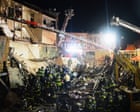
When a residential structure gave way in Flatbush, killing one person and injuring several others, the standard news reports reduced the catastrophe to cold geometry and municipal jargon. Square footage. Response times. Department of Buildings violation codes. Street closures along the avenue. Those facts matter, of course they do. They form the skeleton of the public record. Yet skeletons cannot bleed, and they cannot tell you what it feels like to stand on a Brooklyn sidewalk watching strangers claw through pulverized brick for someone who was just trying to make lunch.
To understand what really happened in Flatbush, you have to look past the yellow caution tape and examine the invisible architecture of neglect that holds up too much of urban America.
The Anatomy of a Slow-Motion Collapse
Buildings rarely fail without warning. They whisper long before they scream.
Consider a hypothetical resident—let us call her Elena—living on the third floor of an aging walk-up just a few blocks from Prospect Park. Elena is a home health aide who works double shifts, pays nearly half her take-home income in rent, and keeps a small pot of rosemary on her fire escape. For months, Elena notices that her bedroom door no longer latches properly during humid weather. Then, a faint dusting of white powder begins appearing along the baseboard every morning, no matter how often she sweeps it away.
In Elena's mind, these are minor annoyances, the tax you pay for living in a vibrant, historic Brooklyn neighborhood where rent hasn't quite hit Manhattan absurdity. She files a maintenance request through an online portal that routes her complaint into a bureaucratic void. Maybe a superintendent shows up three weeks later with a bucket of cheap spackle and a putty knife, smearing white paste over a symptom while ignoring the disease eating through the load-bearing wall behind it.
This is how structural failure actually works. Think of an older brick building like a human spine. The bricks are the vertebrae, strong under direct compression, capable of bearing immense weight for decades. The mortar between them—that sandy, lime-rich paste—is the cartilage. Over a hundred New York winters, water seeps into microscopic fissures, freezes, expands, and turns that mortar to dust. Add an unpermitted basement excavation next door, or heavy construction vibrations, or decades of deferred roof maintenance letting rainwater rot the timber joists from the inside out, and suddenly the spine loses its alignment.
Once a load-bearing wall bows outward by even a fraction of an inch, gravity stops being a neutral force and becomes an executioner.
In Flatbush, when that threshold was crossed, the collapse unfolded in seconds. Ton upon ton of masonry pancaked downward, trapping residents, construction workers, or passersby who had zero reason to believe the ground beneath their feet was anything less than permanent. First responders from the FDNY arrived within minutes, deploying canine units, acoustic listening devices, and hydraulic jacks to shore up shifting voids where another tremor could bury rescuers alongside the trapped.
One life ended instantly. Several others were pulled from the wreckage broken, traumatized, and permanently altered.
Why Neighborhoods Like Flatbush Carry the Heaviest Weight
If you map structural complaints, open building violations, and emergency vacate orders across New York City, a clear, uncomfortable pattern emerges. Disasters like the Flatbush building collapse do not strike randomly across the five boroughs like summer lightning. They cluster along fault lines of age, economics, and enforcement.
Flatbush is a neighborhood of extraordinary resilience and cultural richness—home to generations of Caribbean immigrants, long-standing Black families, Orthodox Jewish communities, and waves of younger renters priced out of neighboring Park Slope and Crown Heights. Its housing stock is a dense patchwork of early twentieth-century brick tenements, limestone row houses, and rapidly erected infill developments squeezed onto narrow lots.
Here is the math that keeps urban planners awake at night: New York City contains more than one million buildings, and the vast majority were constructed before World War II. Meanwhile, the Department of Buildings operates with a finite army of inspectors tasked with overseeing active construction sites, elevator safety, boiler inspections, facade laws, and tens of thousands of annual citizen complaints.
Under that pressure, municipal oversight inevitably becomes reactive rather than preventive. Inspectors respond to crises rather than catching rot in its infancy.
Worse still is the perverse financial math practiced by negligent landlords. In a housing market defined by severe scarcity, a landlord faces little market punishment for letting a building deteriorate. If one tenant moves out because the ceiling is sagging and water stains bloom across the plaster like dark bruises, three desperate applicants are waiting in line to sign the lease at a higher rate. Paying an occasional fine to the city is simply treated as an operating expense, far cheaper than hiring structural engineers, repointing brick facades, or replacing compromised steel lintels.
And what happens when a shiny new development goes up right next door to a fragile hundred-year-old building?
This is one of the most common—and least understood—triggers of urban collapses. In dense neighborhoods like Flatbush, developers maximize every square inch of land, digging deep foundations directly adjacent to historic structures built on shallow rubble footings. When excavators dig below the foundation line of a neighboring building without installing proper underpinning—essentially concrete piers poured beneath the old foundation to transfer its weight safely downward—the soil shifts. The old building begins to sink unevenly. Bricks shear apart. Floors tilt.
By the time someone calls 311, the damage is often irreversible.
The Myth of the Safe Interior
We spend our lives indoors operating under a profound psychological illusion: that walls equal protection.
When storms roll in, we go inside. When streets feel chaotic, we lock our deadbolts and exhale. That basic assumption of shelter is the bedrock of human sanity. When a building collapses in the middle of an ordinary afternoon, it violates that primal trust in a way few other tragedies can match.
I remember standing outside a cordoned-off brownstone in Brooklyn years ago after a partial facade collapse sent fifty-pound chunks of stone crashing onto a stoop where neighborhood kids usually sat after school. Nobody died that day—pure luck, separated from tragedy by twenty minutes on the clock. What stayed with me was not the pile of rubble on the concrete, nor the flashing red lights reflecting off parked cars. It was the faces of the neighbors standing across the street in bathrobes and slippers, staring up at their own front windows as if seeing a stranger for the first time.
They weren't just looking at a damaged building. They were recalculating every creak they had ever heard in their own hallways.
That quiet paranoia is entirely rational. Most renters and homeowners have no idea how to read the warning signs of structural distress, and city agencies rarely translate technical engineering risks into plain human language. Even when violations are public record, buried inside clunky municipal databases, how many people know how to look up a Building Information System profile before signing a lease? Almost none. You check the water pressure. You check the distance to the Q or the 2 and 5 trains. You check whether the bedroom fits a queen mattress. You assume the walls will stay upright because the city issued a certificate of occupancy decades ago.
Reading the Warning Signs Before the Dust Rises
Truthfully, distinguishing between harmless settling and imminent danger can confuse even seasoned contractors. Old buildings breathe. Wood swells in July and shrinks in January. Plaster cracks easily without signaling structural doom.
Yet structural engineers point to specific red flags that deserve immediate, relentless escalation—not a polite email to a property manager, and not waiting until next month.
Watch for diagonal cracks radiating outward from the corners of windows and doors, especially jagged stair-step cracks running through exterior brickwork. Horizontal cracks along basement walls or bowed masonry bulging outward like a pregnant belly indicate severe lateral pressure or failing ties holding the outer brick wythe to the inner frame. Pay attention when doors and windows across multiple floors suddenly jam simultaneously, or when gaps open up between walls and ceilings where none existed before.
If you live next door to an active excavation or demolition site and feel sustained vibrations rattling dishes in your cabinets, document everything with time-stamped video and report it immediately. Construction crews are legally required to monitor vibration levels and protect adjacent structures, yet corners get cut every single day when project timelines slip and financing costs mount.
When a complaint goes unanswered, persistence becomes a survival skill. Calling 311 creates a paper trail, forcing an inspection clock to start ticking. Reaching out to local community boards, tenant advocacy groups, and council offices applies political heat that bureaucratic portals never generate on their own.
What Remains After the Siren Fades
Within forty-eight hours of the Flatbush collapse, the news cycle moved on, as it always does. Another headline pushed the story down the feed. The temporary shelters processed displaced families. City officials promised thorough investigations, strict accountability, and reviews of pending complaints tied to the property.
Investigations are necessary, yet promises made in front of television cameras carry a notoriously short half-life in New York real estate. Fines get negotiated down in administrative hearings. Limited liability companies dissolve and reappear under fresh names. Meanwhile, across Brooklyn, the Bronx, Queens, and Upper Manhattan, thousands of tenants continue sleeping beneath cracked ceilings, trusting that the mortar holding their bedrooms together has one more year left in it.
A city is not measured by the height of its newest glass towers in Downtown Brooklyn or Hudson Yards. It is measured by whether a working person can walk through their front door in Flatbush, set down their groceries, and trust that the roof above them will still be there in the morning.
Late that night, long after the cameras packed up and the heavy cranes finished lifting the last twisted beams from the Flatbush wreckage, a light rain began to fall over the block. Under the amber glow of the streetlamps, fine gray dust turned to slick paste on the windshields of parked cars, while across the street, behind darkened windows, neighbors stood quietly watching the empty space where a home used to be.