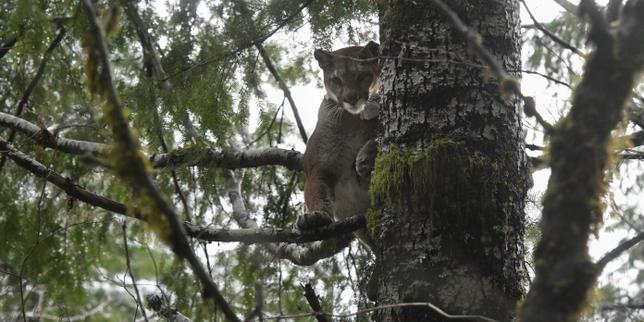
In the damp, moss-draped undergrowth of the Pacific Northwest, a tiny creature called the coastal marten spends its life hunting among the roots of ancient redwoods. It is a fierce, cat-like relative of the weasel, no heavier than a stick of butter, yet perfectly adapted to a forest that has stood for millennia. Most Americans will never see one. But their lives are bound to its survival in ways that have nothing to do with biology, and everything to do with how we define the value of a living world.
A few years ago, a series of pen strokes in Washington, D.C., fundamentally altered the landscape beneath the marten’s paws.
The Trump administration rolled out sweeping revisions to the Endangered Species Act (ESA), the bedrock environmental law signed by Richard Nixon in 1973. To the officials holding the pens, these changes were described as modernizing bureaucratic red tape and streamlining economic development. But to the coalition of environmental groups, state attorneys general, and scientists who swiftly filed lawsuits to block them, the new rules represented a quiet, systematic dismantling of America’s safety net for vulnerable wildlife.
This is not a simple story of activists versus developers. It is a deeper struggle over how we calculate the cost of our own future.
The Math of Extinction
For nearly fifty years, the Endangered Species Act operated on a remarkably simple, almost sacred principle: when deciding whether a plant or animal was sliding toward extinction, the government could only look at science. Economics were kept out of the room. The decision to save a species was treated as a moral and biological imperative, not a financial negotiation.
The new rules changed the math.
Under the revised regulations, federal agencies were permitted to conduct economic analyses when deciding whether to list a species as threatened or endangered. Suddenly, the cost of restricting logging, halting oil drilling, or rerouting a pipeline could be calculated alongside the biological risk of a species vanishing forever.
Imagine trying to decide whether to repair a crumbling bridge by first calculating how much money you save by letting it collapse.
By introducing dollar signs into the initial assessment, the playing field shifted. Critics argued that putting a price tag on a species is a rigged game. How do you quantify the economic value of a gray wolf? What is the monetary return on investment for a rare desert wildflower, or a buried burying beetle? The economic benefits of exploitation are immediate, loud, and easily measured in quarterly corporate earnings. The benefits of conservation are quiet, long-term, and largely invisible until they are gone.
The Ghost of Future Threats
But the financial calculations were only the beginning. The revisions also chipped away at how we protect species that are not yet endangered, but are rapidly heading that way—a category known as "threatened."
Previously, threatened species automatically received the same strict protections as endangered ones. The new rules stripped away this blanket protection. From that point on, protections would be negotiated on a case-by-case basis.
Worse still was the change in how the government defines the "foreseeable future."
Under the original framework, scientists used long-term climate models to project how rising temperatures, melting glaciers, and shifting habitats would impact wildlife decades down the road. If a species’ home was projected to disappear in thirty years, it received protection today.
The revised rules narrowed that window. By requiring a higher standard of certainty for what might happen in the future, the administration effectively turned a blind eye to the slow-motion train wreck of climate change.
Consider the wolverine. This solitary mountain predator relies on deep, persistent spring snowpacks to den and raise its young.
As the planet warms, those snowpacks are shrinking. Under the new guidelines, predicting the loss of that snowpack decades from now was deemed too speculative to warrant immediate federal protection. The law, once designed to be a shield against future disasters, was transformed into a reactive tool that only steps in once the disaster is already at the doorstep.
A Line in the Dirt
The response to these changes was swift and fierce. A coalition of environmental organizations, led by Earthjustice and representing groups like the Center for Biological Diversity, the Sierra Club, and the Defenders of Wildlife, filed a massive lawsuit in federal court. Soon after, a coalition of state attorneys general joined the fight, arguing that the federal government was violating the very spirit of the law it was sworn to uphold.
They argued that the administration had bypassed necessary public comment periods and ignored the overwhelming consensus of its own scientific agencies.
For those living on the ground in communities near public lands, the stakes felt incredibly personal.
Think of a small-town biologist who has spent twenty years tracking the decline of the sage grouse across the western plains. They have watched the sagebrush sea get fragmented by roads, oil rigs, and transmission lines. To them, the Endangered Species Act was not a set of regulations to be navigated; it was the only thing keeping the bulldozers from clearing the last remaining breeding grounds.
When you weaken that law, you do not just change a policy. You tell the people who have dedicated their lives to stewardship that their work, and the creatures they protect, are negotiable.
The Ripple in the Pond
It is easy to look at these legal battles and feel a sense of detachment. After all, most of us do not live in the path of a pipeline, and we will never cross paths with a coastal marten or a wolverine.
But ecosystems do not exist in isolation. They are intricate webs where every thread supports another.
When you remove a predator like the wolf, prey populations explode, leading to overgrazing that strips riverbanks of vegetation. This causes erosion, muddying the waters where salmon spawn. The loss of the salmon starves the bears and eagles, and eventually, the forest itself suffers as the nutrients once carried inland by the fish are lost.
Human beings are not observers standing outside this web. We are sitting right in the middle of it.
The clean water we drink, the air we breathe, and the fertile soil that grows our food are all products of these complex, functioning systems. When we systematically dismantle the protections that keep these systems intact, we are not just deciding the fate of a few rare plants and animals. We are deciding our own.
The legal battles sparked by those pen strokes in Washington were about much more than a set of administrative rules. They were a referendum on what kind of ancestors we want to be. They forced us to look at the wild, untamed corners of our country and ask ourselves a fundamental question: Is our prosperity only possible if we consume everything that came before us?
The courtrooms have emptied, the briefs have been filed, and the political tides continue to shift. But out in the quiet forests of the Northwest, beneath the canopy of trees that have lived through centuries of human ambition, the marten still hunts. It knows nothing of court filings, economic assessments, or political compromise. It only knows the cold damp of the moss, the scent of the wind, and the fragile, beautiful necessity of survival.