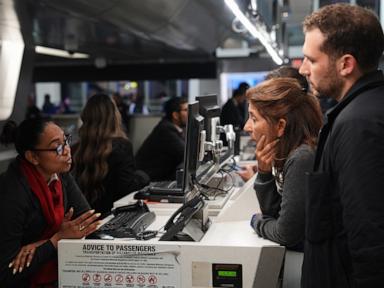
Silence in an airport terminal never sounds peaceful. It sounds like held breath.
I remember standing near Gate B14 at Chicago O’Hare on a brisk morning when the ambient hum of modern travel simply evaporated. Usually, an airport moves to a predictable percussion: the rhythmic clack of rolling suitcases over terrazzo floors, the hiss of espresso machines, the automated chime preceding a gate change. Then, within three minutes, the chimes stopped. Every departure board down the concourse flickered simultaneously, shifting from green to an unbroken wall of amber delays. Across the aisle, a woman clutching a laminated folder of oncology appointment records stared up at the glowing screen, her knuckles whitening around the strap of her carry-on. Beside her, a pilot in full uniform lowered his coffee cup, pulled out his personal phone, and frowned at a blank internal dispatch screen. Read more on a similar subject: this related article.
Nothing had crashed. No blizzard had swallowed the Midwest. No cyberattack had breached the perimeter.
Instead, somewhere inside a climate-controlled server room in Virginia, a piece of network hardware had choked on too much information at once. More reporting by Travel + Leisure highlights comparable views on this issue.
When aviation officials later explained why thousands of commercial aircraft were ordered to sit idle on tarmacs across the United States, the official post-mortem sounded almost mundane. A technical failure had struck the Notice to Air Missions system—known in cockpits and control towers simply as NOTAM—and engineers admitted bluntly that their routers had become overloaded with data. To the casual observer reading a headline over morning coffee, a router overload sounds like a household annoyance, the digital equivalent of rebooting a home Wi-Fi box when a movie buffers. In the architecture of national airspace, however, that single bottleneck brought the entire American commercial aviation grid to a standstill for the first time since September 11, 2001.
To understand how an invisible traffic jam inside a router can freeze tens of thousands of tons of aluminum and jet fuel across three thousand miles, you have to look past the sleek composite wings of modern airliners and examine the aging nervous system keeping them apart.
The Invisible Paperwork Behind Every Takeoff
Consider a hypothetical flight crew—let us call them Captain Elena Vance and First Officer Marcus Thorne—preparing a Boeing 737 for a routine morning departure from Denver to Boston. In the popular imagination, flying an airliner is a matter of hands on throttles, eyes on the horizon, and voices crackling over radio frequencies with air traffic controllers. In reality, before Elena ever releases the parking brake, federal aviation law requires her to verify a sprawling catalog of real-time hazards along every mile of her route.
Is a runway light burned out in Omaha? Is a crane operating two miles off the approach path in Cleveland? Has a flock of migrating geese been spotted near the departure corridor, or has a temporary flight restriction popped up over a stadium in Pennsylvania?
Every one of those warnings lives inside the NOTAM database.
Think of the NOTAM network as the central nervous system of the sky, or—to use a more tactile analogy—a massive, continuously updating corkboard nailed to the wall of every cockpit in America. Without that corkboard, pilots are flying blind to sudden changes on the ground. Federal regulations forbid a commercial airliner from taking off if the crew cannot access current NOTAMs. When the system goes dark, safety rules leave zero room for improvisation. Even if the sun is shining, the engines are healthy, and the runway is dry, the airplane legally cannot move an inch.
On the morning the routers failed, that corkboard vanished.
For decades, the Federal Aviation Administration built its digital infrastructure the way homeowners add extensions onto a nineteenth-century farmhouse. New rooms were bolted onto old foundations. Modern fiber-optic cables were spliced into legacy mainframes designed when Richard Nixon was in the White House and bell-bottoms were in fashion. While passenger cabins gained satellite internet and flight decks gained touchscreen glass displays, the underlying plumbing moving safety alerts from local airports to national distribution hubs remained stubbornly fragile.
When a surge of data hit the network, the routing hardware responsible for directing those safety messages to airlines and dispatch centers simply ran out of capacity. Packets of critical flight data backed up like cars behind a jackknifed tractor-trailer on an interstate highway. Dispatchers in Atlanta, Dallas, and Seattle watched their terminals freeze. Pilots sitting at the end of active runways suddenly lacked the legal clearance required to push the thrust levers forward.
What Happens When the Clock Stops at Thirty Thousand Feet
One of the first questions travelers ask when a nationwide ground stop hits the news is terrifyingly simple: What happens to the planes already in the air?
Panic. That is the immediate human reflex when headlines scream about a grounded nation.
Yet inside the radar rooms of the FAA’s Air Route Traffic Control Centers, the reality is far more disciplined—and strangely quiet. A ground stop does not mean the sky has fallen; it means the door to the sky has been locked from the outside. Aircraft already cruising at thirty-five thousand feet remain under positive radar control, guided safely by controllers using independent voice radios and primary surveillance systems that do not rely on the ground-based NOTAM text database. Those pilots already received their pre-flight briefings before departure. Controllers simply widen the spacing between incoming jets, guiding them down to their destinations in an orderly, unhurried queue while refusing to let new aircraft join the stream.
The crisis happens on the concrete.
Within forty-five minutes of a nationwide ground stop, the logistical choreography of American aviation unravels into mathematical chaos. Airlines operate like intricate clockwork mechanisms where a single jet might fly four or five legs across four different time zones in a single day. When Atlanta holds its departures for two hours, the crew waiting in New York to fly that same plane to Miami never receives their aircraft. Worse, federal law strictly caps the number of hours pilots and flight attendants can remain on duty without mandatory rest. As minutes tick away on congested taxiways, flight crews literally "time out" while sitting stationary twenty yards from the terminal building.
Even after engineers clear the overloaded routers and lift the ground stop, an airline cannot simply flip a switch and resume normal service. Thousands of pilots, flight attendants, and aircraft are now stranded in the wrong cities. Catering trucks have emptied. Fueling schedules have collapsed. Gate agents face lines stretching two hundred yards down the concourse, trying to rebook passengers onto flights that were already eighty-five percent full before the breakdown began.
A two-hour software bottleneck regularly triggers forty-eight hours of cascading cancellations.
The Human Toll We Never Measure in Delay Statistics
Aviation analysts love to measure these failures in clean, sterile metrics: eleven thousand delayed flights, thirteen hundred cancellations, hundreds of millions of dollars in lost carrier revenue. Numbers sanitize reality. They hide what happens at eye level when the infrastructure of mobility fractures.
Walk down any concourse during a system-wide outage and you witness a quiet, collective vulnerability. You see parents rationing the last four ounces of baby formula because their checked luggage sits locked inside the belly of a grounded jet. You see hourly workers watching their shift start times pass on their phones, knowing they will lose a day’s wages because a router in Virginia choked on data packets. You see the exhaustion in the posture of a gate agent who has absorbed six straight hours of misplaced fury from strangers, despite having no more information than the people yelling across the counter.
I admit that watching this unfold firsthand leaves an unsettling aftertaste. We like to believe that the systems carrying us at five hundred miles an hour across continents are engineered with triple-redundant perfection. Discovering that the entire American air transit network can be brought to its knees by overloaded routing hardware feels deeply disorienting. It exposes a truth modern society prefers to ignore: our most sophisticated technologies often rest atop brittle, underfunded foundations that nobody notices until they crack.
Historical patterns in American infrastructure tell the exact same story over and over. Whether we look at aging electrical grids buckling during summer heatwaves, municipal water mains rupturing beneath city streets, or legacy banking servers stalling direct deposits on a Friday morning, the failure mode is identical. Modernization gets deferred because maintenance is invisible. Nobody holds a ribbon-cutting ceremony for replacing backend network routers. Politicians and corporate boards love shiny terminals and next-generation aircraft; nobody wins applause for funding database architecture.
Why Fixing the Plumbing Takes More Than a Reboot
When the FAA finally restored the NOTAM system after that historic ground stop, officials traced the root cause to human error compounded by brittle architecture—specifically, a damaged database file encountered during routine maintenance that overwhelmed the backup synchronization routers. In plain English, someone pulled the wrong digital thread, and the entire sweater unraveled because there was no modern firewall separating routine updates from live operational traffic.
Fixing that vulnerability requires far more than buying faster routers.
True resilience in air traffic management demands decoupling legacy databases from modern cloud-based distribution networks so a single corrupted file cannot poison the entire pipeline. Aviation engineers have spent years pushing toward modernized digital NOTAM formats—filtering out irrelevant clutter so pilots receive crisp, graphical alerts tailored specifically to their flight path rather than scrolling through fifty pages of dense, uppercase text codes written in 1970s shorthand.
Consider what that difference means in practice. Under the old text-heavy system, a captain preparing for takeoff might have to wade through dozens of low-priority notices—a darkened radio tower six miles from the airport, a closed taxiway on the far side of the airfield—just to spot the one critical warning about a shortened runway. That sheer volume of unfiltered text is precisely what swells data loads and strains aging transmission hardware. Modernizing the data structure does not just protect the servers; it protects human attention inside the cockpit when seconds matter most.
Yet technology upgrades move at the speed of federal budgets and rigorous safety certification. You cannot beta-test air traffic software on live passenger flights. Every line of code must be vetted against catastrophic edge cases, creating a perpetual tug-of-war between the urgent need for modern speed and the uncompromising demand for zero-error reliability.
What You Can Actually Do Before the Next Screen Turns Amber
As travelers, we cannot rewrite federal server architecture from seat 24B. We can, however, stop treating modern air travel as a guaranteed utility and start navigating it like a complex, fragile weather system.
First, book the earliest flight out whenever your schedule allows. Morning departures sit at the very beginning of the daily operational chain; the aircraft is usually already parked at your gate overnight, and the crew is starting fresh. When a technical failure or ground stop hits at ten in the morning, early flights are already airborne, while afternoon travelers absorb the full brunt of cascading crew timeouts.
Second, carry a small, non-negotiable survival kit inside your personal item—not your overhead carry-on, which gate agents often force you to check when bins fill up during irregular operations. Medications, chargers, basic toiletries, and snacks belong under the seat in front of you. When a ground stop traps you on a tarmac or strands you overnight in a hub city, access to your essentials determines whether the delay is an inconvenience or a genuine emergency.
Finally, download your airline’s mobile app and turn on push notifications before leaving home. During a nationwide system failure, automated rebooking algorithms inside airline apps frequently assign new seats minutes before gate agents even receive terminal access to process the same changes manually. Standing in a three-hundred-person customer service line while refreshing your phone screen beats waiting passively for an announcement that may never come.
Late that afternoon in Chicago, nearly four hours after the departure boards had frozen, the terminal suddenly exhaled. A single automated chime echoed off the high glass ceiling. At Gate B14, the amber text blinked back to green, and the woman holding the oncology folder rose slowly to her feet, gripping her bag as the boarding doors finally swung open. Out on the ramp, twenty-seven jets sat nose-to-tail in a silent silver line, waiting for their turn to climb back into a sky that had never truly closed—only waited for a machine on the ground to catch its breath.