The fluorescent lights in a Sensitive Compartmented Information Facility hum at a frequency you only notice at three in the morning. There are no windows. No phones. Just the low, steady whir of air filtration and the soft click of a keyboard as an analyst cross-references satellite telemetry against an intercepted phone call from half a world away.
Picture someone like Maya. She is a hypothetical composite of thousands of career civil servants working across the eighteen agencies that make up the United States Intelligence Community. Maya does not wear a tuxedo. She does not carry a concealed Walther PPK. She drinks lukewarm coffee out of a chipped ceramic mug and spends twelve hours a day trying to figure out if a sudden movement of armored trucks near a disputed border is a routine training exercise or the opening act of a war. Her entire professional existence rests on a single, fragile currency. Trust. Not the trust of the public, who will never know her name, nor even the trust of the people she tracks. She relies on the trust between the people who gather the secrets and the elected officials who decide what to do with them. Don't miss our previous article on this related article.
Right now, that currency is under immense strain.
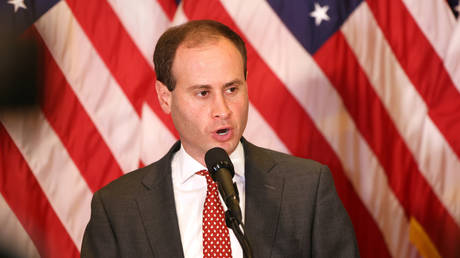
According to recent reporting from major political outlets, Democratic lawmakers on Capitol Hill are preparing a broad congressional inquiry into the operations, oversight, and leadership of the U.S. Intelligence Community. To the casual observer scrolling past a headline on a Tuesday morning, the news sounds like standard Washington theater. Another committee. Another set of subpoenas. Another round of televised hearings where stern-faced senators lecture agency directors behind a bank of microphones. To read more about the background here, NBC News offers an informative summary.
It is tempting to tune it out. Most people have bills to pay, kids to pick up from soccer practice, and very little bandwidth for the arcane turf wars of the federal bureaucracy. Yet, dismissing this developing investigation as routine partisan sparring misses the human and national stakes entirely. When the machinery of intelligence oversight grinds against the executive branch, the fallout does not stay neatly contained inside the Beltway. It seeps into the windowless rooms where people like Maya work, altering how threats are assessed, how alliances are maintained, and how safe the average citizen actually is.
The Architecture of Necessary Suspicion
To understand why lawmakers are moving toward a formal probe, you have to understand the strange, paradoxical compact at the heart of American democracy. A free society relies on transparency, open debate, and accountability. An intelligence agency relies on secrecy, deception, and operational security. Putting the two together is like trying to build a submarine with screen doors.
For the first two centuries of American history, Congress largely left the spies alone. Presidents ran covert operations out of hip pockets, and lawmakers preferred not to know the details. That hands-off era ended abruptly in the mid-1970s. Following revelations of domestic surveillance, unauthorized covert actions abroad, and abuses of power during the Vietnam and Watergate eras, Senator Frank Church led a historic investigation that pulled back the curtain on the Central Intelligence Agency, the National Security Agency, and the Federal Bureau of Investigation.
The Church Committee established the modern rules of the road. Congress created permanent intelligence committees in both the House and the Senate. The deal was straightforward. The executive branch could keep its secrets from the public, provided it shared them with a select group of elected representatives. In exchange for funding and legal authority, the intelligence agencies agreed to submit to rigorous, continuous oversight.
It is a system built on institutionalized skepticism. Think of the Intelligence Community as the nervous system of the federal government, constantly sending signals about pain, heat, and danger from every corner of the globe. Congressional oversight is the conscious brain checking to make sure those signals are real, that the nerves are not misfiring, and that the body is not overreacting to a phantom threat.
When Democratic leaders signal that they are planning a comprehensive probe, they are arguing that the nervous system is misfiring, or worse, that someone is tampering with the signals.
What Sparked the Current Inquiry
According to statements from congressional aides and committee members, the planned investigation centers on several interlocking concerns regarding how intelligence is collected, analyzed, and shared under the current administration. Critics within the Democratic caucus have raised alarms about potential politicization within intelligence leadership, arguing that career analysts face pressure to align their assessments with executive policy preferences rather than raw, unvarnished facts.
History shows what happens when intelligence bends to please the customer. In the run-up to the 2003 invasion of Iraq, intelligence assessments regarding weapons of mass destruction were shaped by confirmation bias, institutional groupthink, and intense political pressure from policymakers eager to justify a predetermined course of action. The resulting failure cost thousands of lives, trillions of dollars, and decades of credibility.
Lawmakers initiating the current review point to recent personnel shifts, changes in classification protocols, and disputes over congressional briefings as warning signs that the wall separating objective analysis from political messaging is eroding. They are also examining whether the executive branch has withheld critical intelligence findings from the Gang of Eight—the bipartisan group of congressional leaders legally entitled to the nation's most sensitive secrets.
Conversely, defenders of the current intelligence leadership and Republican counterparts on the oversight committees view the planned probe through a sharply different lens. According to statements from conservative lawmakers and administration officials, the push for an investigation is a partisan effort designed to undermine executive authority and relitigate settled policy disputes. They argue that recent reforms within the agencies were necessary to eliminate bureaucratic bloat, curb unauthorized leaks to the press, and refocus the workforce on core national security threats rather than internal administrative mandates. From their perspective, constant congressional inquiries distract agency leaders from tracking foreign adversaries and create a chilling effect on legitimate decision-making.
Both arguments tap into real, documented vulnerabilities. An intelligence service shielded from scrutiny can easily drift into overreach or insular groupthink. At the same time, an intelligence service dragged perpetually into partisan crossfire becomes paralyzed, spending more energy preparing for depositions than tracking hostile actors.
The Invisible Toll on the Ground
Step away from the podiums and the press releases for a moment. Consider what happens to Maya, our hypothetical analyst, when a major congressional probe kicks into high gear.
First comes the freeze. When word spreads through the corridors of Langley or Fort Meade that Capitol Hill is demanding emails, draft assessments, and internal chat logs, the instinct for self-preservation takes over. Writing an intelligence assessment is inherently an exercise in managing uncertainty. An analyst rarely has one hundred percent of the puzzle pieces. Usually, they have thirty percent, and they have to make an educated judgment about what the remaining seventy percent looks like.
In a healthy environment, analysts debate fiercely. Someone writes a bold hypothesis. A colleague tears it apart. They argue over the reliability of a human source or the translation of an intercepted phrase. That friction produces sharp, honest analysis.
Under the shadow of an investigation, that friction dies. Nobody wants to put a bold, uncertain hypothesis in an email that might be read aloud at a hearing six months later. Every sentence gets hedged. Every conclusion gets watered down with bureaucratic caveats until it says nothing at all. The analysis becomes safe, defensive, and useless to a president trying to make a high-stakes decision at two in the morning.
Second comes the hemorrhage of talent. Developing a seasoned intelligence officer takes years. You cannot simply hire someone off the street to understand the tribal dynamics of the Sahel, the internal factional politics of the Chinese Communist Party, or the code structure of a Russian cyber unit. When career professionals feel caught in a political vice—suspected of disloyalty by one side and subpoenaed by the other—many simply walk away. They take their security clearances to private defense contractors or corporate risk firms, trading mission for peace of mind. Once that institutional memory walks out the door, you cannot buy it back.
Third, and perhaps most dangerous, is the reaction of foreign partners. The United States does not gather intelligence alone. It relies on a vast network of alliances, most notably the Five Eyes partnership with the United Kingdom, Canada, Australia, and New Zealand, alongside dozens of bilateral arrangements with foreign services around the globe.
Imagine you are the director of a foreign intelligence agency. You have a fragile, high-level asset inside a terrorist network or a hostile government. Sharing that intelligence with Washington could save American lives, yet if the identity of your source leaks during a political brawl in Congress, your asset will be executed. Watching Washington turn its intelligence apparatus into a battleground makes foreign partners hesitate. They hold back the crown jewels. They share the summary, not the raw feed. Blind spots begin to form in places where America can least afford them.
Navigating the Fog of Oversight
It is easy to feel cynical watching this unfold. Looking at the sheer scale of the modern intelligence budget—tens of billions of dollars spread across civilian and military programs—the average citizen might reasonably wonder how anyone can truly oversee such a sprawling machine. The terminology alone feels designed to keep outsiders at bay. Special access programs. Compartmented information. Operational security. Executive privilege.
I remember speaking years ago with a former senior staffer who had spent a decade on the Senate Intelligence Committee. He described the job as trying to read a massive novel through a keyhole while someone on the other side of the door keeps changing the pages. Even with full security clearances, oversight staffers are vastly outnumbered by the agencies they monitor. They rely heavily on whistleblowers, internal inspectors general, and the good faith of agency directors to know what questions to even ask.
When that good faith breaks down, subpoenas become the only tool left in the box.
That is the uncomfortable reality at the core of this developing probe. We want our intelligence agencies to be agile, secret, and fiercely effective against adversaries who do not play by any rules. Simultaneously, we demand that those exact same agencies operate under the strict supervision of a messy, loud, transparent democracy. There is no permanent fix for that tension. Every generation has to renegotiate the boundary between secrecy and accountability.
The Mechanics of What Comes Next
As Democratic lawmakers finalize the scope of their inquiry, the process will likely unfold in phases, moving quietly behind closed doors long before any public spectacle occurs.
Initially, committees rely on document requests and transcribed interviews. Staff investigators will comb through internal directives, threat assessments, and communications logs to establish a timeline of events. If agencies comply, much of this work remains classified, resulting in private briefings and, eventually, heavily redacted reports or legislative adjustments tucked into the annual Intelligence Authorization Act.
Conflict escalates when the executive branch invokes executive privilege or cites operational security to withhold documents. At that point, committee chairs face a choice. They can negotiate a compromise—allowing senior lawmakers to view sensitive files in a secure reading room without making copies—or they can issue formal subpoenas, setting off a protracted legal battle in federal court that can stretch across election cycles.
Public hearings are typically the final card played, designed not to uncover new secrets, which cannot be discussed on camera anyway, but to shape public perception and apply political pressure. Witnesses will speak in careful, rehearsed cadences. Lawmakers will use their five-minute blocks to make pointed speeches aimed at evening news clips. Beneath the theater, however, real leverage is exercised through the power of the purse. Congress controls the funding. By fencing off specific budget lines or holding up senior nominations, oversight committees can force operational changes even without a dramatic courtroom victory.
The Weight of the Unseen
Late tonight, long after the cable news panels have moved on to the next outrage and the press releases have been filed away, the fluorescent lights in that windowless room will still be humming.
Maya will still be at her desk. She will pull up a fresh batch of satellite imagery, adjust the contrast on her monitor, and begin looking for anomalies in the terrain. She does not get to choose the political climate in Washington. She cannot control whether the people at the top of the pyramid trust one another, or whether the elected representatives down the avenue view her agency as a vital shield or a suspect institution.
All she can do is look at the evidence on her screen, write down what she sees as clearly as she knows how, and send it up the chain—hoping that when it arrives, someone is still willing to read it without looking for what they want to find.