Turn the tap.
That is the entire ritual for most of us, a muscle memory so deeply ingrained that we execute it half-asleep at six in the morning while reaching for a coffee mug, barely registering the cold rush of clear liquid hitting the porcelain. We assume the water will be clean. We assume the tap will work. We assume that somewhere beyond the horizon of our daily commute, an invisible, self-maintaining machine keeps the poison out and the purity in. Learn more on a connected issue: this related article.
It is an illusion. And it is only broken when the machine fails, or when two people decide to quietly spend their lives making sure it never does.
Consider what happens when a New York couple decides to give away seventy-seven acres of land—not for a shopping plaza, not for a gated cul-de-sac of luxury homes, and not for a windfall retirement payout, but to protect drinking water and preserve wildlife. On paper, it reads like a dry municipal press release. A line item in a county land trust ledger. Seventy-seven acres. A conservation easement or an outright donation. Good news, brief applause, turn the page. More journalism by Associated Press highlights related perspectives on this issue.
Except that seventy-seven acres is never just dirt and timber. It is a living filter. It is the difference between a glass of water you drink without a second thought and a municipal filtration bill that bankrupts a small town.
The Architecture of an Invisible Filter
To understand why seventy-seven acres in New York matters to anyone who has ever turned on a faucet, you have to stop looking at a forest as scenery and start looking at it as heavy infrastructure.
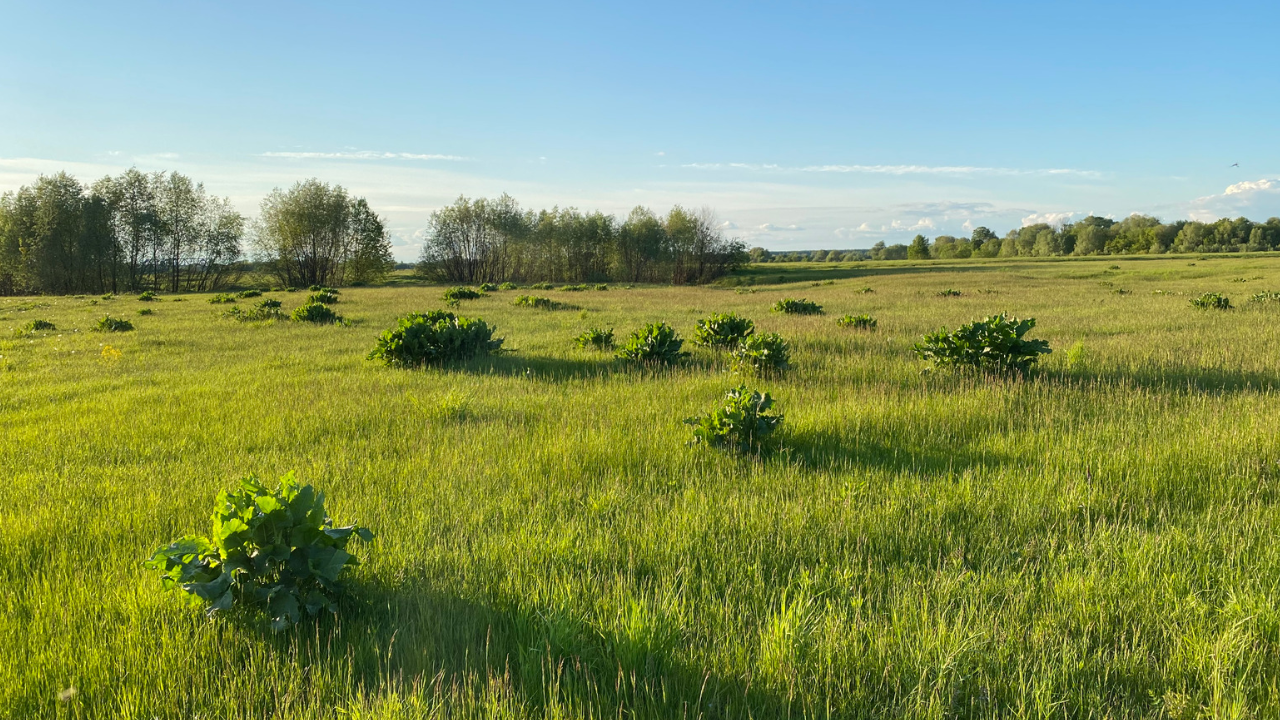
Picture a hypothetical afternoon in late October—let us call our observer Arthur, a retired municipal water engineer who spent thirty years staring at turbidity charts and chemical dosing logs. If Arthur walks onto seventy-seven acres of intact, undeveloped New York woodland after three days of driving rain, he doesn't see autumn foliage. He sees a sponge the size of fifty-eight football fields.
Every oak, maple, and hemlock on that acreage is drinking. Through a vast, subterranean network of roots and fungal threads, those trees intercept thousands of gallons of rainwater before it can slam into the soil, tear loose centuries of sediment, and wash agricultural runoff, road salt, and heavy metals straight into the nearest tributary. Below the roots lies the duff—a thick, decaying mattress of leaves, pine needles, and humus that acts like a multi-stage carbon block filter. Water passing through that forest floor slows down. It cools. Bacteria break down nitrates. Soil particles trap phosphorus. By the time that rainwater percolates into the underlying aquifer or trickles into a reservoir-bound stream, nature has already done the heavy lifting that concrete treatment plants charge millions of dollars to replicate.
Now, strip those seventy-seven acres bare. Pave forty percent of them for driveways, roofs, and cul-de-sacs. Spray the remaining sixty percent with lawn fertilizer and weed killer.
The next time it rains, the sponge is gone. Replaced by a waterslide. Stormwater sheets off the asphalt at high velocity, carrying oil, brake dust, nitrogen, and thermal pollution directly into the watershed. Downstream, the water treatment plant's intake sensors begin to scream. Turbidity spikes. Algae blooms feed on the warm, nutrient-rich runoff, releasing toxins that standard chlorination cannot always neutralize. Suddenly, the municipality has to build a new chemical flocculation facility, or drill deeper wells, or issue a boil-water advisory.
I have stood beside rural stream beds in upstate New York after a summer cloudburst and watched the water turn the color of chocolate milk in less than twenty minutes—not because the storm was historic, but because a single upstream hillside had been clear-cut for development the previous spring. You can smell the difference before you even see it. Healthy watershed water smells like wet stone and crushed fern. Compromised runoff smells faintly of diesel and warm mud.
That is the hidden geometry behind a seventy-seven-acre land gift. It is not merely charity. It is a preemptive strike against ecological and financial ruin.
Why Landowners Walk Away From Millions
If you have never owned a substantial parcel of land in the Northeast, it is easy to romanticize the decision to preserve it. You might picture wealthy philanthropists sipping tea on a wrap-around porch, casually signing over a spare corner of an estate they barely visit.
The reality is almost always messier, harder, and infinitely more personal.
In New York—particularly in the Hudson Valley, the Catskills, the Adirondacks, and the Finger Lakes—land is the ultimate temptation. Developers do not knock on doors with vague compliments about the view; they arrive with earnest money, zoning variances, and subdivided blueprints that turn a family's woods into a seven-figure payday. For an aging couple facing property taxes that climb faster than inflation, medical bills that arrive like clockwork, and the sheer physical exhaustion of maintaining trails, clearing fallen timber, and monitoring boundaries against trespassers, selling to a developer isn't greed. It is survival.
I remember talking to a landowner in Dutchess County years ago who was wrestling with this exact crossroads. His hands were scarred from forty years of chainsaw work and fence mending. He loved every square yard of his ridge, yet he sat at his kitchen table with two folders: one from a regional land conservancy offering tax incentives and permanent protection, and one from a residential builder offering enough cash to buy a condo in Florida and never shovel snow again. "You feel like you're betraying your own knees if you keep it," he told me, "and betraying your grandchildren if you sell it."
That is the emotional crucible every land donor steps into. Giving up seventy-seven acres—whether through a fee-simple donation to a land trust or a perpetual conservation easement that strips away development rights forever—means voluntarily extinguishing the highest financial value of your greatest asset. You are signing a legal document that binds not only you, but every owner who comes after you, forever.
And why do couples do it? Rarely for a plaque. Most of the time, it comes down to a quiet, stubborn refusal to watch a living thing be carved into pieces. They have watched the red-tailed hawks nest in the same white pine for twenty springs. They have tracked bobcat prints in February snow along the creek bed. They know that if they sell, the bulldozers will arrive before the ink on the closing papers is dry.
The Wildlife Corridor You Never See on a Map
When people hear that seventy-seven acres have been set aside to preserve wildlife, they tend to picture a zoo without fences—a tidy sanctuary where deer, foxes, and songbirds live happily inside a neat boundary line.
Nature does not respect property lines. Wildlife needs highways.
Biologists call it habitat fragmentation, though a better analogy is taking a five-hundred-page novel and tearing out every fourth page. You still have most of the paper, and plenty of words remain, but the plot collapses. Animals cannot survive in isolated pockets of green surrounded by four-lane highways and suburban lawns. A black bear needs a home range spanning dozens of square miles to forage and mate. Wood thrushes and scarlet tanagers—neotropical migrants that fly thousands of miles from Central and South America to breed in New York's forests—suffer catastrophic nest predation when deep woods are chopped into small fragments, because raccoons, house cats, and cowbirds thrive along forest edges.
Even amphibians, the quiet barometers of environmental health, depend on unbroken terrain. Spotted salamanders and wood frogs spend most of the year buried under leaf litter in upland woods, then migrate en masse on the first warm, rainy night of spring to breed in temporary forest pools called vernal pools. Put a single curbed road between their winter burrows and their spring breeding pond, and an entire local population can be wiped out in two seasons.
Seventy-seven acres, positioned strategically next to existing state forests, municipal watershed lands, or neighboring protected parcels, acts as a critical bridge. It stitches torn pages back together. It gives coyotes, fishers, barred owls, and migratory warblers an uninterrupted corridor to move, hunt, and adapt as shifting climate patterns push species northward and upward in elevation.
How New York's Watershed History Proves the Math
If anyone doubts whether protecting land actually saves drinking water, New York itself provides the most famous proof in modern environmental history.
In the 1990s, New York City faced a stark ultimatum from federal regulators. Development and agricultural runoff in the Catskill and Delaware watersheds—the sprawling upstate regions that supply roughly ninety percent of the city's tap water—were threatening water quality. The city had two choices: build a massive mechanical filtration plant at an estimated capital cost of six to eight billion dollars, plus hundreds of millions more every year to operate and maintain it, or invest roughly one to two billion dollars in buying land, securing conservation easements, and upgrading septic systems across the upstate watershed.
New York chose the dirt and the trees.
By partnering with local landowners, farmers, and land trusts to keep critical acreage forested and undeveloped, the city preserved one of the largest unfiltered municipal water supplies in the world. It became the textbook case for watershed economics: spending money to protect natural capital upfront is dramatically cheaper than engineering a mechanical substitute after the ecosystem breaks.
The principle holds just as true for a seventy-seven-acre parcel feeding a local aquifer or a regional reservoir as it does for a metropolis of eight million people. Whether a community draws its water from a deep bedrock well or a surface reservoir, every acre kept under forest canopy reduces the chemical load, stabilizes groundwater recharge during summer droughts, and buffers streams against the increasingly violent rainstorms hitting the Northeast.
What Happens After the Ink Dries
There is a common misconception that once a couple donates land or places it under protection, the work ends. In truth, a new, quieter phase of stewardship begins.
Land trusts and conservation agencies do not simply lock a gate and walk away. They conduct baseline ecological inventories—mapping every wetland boundary, vernal pool, stone wall, and invasive plant stand on the property. Every single year, a stewardship coordinator walks the perimeter of those seventy-seven acres, GPS unit in hand, checking for unauthorized tree cutting, ATV erosion, or dumping. If a future landowner attempts to violate the terms of a conservation easement fifty years from now, the land trust is legally obligated—and funded through a dedicated stewardship endowment—to defend that land in court.
Meanwhile, beneath the canopy, the forest gets down to business. Dead standing trees, which a tidy suburban developer would immediately chip into mulch, become high-rise apartments for pileated woodpeckers, flying squirrels, and bats. Fallen logs nurse moss, salamanders, and new hemlock seedlings. Rain falls through the leaves, sinks into the dark, porous earth, and begins its slow, silent descent toward the water table.
No ribbon-cutting ceremony accompanies that process. No breaking news banner interrupts your evening broadcast to announce that a billion gallons of rainwater were successfully filtered without a single ounce of alum or chlorine.
Next time you stand at your kitchen sink, half-awake, waiting for the water to run cold before filling your glass, pause for a second. Look at the clarity in the tumbler. That transparency is not an accident of plumbing. Somewhere upstream, someone resisted the urge to cash out, stood their ground against the bulldozer, and left seventy-seven acres of wild, tangled forest alone so the rest of us could drink in peace.