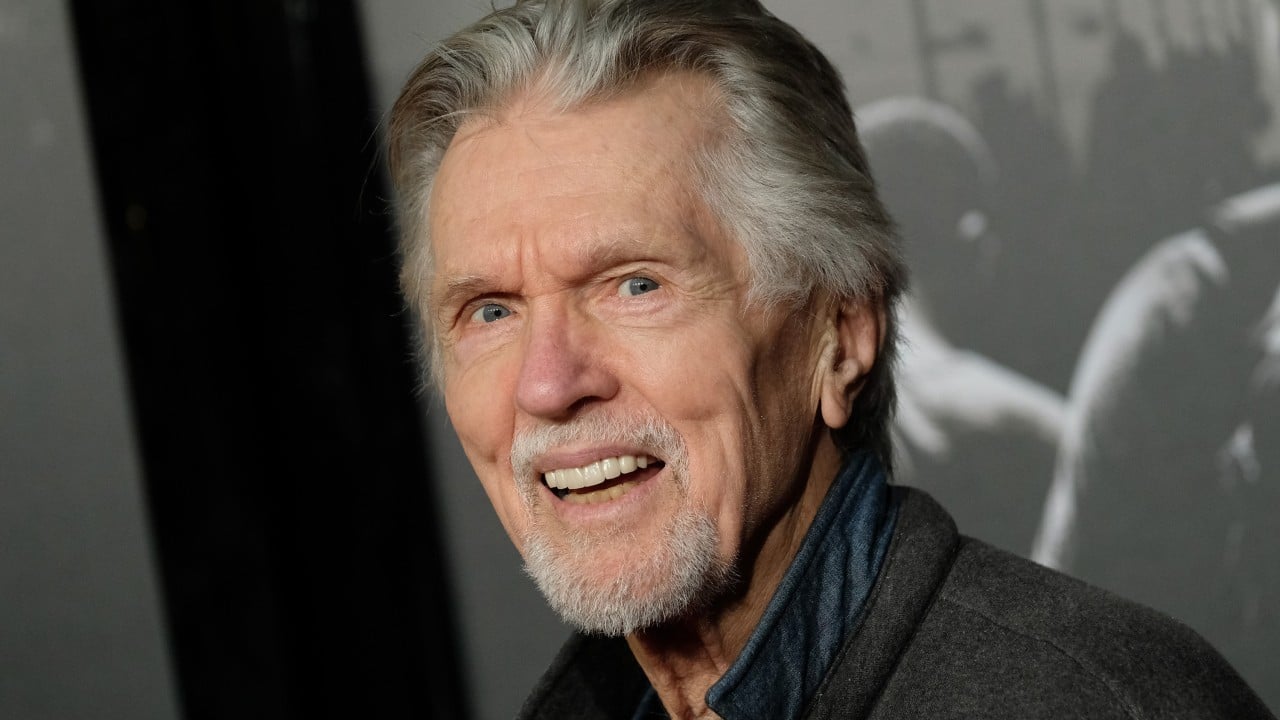
Gone.
A single word can hollow out an entire room, even when you never knew the man personally, even when ninety-three years sounds less like a sudden tragedy and more like a long, hard-earned exhale. When news broke that Tom Skerritt had died at ninety-three, my first instinct wasn't to scroll for trivia or recite a roll call of credits. My chest tightened the way it does when an old lighthouse finally goes dark off a rocky coast. You don't need that beam every night. Knowing it's still there, throwing steady light across dark water, changes how you read the horizon.
Standard obituaries move fast. They stack dates like cordwood: born in Detroit, served briefly in the Air Force, broke out in MASH and Alien, commanded a squadron in Top Gun, anchored Picket Fences for four seasons, collected an Emmy along the way. Every one of those facts is true. Every one of them is also strangely weightless if you don't stop to ask what a life like that costs, or why a certain kind of actor leaves such a lingering ache behind.
I have spent enough years watching actors come and go to know how rare quiet authenticity is in a business built on volume. Loudness gets headlines. Flash gets reel time. Yet the performers who stay wedged in our memory for decades are often the ones who look like they could fix a carburetor, tell you the truth when a plan goes sideways, and carry dread without turning it into melodrama.
Why Dallas Still Felt Like Someone You Knew
Consider a hypothetical viewer—let's call her Maya—sitting on a worn sofa in 1979 with a warm soda and a ticket stub in her pocket. She isn't thinking about film theory or practical effects. She is nineteen, nervous about her own future, and suddenly trapped inside the greasy, claustrophobic belly of the Nostromo alongside Captain Arthur Dallas.
In Ridley Scott's Alien, Dallas isn't a superhero in gleaming armor. He's a weary space trucker hauling ore across the dark, trying to keep a bickering crew alive when the company contract turns out to be a death sentence. When Skerritt plays Dallas, there's no theatrical grandstanding. You see the tired set of his jaw, the way he weighs bad options against worse ones, the quiet dread of a man who realizes too late that authority doesn't come with a shield.
That's why Dallas's fate hit audiences so hard. In classic adventure stories, the captain survives until the final reel. By putting a grounded, believable leader like Skerritt at the center and stripping away his safety net, the film made the terror feel earned rather than cheap.
And here is the metaphor I want to name openly: watching Skerritt across sixty-plus years of screen work is a bit like watching a timber-frame house weather six decades of Pacific storms. The beams aren't flashy. Nobody invites guests over just to admire a mortise-and-tenon joint. Yet when the wind howls at forty knots and the shingles rattle, that quiet structural honesty is the only thing keeping the roof on.
To understand what changed when he stepped in front of a camera, it helps to look at the range of roles that defined his career rather than treating them as isolated blips.
| Era or Title | Role or Archetype | What It Revealed on Screen |
|---|---|---|
| MASH (1970) | Captain "Duke" Forrest | Sharp, rebellious wit that kept pace with satirical chaos |
| Alien (1979) | Captain Dallas | Weary, human leadership buckling under impossible odds |
| Top Gun (1986) | Commander "Viper" Metcalf | Calm authority that carried weight without raising its voice |
| Picket Fences (1992–1996) | Sheriff Jimmy Brock | Moral grit and small-town patience amid messy truths |
Look closely at that arc and you start to see a pattern that has nothing to do with luck.
The Invisible Stakes Behind "Steady"
People who haven't spent time around working sets often mistake restraint for ease. They think playing a calm commander or a steady sheriff means simply showing up, speaking evenly, and letting the script do the heavy lifting.
It doesn't. Calm on camera is usually built out of friction off camera.
Think about a hypothetical young actor—say, a twenty-four-year-old extra standing near the monitors during a grueling night shoot. Everyone is exhausted. Coffee has gone cold in paper cups. The director wants one more take before dawn, and the lead has to look composed while internally tracking blocking, lighting marks, and emotional subtext. When an actor like Skerritt projects effortless authority in Top Gun as Viper, he isn't coasting. He is absorbing noise so the scene can breathe.
I have felt that exact tension in my own creative work—that quiet panic when a project is unraveling behind the scenes and you have to decide whether to match the chaos or steady the room. Most of us fail at it half the time. We get defensive, or we overcompensate, or we disappear. Watching performers who mastered stillness makes you realize how much discipline hides beneath an unhurried posture.
There's also a quieter vulnerability underneath that strength. A long career in Hollywood is a marathon through shifting tastes, changing studio regimes, and merciless aging. Plenty of bright stars burn hot for five years and vanish into obscurity. Reaching ninety-three—and leaving behind work people still watch, quote, and argue over—requires a stubborn refusal to chase every passing wave.
Not every choice in a long career is a masterpiece, of course, and admitting that doesn't diminish the legacy. Longevity in film and television is messy. Some projects soar; others barely register. What matters is the center of gravity a performer brings to the room.
What Growing Older Teaches Us About Heroes
When we're young, we tend to look for heroes who leap over walls. As we get older—and I say this as someone who has watched enough friends bury parents and confront their own mortality to stop romanticizing invulnerability—we start looking for people who stay kind, sharp, and present when the walls close in.
Skerritt's roles often lived right in that territory. Sheriff Jimmy Brock in Picket Fences wasn't a cartoon lawman; he was a husband, a father, and a civil servant trying to hold a complicated community together in Rome, Wisconsin, while winning a Primetime Emmy for lead actor in a drama series along the way. There was humor in him, frustration too, and a willingness to listen even when listening was hard.
That is the invisible stake in losing a ninety-three-year-old actor: not a sudden shock, because time already told us the clock was late, but the gradual thinning of a generation that knew how to inhabit ordinary men with extraordinary dignity.
Sometimes people ask why we grieve public figures we never met. It's a fair question, and I don't have a neat clinical answer. Maybe it's because those faces were woven into our own timelines—late nights on the couch, movie theaters sticky with spilled cola, conversations with family members who have since passed on. When someone like Tom Skerritt dies, a small piece of shared memory goes quiet too.
Yet the work doesn't vanish with the man. Tonight, somewhere, a kid is watching Alien for the first time with wide eyes, or catching a rerun of Top Gun or Picket Fences, hearing that calm, unmistakable voice cut through the noise.
Rain still taps against the windowpane long after the credits roll, and the light in the hallway stays on.


